Teen wins battle for 'groundbreaking' MND drug

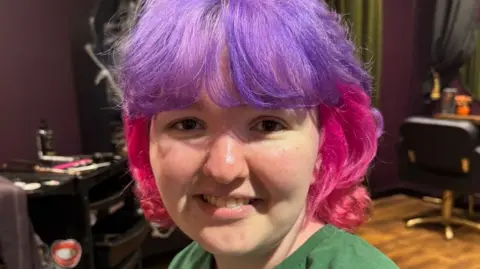 Lillia Jakeman
A 19-year-old with motor neurone disease (MND) says she has been given a "future" after winning a battle for access to a groundbreaking drug.
Lillia Jakeman, of Romsey in Hampshire, has a rare form of MND which the drug Tofersen has been shown to slow.
The medication has not yet been approved for use on the NHS but after an awareness campaign by Lillia and her family she has now been offered treatment at King's College Hospital in London.
A Department of Health and Social Care (DHSC) spokesperson said the National Institute for Clinical Excellence (NICE) was working with the manufacturer on whether Tofersen should be routinely funded by the health service.
Lillia said: "Already I feel a lot more relaxed and at ease. It has provided me a future and stability however as I've only recently started taking Tofersen, I still don't know what it will do to me."
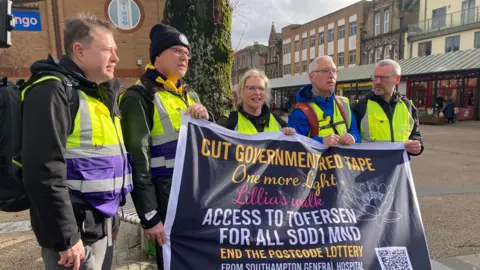
She was diagnosed with MND with the SOD1 gene variation in August 2025, a variant that is thought to affect about 2% of people with the condition.
Tofersen, made by Biogen, has been shown to slow and, in some cases, even halt the progress of MND for those with SOD1, however University Hospital Southampton said it did not have funding to deliver the drug through an early access programme and was therefore unable to provide it to Lillia.
Her family began raising awareness of the situation and in January they walked from Southampton to Westminster to hand a petition to Downing Street, calling for the drug to be available to everyone who needs it.
At the start of February she was able to begin her treatment at King's College Hospital NHS Foundation Trust, where it has funded the medication.
Now Lillia is calling for more to be done to tackle to post code lottery for access to what she calls a "life-saving and life extending drug".
"We're not just fighting for myself, we're also fighting for other people who have not yet gained access to Tofersen," she said.
Dr Rachel Jakeman, Lillia's stepmother and an NHS doctor, said the family's campaigning paid off: "It's just us pushing and pushing and not taking no for an answer."
She added that although they will not know the impact of the drug for at least three months she believed it had already given Lillia "the mental strength to carry on and start living life".
She said the teen was well enough to visit Dr Jakeman and Lillia's father at their home for the first time in four years.
A Department of Health and Social Care spokesperson said: "We are committed to improving care for people with Motor Neurone Disease like Lillia and ensuring they receive the support and treatment they need.
"Tofersen is approved for use in the UK and NICE is working with the manufacturer on whether to recommend it for routine funding by the NHS.
"If recommended NHS England will work to make it available to NHS patients as rapidly as possible."
A spokesperson for University Hospital Southampton previously said: "We have not received any funding to pay for the increased service capacity we need to safely deliver this treatment and closely monitor a patient's ongoing progress.
"The trust will work towards being able to offer this treatment as soon as possible, if and when it is approved by NICE and funding is made available from NHS England."
You can follow BBC Hampshire & Isle of Wight on Facebook, X, or Instagram.
