North East councils recycling less household waste

 BBC
BBCCouncils across north-east England are recycling less household waste than they did 10 years ago, official data has revealed.
The total amount of household waste sent for recycling by the region's 12 councils fell 18% from 429,653 tonnes during the 2014-15 financial year to 352,169 tonnes in 2023-24.
Middlesbrough Council and Stockton Council had some of the worst recycling rates in England, and only recycled 23.8% and 24.5% respectively of their rubbish in 2023-24.
Both councils said they would be making changes to their bin collections to improve recycling rates, while Middlesbrough said it had brought in waste engagement officers.
A spokesperson for Middlesbrough Council said it had not reduced the amount of waste it collected from households but the quality demands for recyclable waste had increased.
"Things like wet cardboard and paper and any material with food elements still present are now rejected," they said.
The council also said it planned to introduce red-lidded bins to recycle paper and cardboard, as well as food waste caddies, as part of the government's Simpler Recycling laws.
Stockton Council's cabinet member for environment, leisure and culture Nigel Cooke said the local authority recognised its recycling rates were low and was making changes to collections.
Those included bringing in weekly recycling collections, along with moving general waste collections to a fortnightly rota to "encourage" people to recycle more.
"These changes to our waste and recycling service will help the council move forward with our commitment to the environment, reduce costs and, most importantly, continue to provide an outstanding service to our residents," he said.
The figures were published by the Department of Environment, Food and Rural Affairs (Defra) and analysed by the BBC.
The analysis also showed what percentage of each council's household waste was sent to be recycled each year.
Every North East council recycled a lower proportion of its waste in 2023-24 than it did in a decade before.
Newcastle City Council and Redcar and Cleveland Borough Council both saw their recycling proportion fall by 15% over the 10-year period - the third biggest drop in the country.
Redcar and Cleveland's proportion fell from 47% in 2014-15 to 32% in 2023-24, while Newcastle's fell from 41% to 26%.
The national average fell from 44% to 42%.
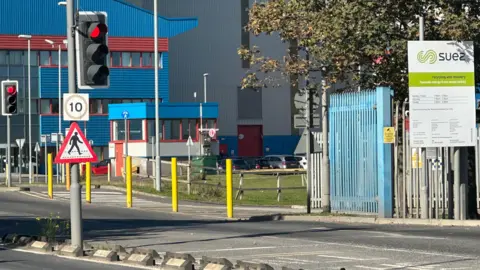
A spokesperson for Newcastle City Council said it used to operate a mechanical biological treatment (MBT) process in Byker to extract organic material from waste, which was later turned into compost.
It closed the MBT facility in 2022 after the government said it would introduce laws forcing councils to collect food waste separately, however those rules were delayed until 2026.
"We have already been piloting food waste collection and we anticipate this will significantly increase our recycling rates when the collections are rolled out across the city," a spokesperson said.
The council also said it had worked to improve recycling by holding pop-up recycling centres, launching a bin collection app, and taking part in a trial to collect plastic bags.
Redcar and Cleveland Council said it was attempting to address its reduction in recycling rates by investing in its recycling team and engaging with people who did not recycle.
It said it held "events, roadshows and school visits" and had created social media campaigns and advertising to promote recycling across the borough.
