The social experiment that spawned an industry

 Sidlesham Heritage Project
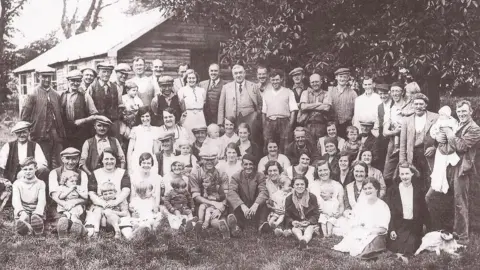
A government project to provide homes and employment during the great depression led to Sussex becoming a centre of market gardening.
In the 1930s, the Land Settlement Association (LSA) was created to set up families from industrial areas with their own smallholdings.
Sidlesham, in West Sussex, was the largest of those sites, with each family offered a two-up two-down house with a piggery, chicken shed and four acres (1.6 hectares) on which to grow vegetables, which they sold through a co-operative.
One of the original buildings has been relocated to the Weald and Downland Living Museum, where it is in storage.
 Sidlesham Heritage Project
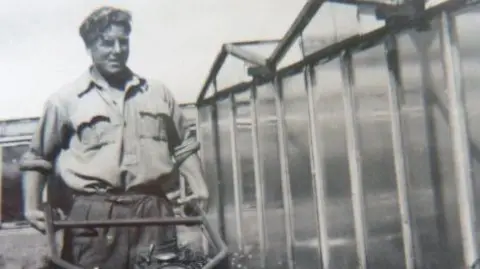
Norman Dixon, who is 95, arrived in Sidlesham from the North East as a 10-year-old in 1939, and still lives in the same property.
He said: "I worked for my father, growing tomatoes, lettuce and garden crops. We used to send them to Covent Garden."
He set up as an independent trader after the LSA closed in 1983, before retiring and buying the house and land.
"We came down on the dole, and I ended up buying it. It took a long time but it was achieved," he said.
"You want the truth, I didn't want to come, but I don't want to go back now."
Museum curator Julian Bell said: "We've got 53 buildings we've rescued, dismantled, brought back and erected on site.
"We've got four in store awaiting re-erection, one of which is a Land Settlement Association building.
"In terms of architecture it's not outstanding, but what it represents is the social history of the area south of Chichester, giving visitors an idea of why that area is now still a big market gardening area."
Follow BBC Sussex on Facebook, on X, and on Instagram. Send your story ideas to southeasttoday@bbc.co.uk or WhatsApp us on 08081 002250.
