'We prepare for the wrong disasters': Earth's fight against encroaching saltwater

 Lena Nian/ BBC
From The Gambia to the US, sea salt is increasingly seeping into the freshwaters people need for drinking and producing food.
Someone turns on the tap for drinking water in New Orleans, but the water is salty. In Bangladesh, farmers are forced to turn previously fertile land into brackish ponds to raise shrimp. In The Gambia, a farmer watches her crops wither and fail, doused in salt.
Around the world, previously reliable coastal freshwater supplies are turning to salt, invaded by seawater. This is the strange, slow-moving crisis of saltwater intrusion, and it is increasingly affecting communities around the world.
Saltwater intrusion refers to the inland movement of saline water – from the ocean or sea – into freshwater aquifers. It is impacting low-lying countries like The Gambia, Vietnam and Bangladesh most so far, but is a global problem, including for the US. All continents except Antarctica are projected to have coastal areas with at least 1km (0.6 miles) of inland saltwater intrusion by 2050.
This encroaching saltwater tends to occur gradually over an extended period but presents a long-term devastating impact on drinking water sources, rice farming and coastal communities around the world, says Robert Young, a professor of coastal geology at Western Carolina University in the US.
"Saltwater intrusion is a perfect example of a slow-onset climate crisis," he says. Too often, we focus on big events like storms, and don't pay attention to other changes happening more slowly, he says. "We prepare for the wrong disasters, [but slow-onset climate effects] are the ones that can really impact the future of coastal communities, especially in the developing world.
Encroaching salt
In the US, saltwater intrusion is already present in many coastal aquifers, and is threatening farms and drinking water supply, especially in low-lying south Florida, where the vulnerable Biscayne Aquifer is the primary source of freshwater. Scientists have found wells in Rhode Island to be contaminated by saltwater. Residents of Louisiana have even begun to notice a salty taste in their tap water, The Guardian reported, and in 2023 the Louisiana state governor requested a presidential emergency declaration due to its impacts.
Saltwater intrusion into drinking water is not just unpleasant. Studies have found that populations drinking saline water are at greater risk of adverse health outcomes including high blood pressure and health issues in pregnancy.
 Getty Images
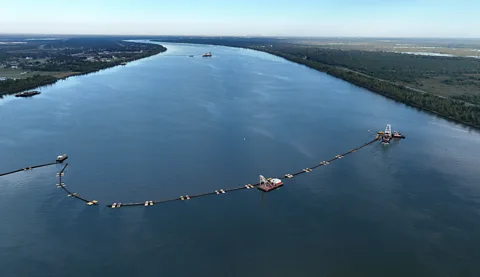
The intrusion often happens at the boundary or interface between saltwater and freshwater. The position of the salt depends on the balance between sea level and the water levels on land, says Holly Michael, a coastal hydrogeologist at the University of Delaware in the US. "Any process that tips that balance one way or the other is going to cause that salt front to move inland," she says.
This process is being worsened by climate change leading to rising temperatures, decreases in rainfall and a global increase in sea levels, says Michael.
In some places, including the US, the excessive extraction of groundwater for demands such as domestic, agricultural and industrial has also contributed significantly to saltwater intrusion, letting underground saltwater intrude into soil and rivers.
Trouble for farmers
But it's coastal farmers in some of the world's poorest countries who are already the most impacted by saltwater intrusion.
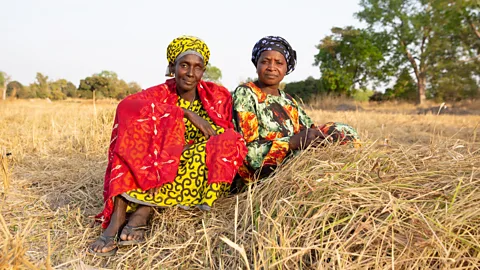
Nurse Senneh was a child when she started growing rice with her parents in Sankandi, a small mangrove-rich village of about 600 people in The Gambia. Her parents taught her that rice seedlings thrive in water, so the crops should only be cultivated during the wet season, when plenty of rain supports irrigation.
The practise had worked for the family for generations: "My father was not wealthy," says Senneh, now 59. "He did hard labour to take care of the family, but during the rainy season we had a bumper harvest to take care of the family."
Senneh began rice cultivation on her own in 1987, soon after she got married. Bumper harvests from her field, she says, helped feed her family, but started to dwindle when saltwater from the Atlantic Ocean began to creep into her one-hectare (2.5-acre) rice field some four years ago.
The situation was completely unfamiliar to Senneh. She began seeing stunted growth and lower yields in her rice crops and, despite efforts to limit the impacts, had to move her cultivation elsewhere.
The Gambia is among the world's lowest-lying countries, and saltwater intrusion was first reported here in the 19th Century. But it is climate change that is now primarily responsible for saltwater intrusion, says Sidat Yaffa, a professor in climate change and agronomy at University of The Gambia.
The Gambia River, which gives the country its name and is one of West Africa's longest navigable waterways, is the main source of freshwater for The Gambia's rice cultivation. Rice needs a lot of water to grow: some 2,500 litres (550 gallons) is required to produce just 1kg (2.2lb).
 Lena Nian/ BBC
The Gambia River is almost at sea level and seriously affected by saltwater intrusion, carrying saline water up to 250km (155 miles) inland, where it empties in tributaries commonly used for rice production, says Yaffa. At the same time, he adds, rising temperatures have caused the country's annual rainfall to decrease by about 30% since the 1970s, slowing groundwater recharge and making soils yet more salty.
"Now we have less rainfall and less freshwater coming from rainfall," Yaffa says. Instead, "we have more brackish water pushing its way upstream from the Atlantic Ocean that empties in the Gambia River."
Pushing back
Between 2009 and 2023, The Gambia saw a 42% reduction in the areas used for rice cultivation and a 26% drop in production due to saltwater intrusion, according to a 2024 impact assessment for The Gambia's National Environment Agency. These changes are concentrated in the traditional rice-growing sector, which provides a living for thousands of people in the country. This new reality threatens food security in a country where 91% of the extremely poor are farmers.
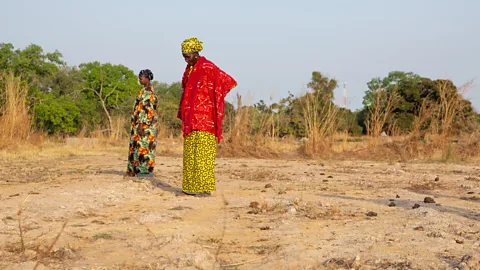
Senneh is not a passive farmer. Once she started noticing the problem, she constructed a makeshift dike, which involved filling bags with mud and burying them in the ground to prevent saltwater from advancing further into her farm. Despite trying three times, however, she says the solution never worked.
 Lena Nian/ BBC
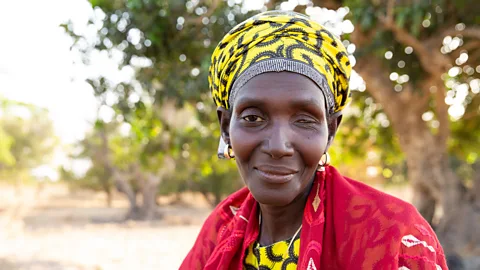
She eventually abandoned the farm. "I had to leave because of the saltwater intrusion," says Senneh. "Now, the entire rice field affected is left uncultivated."
Senneh now cultivates on a small piece of land she owns nearby, but says she gets less than a third of what she used to and that her seven children no longer eat well. "I feel very bad because my family often ate to their satisfaction but not anymore. This alone is a burden," she says. Senneh now buys a bag of imported rice for 2,200 Gambian dalasis (£23/$30). "I never thought there would be a time I would buy rice," she says. "It is very hard on me."
Rice is a crucial food source for subsistence farmers in The Gambia, and while the country actually imports the majority of its rice, buying this is unfamiliar to many. It is also unaffordable, says Yaffa, in country where the average monthly salary is less than 5,000 Gambian dalasis (£51/$69).
Holding back salt
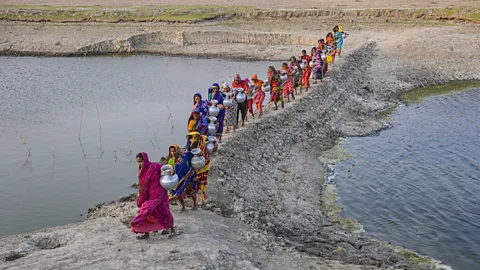
Farmers in other low-lying areas around the world, from Vietnam to the Mediterranean coastline to areas of the US coastline including Florida and the Delmarva Peninsula, are facing the impacts of saltwater intrusion. In Bangladesh, some small-scale farmers have reacted to their lands being inundated by saltwater by converting them to brackish ponds to raise shrimp, which can both contaminate more soils and lead to conflict among coastal residents.
 Getty Images
But people are also fighting back against this encroaching saltwater.
Florida, for example, has installed salinity control structures, which help separate fresh water and saltwater. "What Florida did was put tide gates on canals, so that prevents saltwater from coming back up," says Michael. "They open the gates during low tide, and then that allows the water to drain off."
Similarly, Vietnam – where a severe drought in 2016 worsened by El Niño pushed saltwater 90km (56 miles) inland – has built multimillion-dollar sluice gates to protect the Mekong Delta, its rice basket, against saltwater intrusion. These projects, however, have often been plagued by failures.
Another engineering solution in Florida is wastewater injection, says Michael, where wastewater is collected, treated and released into the river. "This helps to push back saltwater in the groundwater. It raises the water levels on land and kind of replaces the water that was extracted."
China and the Netherlands have also adopted the wastewater treatment approach. In China's Yingli Town for example, treated rainwater are directly used on farmlands as irrigation water.
In The Gambia, Yaffa says, a dike was constructed back in 1994 to prevent saltwater from intruding into rice fields. "The dike was a good solution," he says. "[But it] is in a bad shape now and needs a lot of repairs."
More like this:
Other solutions are being explored in Vietnam to help farmers adapt to saltwater intrusion. A year after the 2016 drought, researchers from Tra Vinh University piloted a new lower-water rice farming technique with farmers which alternates between flooding and draining fields, and helped them to monitor water levels in the fields using their smartphones. While the app-sensor technology used is currently too expensive, the researchers said falling sensor prices meant it would soon become more accessible, according to Mongabay.
Dương Văn Ni, director of the Mekong Conservancy Foundation, developed a simple handheld device that allows rice farmers to test whether the water is too salty for cultivation or not – although it doesn't help reduce this salinity. He also inspired the cultivation of native reeds in the Mekong Delta, which thrive in saline soil and are dried, woven into items like baskets, and sold, providing an alternative income.
In the balance
With all these solutions, "there are no silver bullets, and what works in one place may not work in another", notes Lizzie Yarina, a climate adaptation researcher at Northeastern University in the US.
As climate change intensifies and population increase continues to exert pressure on freshwater aquifers, the salinity crisis will only increase. By 2100, nearly 77% of the global coast will be affected by salinity, a 2024 study found. The livelihoods of many farmers will increasingly hang in the balance.
 Lena Nian/ BBC
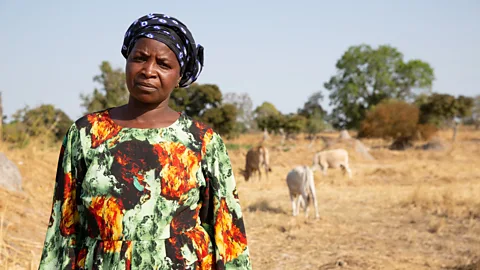
Back in The Gambia, Binta Ceesay, 63, also started experiencing saltwater intruding into her rice fields in Sankandi in 2019. She tried applying animal waste to her fields to improve the soil's fertility, but the saltwater kept encroaching. She then constructed a makeshift dike. It also failed. She was likewise forced to abandon her field, where she had previously harvested at least 30 bags of rice per season to feed her family and pay medical and school bills for her seven children.
Senneh and Ceesay have both shifted to cultivating vegetables such as lettuce and cabbage, but the meagre profit does not cover their expenses, including buying imported rice. To meet her family needs, Ceesay says, she sometimes borrows money from a women-only group she belongs to in her village.
Yaffa worries about the impact of importing more rice. "My fears are that The Gambia, especially the farming communities, will face serious food shortages that will impact their lives and livelihoods," he says. The decline in rice production, he says, "will create hunger and could trigger riot in the country".
Senneh is also deeply worried and hopes for a permanent solution. But she believes time is ticking on the crisis.
"I support the construction of dikes," she says. "If not, [saltwater intrusion] will become worse and life will be unbearable for us. I fear that in the future my second rice field may be affected if nothing is done."
--
For essential climate news and hopeful developments to your inbox, sign up to the Future Earth newsletter, while The Essential List delivers a handpicked selection of features and insights twice a week.
