What animals can teach us about overcoming tyranny

 Alamy
AlamySome animal societies are ruled by despots with an iron fist, while others seem naturally egalitarian – and they all have lessons for us.
The 20th Century had no shortage of despots. Ruthless leaders who crushed their opponents and brutalised anyone who dared step out of line. Authoritarians like Joseph Stalin, Mao Zedong, Idi Amin – and Bill the house mouse.
In the early 1950s, Peter Crowcroft, an ecologist and expert in mice, was on a former World War Two bomber training airbase in Suffolk, UK, observing the rise of Bill, a mouse he had nicknamed as part of an unusual experiment.
Mice had a reputation for destroying huge volumes of grain in strategic food reserves dotted around Britain. In the early years of the Cold War, the British government sought to better understand mouse behaviour, with a view to constraining the rodents' antics. And so, Crowcroft was brought in to set up a mouse-observation lab at the former bomber training facility.
Early in the work, Crowcroft introduced Bill to a fellow mouse named Charlie. "I was quite unprepared for the stark savagery with which Bill hurled himself upon Charlie in the first instant of their meeting," he wrote in a book detailing the study, Mice All Over. The two mice fought fiercely for a short time but Bill soon emerged the victor. A despot was born.
In his book, published in 1966, Crowcroft documented Bill's tyrannical behaviour towards other mice over many pages.
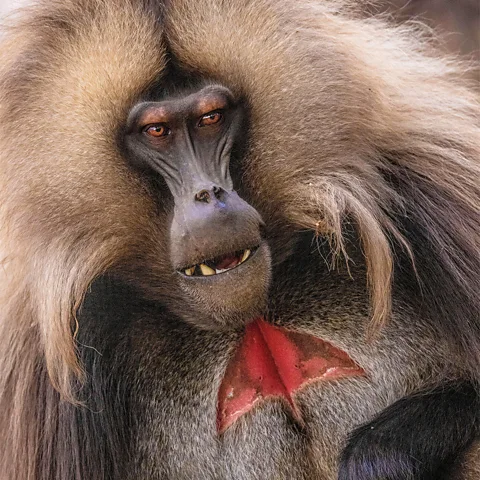
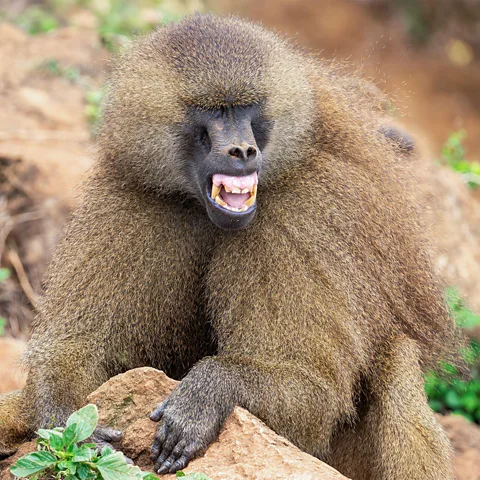
Despotism is a feature of many animal societies, not just mice. Baboons, banded mongooses and naked mole rats are just some of those known to have what ecologists call "dominance hierarchies", or pecking orders, at the top of which sits an individual or individuals who rule with an iron fist. They get the most food. The best sexual partners. And their behaviour ultimately steers the entire group in one direction or another.
 Alamy
AlamyDespotism can become entrenched when subordinates have nowhere else to go – a condition that also appears to have enabled despots in human societies. But, in some cases, circumstances can lead to the removal of aggressive leaders. And some animal societies that work together appear able to evade despotism.
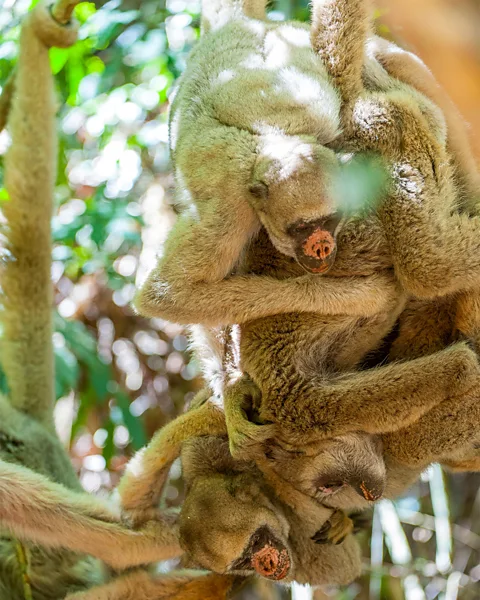
The northern muriqui, a famously peaceful monkey species in Brazil, for example, maintains a gentle, egalitarian society. Animals' genetics as well as their environments may determine how despotic – or not – they are. And perhaps we can learn from that. "The more I observed mice," wrote Crowcroft, "the more I came to recognise elements of the behaviour of my fellow men, and the more I began to understand both species."
Crowcroft's work – though criticised by some at the time as a waste of government money – has influenced many researchers, including Justin Varholick, a biomedical scientist at Kennesaw State University in Georgia, the US. He studied mouse behaviour during his PhD and says, "The basis of most of my research was that book."
Mice housed in laboratories, often in small cages, are prone to despotism. In 2019, Varholick and colleagues published a study about this behaviour. They observed dozens of mice, which they separated into groups of three, and housed in standard lab cages. Varholick found that the rank of individual mice could change, depending on who was in the cage with them. They evaluated this using a method called a tube test: put two mice into opposite ends of a tube. Whoever backs out first has, by implication, declared themselves the subordinate.
"The social relationships in the cages are not the same across cages," he says. "They're very different depending on who is in the cages." Varholick's main goal was to better understand these animals in order to reduce aggression in lab mice, which can be problematic for researchers as well as the unlucky subordinate mice themselves.
In the wild, environmental factors might determine whether despotism emerges in a particular group of mice. And some animal species are famously despotic. Take chacma baboons, which live in southern Africa. A well-known 2008 study showed that despots typically ruled these baboon societies, and this played out, for example, when the monkeys went looking for food. "Group foraging decisions were consistently led by the individual who acquired the greatest benefits from those decisions, namely the dominant male," the researchers noted.
Behavioural ecologist Élise Huchard, director of research at the French National Centre for Scientific Research, was one of the co-authors on that paper. She has spent many years studying baboons in Namibia. Huchard describes how despotic males in these groups often chase females, both to coerce them into mating and also to intimidate them – in order to reduce the chances of the female mating with any other male baboon. The despotic baboon might chase a female up a tree, forcing her to the end of the tree's branches. In extreme cases this can have tragic consequences.
"We've seen a female who was very pregnant and chased like that," says Huchard. The female in question fell from the tree. "She miscarried the next day."
But Huchard stresses that high-ranking females in these baboon societies also behave despotically, asserting their rank over subordinate females. Female baboons inherit their social rank from their mother. Huchard says she and her fellow researchers, on a personal level at least, often feel slightly more attached to the subordinate baboons who put up with all this tyrannical behaviour. But she also recalls one high-ranking female who was particularly gentler than expected: "I thought it was particularly nice of her to be so high-ranking and have such restraint."
 Getty Images
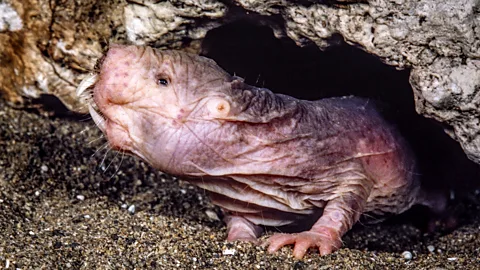
Some females at the top of certain animal societies are decidedly brutal. Naked mole rats live underground where they dig tunnels using their huge front teeth, as they search for plant tubers, which they feed on. Naked mole rat societies have queens, the only females who reproduce, and they assert their dominance by "aggressive pushing, tail-tugging and shoving behaviours".
Breaking off from the group would be risky. "Nobody knows where the next load [of tubers] will be," says Laura Betzig, an independent anthropologist who has studied despotism in animal as well as human societies. "They stick around and put up with awful despots."
Betzig also cites ant workers that eat eggs laid by females other than the queen. "She uses an army of physical workers, a police force, to destroy the eggs," says Betzig. This is one way a leader can eliminate would-be rivals.
More like this:
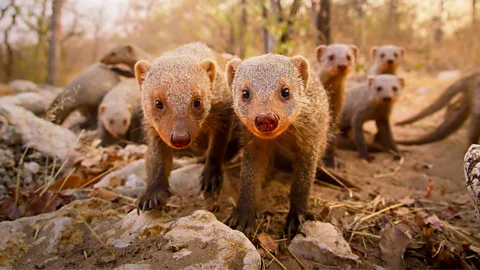
And, in banded mongooses, female despots go one step further. These mammals live in tight-knit groups. When the leading female seeks to mate, she declares a kind of war on rival groups nearby. Typically, the despotic female will seek out a rival group's male – and will bring male guards from her own group with her. If the pioneering female wins her war and mates successfully, "the resulting pups will be genetically more diverse, bigger, and more likely to survive", as one researcher put it in a 2020 paper. But many banded mongooses can be killed in the process. It brings to mind the outrageously autocratic Lord Farquaad's famous line from the movie Shrek: "Some of you may die. But it's a sacrifice I am willing to make."
Kingsley Hunt, a researcher at the University of Exeter in the UK, studies banded mongooses. He notes that males often suffer in conflicts between groups – but they don't have much choice. "Life for a lone mongoose is probably pretty short and brutal," he says. "That might limit your ability to say 'no' or revolt."
And when it comes to figuring out why despotism persists in some animal societies, despite obvious downsides for many individuals, a lack of mobility could be a key factor. Betzig says she has found evidence that historical human societies ruled by despots were often in geographic locations that made escape difficult. That allowed the despot to abuse their captive audience. "To me, the take home is: 'Don't stop moving, don't put up walls,'" says Betzig. "'Don't put up barriers to flight in any way.'"
Huchard says that some animal societies are more despotic than others but why this is the case remains the subject of research. Despotism might emerge due to a mix of genetic and learned behaviours. She refers to a famous study, published in 2004, which reported an extraordinary chain of events among olive baboons.
In the mid-1980s, an outbreak of tuberculosis among these baboons resulted in the deaths of many males in the group – and it so happened that most of the deaths were among the more aggressive males. Relatively peaceful males took over, who were noticeably less aggressive than their predecessors. This more friendly, or affiliative, behaviour between males and females suggested a "relaxed" dominance hierarchy had emerged. The really surprising thing is that this less aggressive society endured for many years, persisting across multiple subsequent generations.
 Alamy
AlamyOppression, generally speaking, does not always go well for animals that engage in it. One ant species, Protomagnathus americanus actually kidnaps the larvae of rival species (from the genus Temnothorax), to enslave them. But the enslaved ants have been known to rise up and kill their captors.
Returning to despots, the availability of resources might also be a factor in whether one comes to power, says Marcy Ekanayake-Weber, a biological anthropologist at the University at Albany in New York. If resources are unevenly distributed, then a small number of individuals may be able to monopolise those resources – and become despots in the process, she suggests.
How much can human society learn from all this? All the scientists I spoke to suggested that their studies of non-human animal societies had somehow impacted their views of human behaviour. "That is the way that we understand ourselves, by studying other animal societies," says Varholick. And Betzig notes that, in studies of historical human societies, including Roman examples, she found a "ridiculously strong" correlation between male despots obtaining wealth and power – and with it, access to multiple females, with whom they had sexual relations. Not unlike tyrannical male baboons.
Though Ekanayake-Weber makes an important point: human agriculture, among other things, has probably shaped social hierarchies for millennia. While some animals do have forms of what we could call agriculture, it's hard to compare our civilisations to animal societies without plenty of caveats. Human agriculture may have caused the emergence of male-dominated societies or patriarchies, for instance – potentially a significant deviation from our evolutionary origins as more egalitarian hunter-gatherers, says Ekanayake-Weber.
And yet parallels remain. It's eerily easy to recognise our own, human brutality, in other despotic species. A familiar aggression, a megalomania – a destructiveness. Perhaps that's how Crowcroft felt when he documented Bill's authoritarian regime in the early 1950s. Coincidentally, during that period in history many countries around the world were subject to despots. Researchers say despotism continues to blight some human societies.
But there is another way. In Brazil's Atlantic Forest lives a monkey species that has been dubbed the most peaceful primate on Earth. Tree-dwelling northern muriquis live in egalitarian groups famous for their civility. There are no despots here. Some people refer to the muriqui as "the hippie monkey" – a slightly sensationalising term that nonetheless captures their "relaxed" lifestyle, says Karen Strier, a primatologist at the University of Wisconsin-Madison in the US, who has studied muriquis for decades. She mentions, for example, that the monkeys are, sexually speaking, very laid back. "Females mate with multiple males in close succession," she says.
But there's more. Muriquis seldom get into fights and they share resources fairly. Strier explains that, if two of the monkeys find food or a drinking spot at roughly the same time, the first to arrive will take what it needs while the other waits patiently for its turn. "The pattern in these muriquis is patience and tolerance," she says. The muriquis even seem to hug more often than display any kind of aggressive behaviour, she adds.
Strier's first encounters with northern muriquis back in the 1980s occurred after she had spent some time studying baboons. The difference in how these primates behaved couldn't have been starker. Even among more closely related primate species, however, there are sometimes big contrasts in behaviour. Some macaque species are notoriously despotic whereas others are egalitarian. What induces peacefulness in animal societies?
For the muriquis, Strier suggests it might have to do with the fact that males and females are very similar in size and body shape. This makes it harder for one male individual, for example, to dominate over the females. But ultimately it may simply be that, for various reasons, despotism doesn't have enough benefits for muriqui individuals. "There may be reasons why aggression doesn't work," says Strier. It comes down to a question of what sort of behaviour society, and its environment, rewards.
 Alamy
AlamyArguably, humans fare best when we cooperate with one another, says Ekanayake-Weber. It's something that, culturally, we often celebrate. Take the American folk singer Woody Guthrie's song The Biggest Thing that Man has Ever Done, which lists human achievements ranging from building the mythical Tower of Babel to establishing various American industries – and defeating one of the worst despots of all, Adolf Hitler.
"It really behoves us to lean more into that cooperative, egalitarian side," says Ekanayake-Weber. When we do, we can become a kind of "superorganism", she suggests – like ants that work together to do things no individual ant could accomplish, such as moving large objects around. This kind of collaboration can help a species to flourish.
A 2022 study found that one species of ant would prioritise sticking together as a large group when selecting a new nest site from one of two options – even if that meant plumping for the less favourable site in the end. Ant societies are rigidly hierarchical, and depend on each group or caste within the colony playing a particular role – but the study suggested that, for this species, sticking together remained the most important thing, overall.
Humans are different to ants, baboons, and mole rats. We carve out a unique path on this planet, as we have for many thousands of years. But the animal kingdom still has many lessons for us. "I do use what I've learned from watching the muriquis half my life in my relationships with people," says Strier, explaining that she aims to minimise conflict and stressful interactions with others, for example.
"Watching another primate that has such a peaceful co-existence is an inspiration," she says. "It's just a glimpse into another way of life that we could aspire towards."
--
For essential climate news and hopeful developments to your inbox, sign up to the Future Earth newsletter, while The Essential List delivers a handpicked selection of features and insights twice a week.
