Hate Brussels sprouts? You may be living in the past

 Getty Images
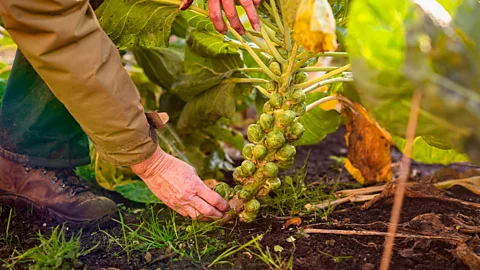
Some people loathed the bitter taste of Brussels sprouts as children. But the humble, healthy vegetable has been the subject of a decades-long breeding programme to banish the bitterness.
The survival of the human species no doubt is down, in some part, to our ability to perceive bitterness in poisonous plants, and associate this with toxicity. It's no mystery, therefore, why the Brussels sprout has been maligned for decades.
But civilisation has moved on since the days of bitter sprouts. Is it time for our tastebuds to catch up?
Have sprouts changed taste?
Brussels sprouts are arguably the most festive vegetable. We grow them all year round, but a quarter of the annual sales of sprouts occur in the two weeks up to Christmas (in the UK at least).
But there's something less-than-festive about their reputation. Sprouts have long been associated with a bitter taste – not to mention flatulent aftereffects. To be fair to sprouts, humans all perceive bitterness differently. And some of us have two copies of a particular taste gene called TAS2R38, which means we're wired to perceive sprouts as bitter.
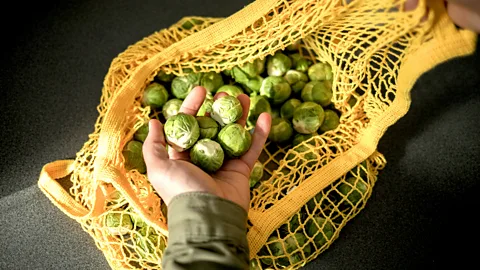
But despite their shaky reputation, their sales have jumped by two percentage points over the last five years. Now, almost two-thirds of people like Brussels sprouts, according to YouGov.
 Getty Images
It's possible that people scarred by the bitter Brussels of their childhood are now fuelling a resurgence in popularity of the humble sprout as grown-ups. After all – sprouts have had an evolution of their own.
Is it sprouts – or are we the problem?
For Alan Steven, who runs a farm near St Andrews in Fife, Scotland, his Brussels sprouts start to become in-demand in September, and ramp up just before Christmas.
He has around six varieties of Brussels sprouts, which all have different harvest dates across autumn and winter. He says the flavours are slightly different for each one (which he can only confirm after eating them raw).
"By January, there's only one variety left in the ground," he says.
Steven decided to work on breeding out the bitterness in sprouts around 25 years ago, trying different techniques, including adding selenium and sulphur to crops, to see if it makes a difference.
But what's most important to Steven – so he can sell his sprouts onto shops and make a living – is how the sprouts look, and their resistance to disease. Luckily, sprouts are a hardy crop, he says.
Taste is a byproduct, Steven says – but there's one crucial detail, and it's nothing to do with the way they're cooked.
"Vegetables don't taste their best until you've had a frost," he says. Some vegetables make their own 'anti-freeze', which lowers the freezing point of liquid in their cells, and according to a botanist, it tastes sweet.
Breeding out the bitterness
Alongside farmers like Steven dabbling in different methods on the ground, there's been another campaign waged away from the fields. Crop breeders have made huge strides towards dulling the bitterness of Brussels over time through changes to the plant's genetics.
Breeding crops so that they have certain qualities is a relatively straightforward process, says Lauren Chappell, an assistant biology professor at the University of Warwick in the UK. Chappell is a research fellow on the Vegetable Genetic Improvement Network (VeGIN), a collaboration of researchers and institutions that aims to improve crop resistance and yield.
 Getty Images
"The breeding process is like a bottleneck," she says. "You start off with really wild varieties that haven't [been] bred before, to have a wide gene pool, then you narrow the gene pool," she says.
The process starts with growing a range of Brussels sprouts varieties, using diverse landraces, which are local varieties developed through selective breeding over more than 100 years. This makes them more resilient to local environmental stresses like pests, disease and extreme weather.
When this diverse range of seeds have grown, you then start by phenotyping them, which means screening them for different traits, such as flavour. At this point, you can also test for bitterness traits, too.
"Initially, a lot of these tests are taste tests because the flavours will change as they're cooked; it's a combination of biochemistry analysis to check the chemistry behind it, and taste tests."
Once a plant with a good taste and good biochemistry has been identified, Chapell then crosses it with another plant that has favourable traits, such as high yield or resistance to various pests and diseases. But this isn't always a predictable process, Chappell says; in the same way that siblings from the same two parents aren't identical.
"It's like how a mum and dad have kids – they look different but some of their underlying traits are the same. It's the same with plants, the genes are slightly different but they have shared traits," she says.
So, Chappell will then cross the children back with the parent to fix those genetics in place.
 Getty Images
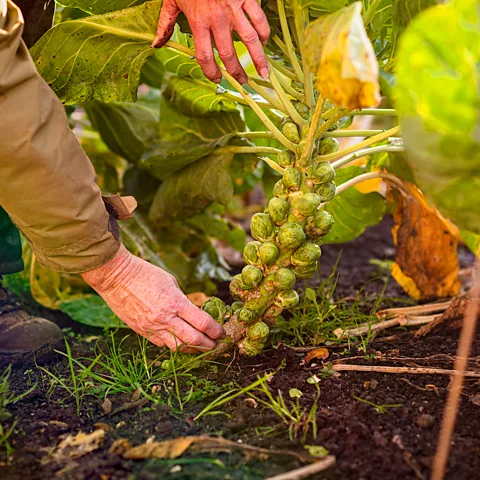
If you do this for several generations, then you'll get a new variety, she says. The processes to create a new variety, though, can take up to 12 years.
However, weeding out the bitterness of Brussels is a delicate balancing act, because sprouts' bitterness is often linked to other traits, including pests and disease resistance, Chappel says.
"Insects also find them bitter, so you breed out the tolerance to insects, making them sweeter and potentially more susceptible to insect damage," she says. "Breeders must juggle this to ensure they taste good, but also that they're able to be tolerant to pests and disease."
Breeders, she says, always look for flavour – and the challenge is understanding what is causing the bitter taste, and if it's linked to other specific traits. If the bitterness is linked to pest and disease resistance, for example, they can look for other sources of disease and pest resistance.
Breeders can also utilise the genetics of other, closely related crops that can be cross-bred, Chappell says, to try to identify new genetics linked to important traits. Sprouts are part of the mustard family, known as Brassicaceae, which also includes broccoli and cabbage.
Sprouting into the future
In November this year, a new act allowing the cultivation of gene-edited crops in England came into force. It gives a framework for the use of advanced genetic technologies, including gene editing, to develop crops with desirable traits.
Through gene editing, tools are used to adjust cut individual pieces of DNA from genes, or amplify specific pathways, to change a crop's traits.
More like this:
• How to make fruit and vegetables last longer
• The apple library with a lost world on its limbs
"Gene editing technology has been utilised in academia for a long time, now through recent regulation and legislation, it can be deployed and utilised publicly," Chappell says.
"We're entering an era of gene editing, which allows breeders to edit and utilise genes present within a plant species."
While the focus of the new framework is to improve productivity and climate resilience among crops, there's no doubt more palatable tastes will also be considered. There is a long history in agriculture of selective breeding for taste, after all – just look at the humble apple and its 2,000-plus varieties.
In the meantime, Steven says, the myths about Brussels sprouts prevails despite the advances.
"A lot of the bitter taste is how someone's cooked them," he says. "They try them in childhood and don't like them, then never try them again."
--
If you liked this story, sign up for The Essential List newsletter – a handpicked selection of features, videos and can't-miss news, delivered to your inbox twice a week.
For more science, technology, environment and health stories from the BBC, follow us on Facebook and Instagram.
