'I now have hope': Young advisers help shape the NHS

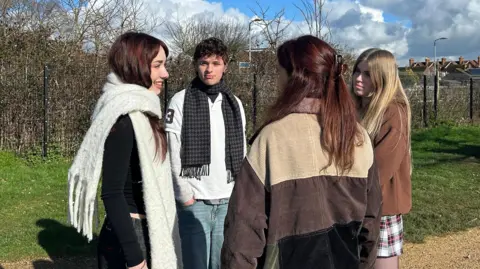 BBC
BBC"I lost all my teenage years, it felt very hopeless. My voice got lost by the end."
Gracie, 19, spent four years as an inpatient in hospital with anorexia. She also had complex post-traumatic stress disorder and is autistic.
Now she is one of a growing number of young people who are using their lived experience to directly influence NHS children's services in Devon and Torbay.
These young advisers play an active role in improving services, from shaping communications and resources to interviewing staff and advising on what support works best for young people, according to Children and Family Health Devon (CFHD).
Gracie, from Dartmoor, said she had seen changes since becoming a young adviser and hopes people of her age are being listened to.
Talking about her own experience, she said: "You start with a voice and you end up without one.
"My family fought very hard, but, when you have a mentally ill child and professionals with strong opinions on care, you get forced into however they see fit and a lot of time that wasn't right."
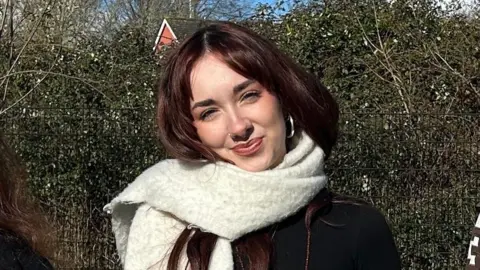
As part of her young adviser role, she has created a neurodivergent-friendly booklet which gives staff destress tolerance skills.
These are techniques such as distraction and self-soothing to help patients manage emotional pain, preventing impulsive or harmful reactions.
She said: "I think there needs to be more of a push towards... tolerance and de-escalation skills within inpatient settings.
"Because of the nature of eating disorders, your care is mainly based on your physical health and they end up removing the psychological input.
"It's just about feeding and getting your health to a point they are happy with. I would always push to look at why this is happening to you, rather than what's physically wrong with you."
Gracie has also developed a box of tools to help inpatients cope, such as self-soothing exercises, puzzles, colouring and sensory toys.
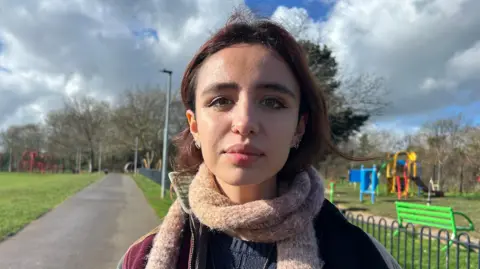
Sage, 19, from Exeter, struggled with anxiety, panic attacks and an eating disorder and is now contributing her experience to the scheme.
She said: "It was a rough time in my life. It's a long journey and it's not an easy fix.
"When I was under the service, I didn't feel like I was listened to properly. I felt that I didn't have that much of a say."
As a young adviser, she takes part in job interviews for posts which range from clinical team managers to psychiatrists.
"If I get the impression from someone applying that they are not someone a young person would click with, then my thoughts and opinions actually get listened to," she said.
CFHD said 48 experts by experience, including young people, parents and carers, had signed up to the scheme by December 2025 and the number was continuing to grow.
Those signed up were involved in 78 recruitment interviews between March and December last year.
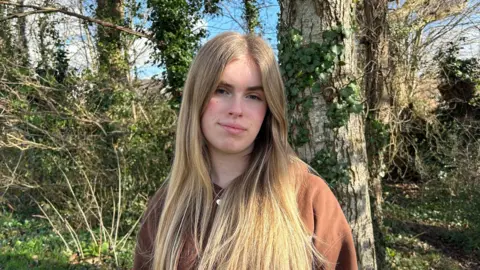
Emily, 18, from Crediton in Devon, has sat in on interviews and helps professionals understand the viewpoint of patients.
She was diagnosed with anxiety in her early teens and developed an eating disorder.
"I was admitted under therapy and I worked through my eating disorder, which I have fully recovered from," she said.
"I am very proud of that but I am still working though my anxiety."
Emily said she had had a lot of support and understanding when she was using the services and felt her feedback was always taken on board.
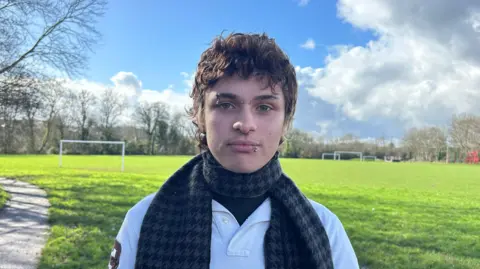
Zero, 16, from Exeter, said being involved meant he had got to have his voice heard.
He said: "I feel like professionals are so eager to hear what we think. That feels really positive."
Zero had depression when he started secondary school.
"I just felt hopeless," he said. "My default was depressed and that's a really dangerous place to be as the only way is down. I had to fight for a way."
Currently, young advisers are working with clinicians to improve both physical and mental health services in Devon and Torbay.
This includes producing easy-to-read letters explaining the autism assessment process for young people.
They are also working with clinicians to make self-referral forms accessible and understandable, and are helping design dialectical behavior therapy - a form of psychotherapy designed to help people manage intense emotions and reduce self-destructive behaviours.
Robin Tay, a participation and engagement worker for CFHD, said: "There will always be things that need to be improved and the best person to tell us what needs to be improved are the people who have experienced the services.
"It's lovely to meet a young person who has had a struggle, who's had support for mental health, to watch them grow and gain confidence and bring this incredible, valuable wisdom to the work we do."
- If you have been affected by any of the issues raised or discussed in this article, there is more information available at BBC Action Line
Follow BBC Devon on X, Facebook and Instagram. Send your story ideas to spotlight@bbc.co.uk.
