Concrete: The material that's 'too vast to imagine'

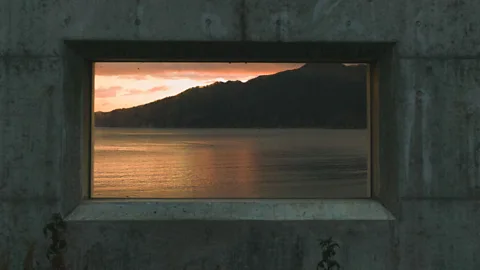 Nicolas Datiche/Getty Images
There is so much concrete in the world that soon it will outweigh all living matter – including us. In the latest in our Anthropo-Scene series, we explore the material's global reach, occasional beauty, and unimaginable scale.
Ages of human history have often been named after the materials that our ancestors mastered at that time: stone, bronze or iron.
If future archaeologists do the same for us, what material might they choose to define the 21st Century? Silicon? Plastic? Both are candidates, shaping the world for better and for worse. But if the decision were based on scale alone, then there can be only one answer: we are living in the age of concrete.
There are few human-made substances on Earth that are quite so ubiquitous. Concrete is what the philosopher-ecologist Timothy Morton calls a "hyperobject" – something so enormous and widespread that it cannot be fully contemplated with the mental faculties that we have. If you attempt to picture the entirety of the world's concrete in the mind's eye, you soon realise that it's impossible.
However, Emily Elhacham of the Weizmann Institute of Science and colleagues recently attempted to give it a shot. Their goal was to better understand humanity's impact during the Anthropocene by totting up the weight of all inanimate human-made objects on Earth. As part of their calculations, they found that concrete accounts for around half of all human-made things – the single biggest category of anthropogenic material. And if its rate of growth continues, it will overtake the total weight of Earth's biomass sometime around 2040.
Try to picture that in the mind's eye: there is a day approaching soon when there will be a greater weight of concrete on Earth than every single tree in every forest, every fish in every sea, every farm animal in every field, and every person alive right now.
How to make sense of this scale? When we encounter an outcrop of granite or limestone, poking out at the surface, its presence can hint at a far deeper and vaster bedrock beneath. We can take the same approach with a single concrete building, wall or slab – each individual instance can be approached as merely the local emergence of a material with an unseen and unimaginable geological reach.
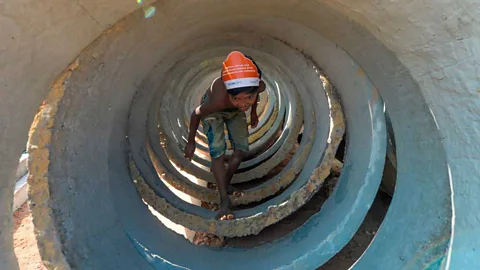
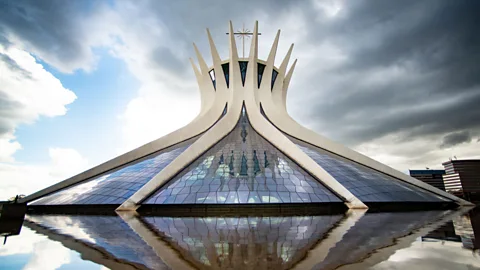
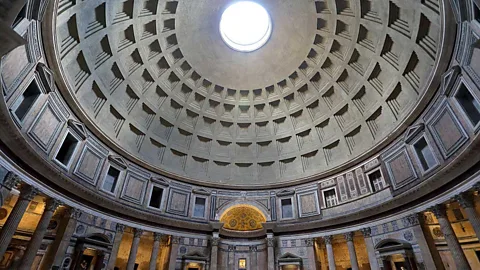
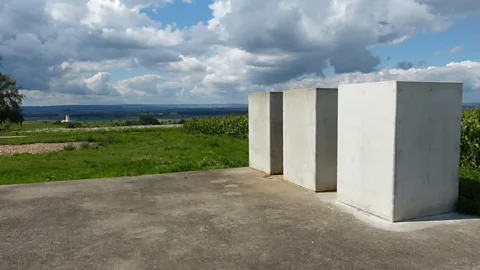
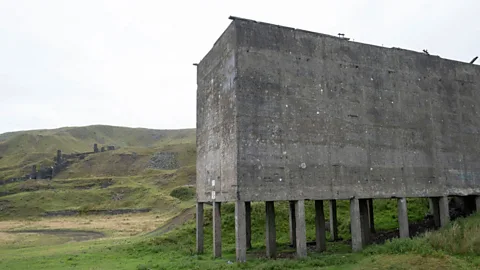
So, in this edition of BBC Future's photographic series Anthropo-Scene, we decided to tour a selection of what you might call concrete "outcrops". Each visual example from around the world can help us to understand the material – and our relationship with it – a little more clearly.
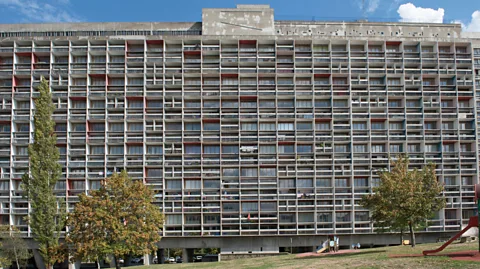 Alamy
Alamy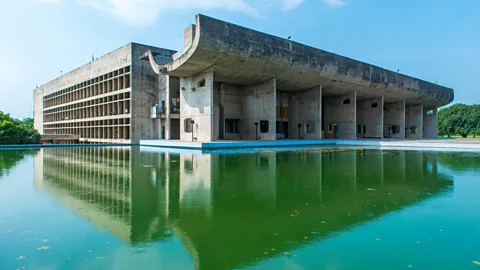 Alamy
Alamy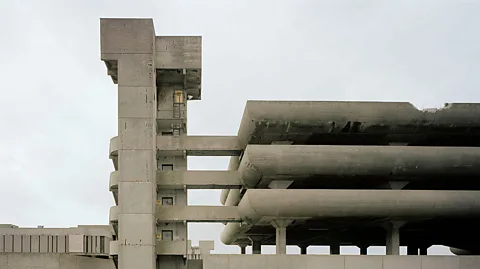 Getty Images
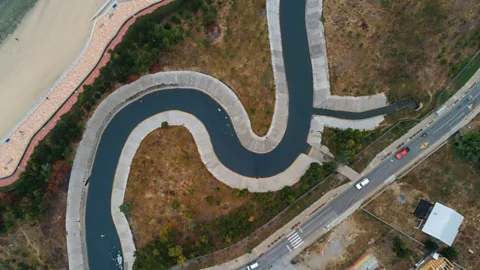 Guillermo Salgado/Getty Images
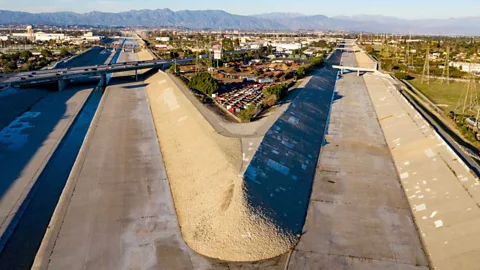 Brian van der Brug/Getty Images
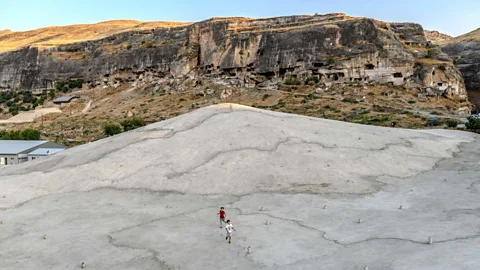 Bulent Kilic/Getty Images
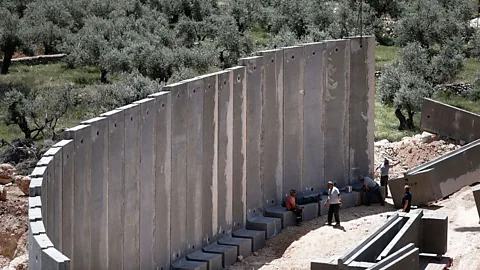 Thomas Coex/Getty Images
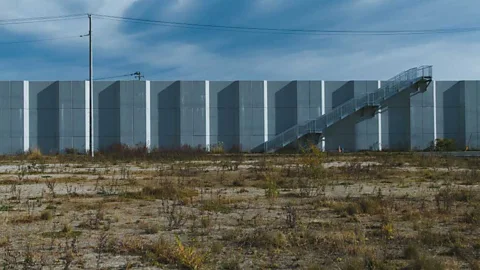 Nicolas Datiche/Getty Images
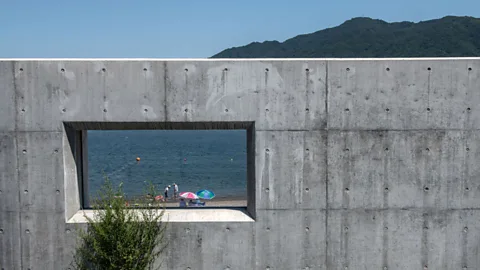 Carl Court/Getty Images
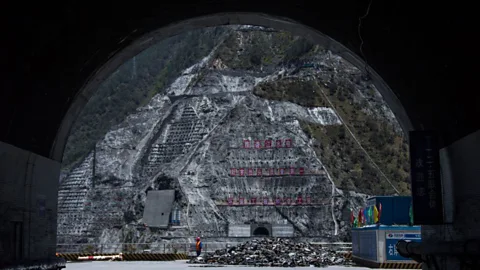 Johannes Eisele/Getty Images
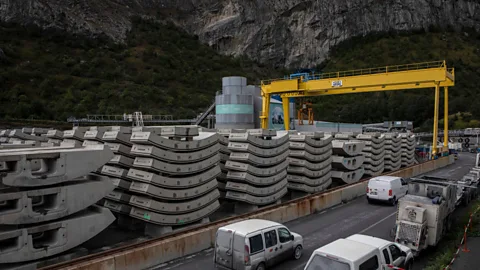 Emanuele Cremaschi/Getty Images
 Munir Uz Zaman/Getty Images
 Andressa Anholete/Getty Images
 Athanasios Gioumpasis/Getty Images
 JuSt-Wemding/Wikipedia/CC BY-SA.3.0
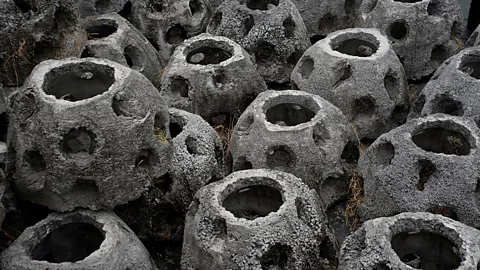 Orlando Estrada/Getty Images
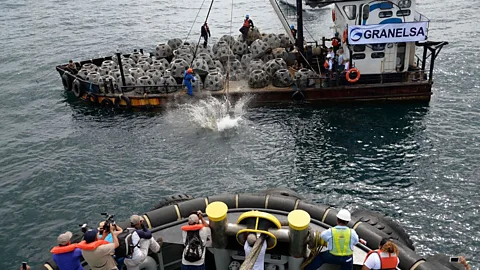 Orlando Estrada/Getty Images
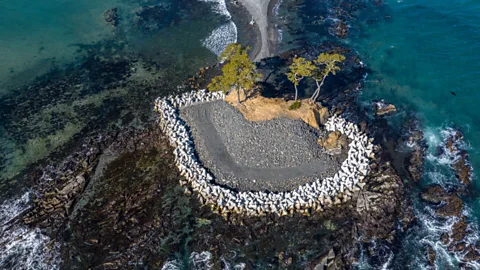 Carl Court/Getty Images
 Getty Images
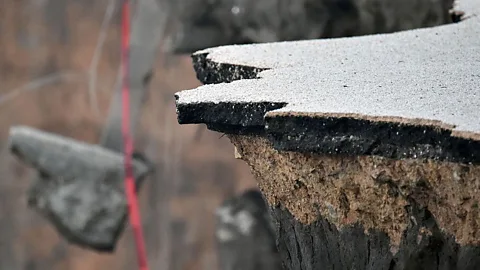 Josh Edelson/Getty Images
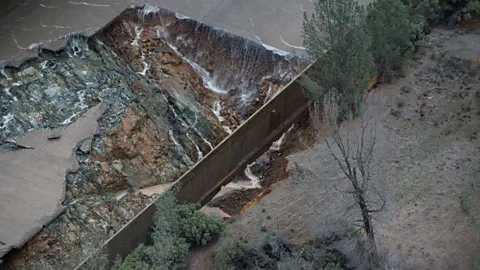 Kelly M. Grow/Getty Images
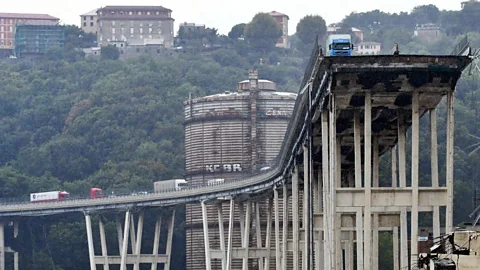 Valery Hache/Getty Images
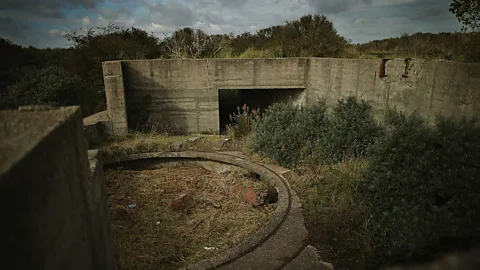 Dan Kitwood/Getty Images
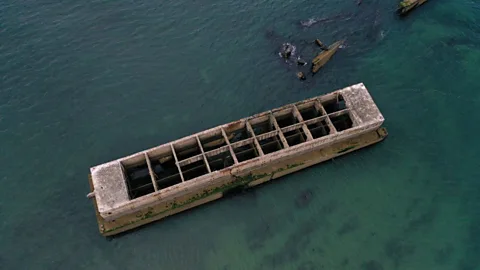 Damien Meyer/Getty Images
 Mike Kemp/Getty Images
*Richard Fisher is a senior journalist for BBC Future. Twitter: @rifish.
--
Join one million Future fans by liking us on Facebook, or follow us on Twitter orInstagram.
If you liked this story, sign up for the weekly bbc.com features newsletter, called "The Essential List". A handpicked selection of stories from BBC Future, Culture, Worklife, and Travel, delivered to your inbox every Friday.
