Trump UK visit – what did Camilla’s wink mean?

 Twitter
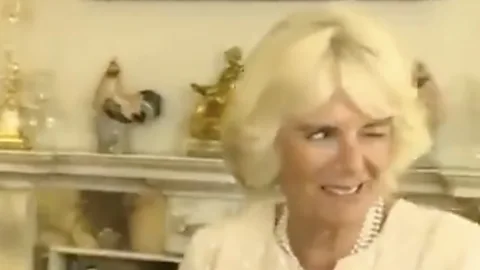
The Duchess of Cornwall went viral this week when she winked after a photo shoot during Donald Trump’s state visit to the UK. Kelly Grovier explores the history of the cheeky gesture.
Winking is harder than it looks. Get it right and you send a secret signal that flickers between flirtatiousness and embarrassment. Get it wrong and you look a little pervy. A successful wink is as elegant as it is elusive, like a one-stroke painting on a canvas of air: its mysterious intent as impossible to prove as the real reason Mona Lisa is grinning.
More like this:
- The hidden figures revealed by art
- Da Vinci’s lost masterpieces
- Stunning depictions of Notre-Dame
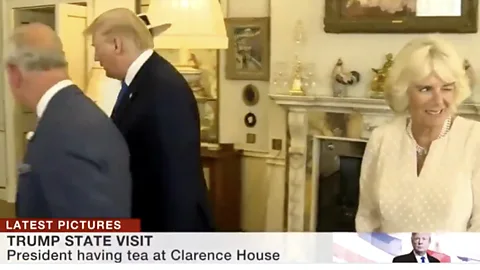
If you want to know how to pull off a perfect wink, the Duchess of Cornwall offered a free masterclass in ambiguous eyelash flashing this week during Donald Trump’s official State visit to the UK. Walking behind the US President and First Lady as they left a photo shoot in Clarence House, Camilla unexpectedly discharged a rapid flex of her left eye’s orbicularis oculi muscle in the direction of her security detail while the cameras were still rolling. It was a wink seen around the world. Within seconds, social media was all atwitter with speculation about what the Royal twitch might mean.
 Twitter
Was it a cryptic code? A quiet cry for help? Alan White, a news editor for BuzzFeed, quipped on Twitter that this was “the wink of someone who’s just stolen [Trump’s] phone”. Charlie Proctor, editor of the monarch-spotting website Royal Central, suggested something comically darker as he imagined an exchange between the Duchess and a Royal Protection Officer: “Camilla, if you are in trouble then wink, we will come and rescue you.”
Quick, silent and discreet, the Duchess’s inscrutable one-eyed squint seemed a kind of quaintly calculated anti-tweet – a mute riposte to today’s endless chatter, uncluttered by the ugly fuss of hashtags and at-signs. With no one expecting an official statement from Clarence House explicating Camilla’s facial flourish, the impromptu tic will likely hang in the air as among the most memorable, if unscripted, moments of Trump’s controversial visit: a fleeting flutter that’s impossible to pin down.
It could hardly be otherwise. Of all the expressions our faces are capable of contorting themselves into, the wink is doubtless the least often captured by artists in the history of image-making. Though many famous portraits seem either on the verge of firing off a wink in our direction, or to be awaiting our reaction to one they’ve just shot our way (Vermeer’s Girl with a Pearl Earring is a repressed wink-grenade ready to explode), full-frontal depictions of the act itself are relatively rare. Even a charming Madonna-and-Child that is attributed to the so-called ‘Master of the Winking Eyes’, an Italian artist active in the city of Ferrara in the 15th Century, is really more a study of giddiness than winkiness as Mary and a ticklish baby Jesus squint jovially, struggling to control an infectious case of the giggles.
Not smiling but gurning
The dearth of winks in art history isn’t surprising. With one lid up and one down, a sitter who is portrayed mid-wink is forever frozen in an ungainly gurn, as if half-blind. No wonder so many portraits that seem at first to be winking turn out to be of individuals who are really just missing an eyeball.
 Wikimedia Commons
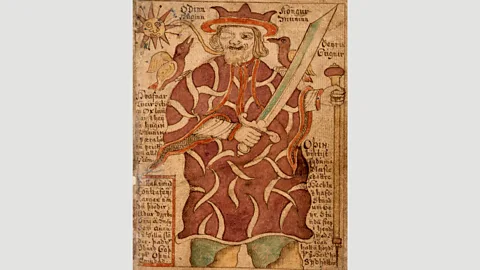
To the uninitiated, depictions of the Norse god Odin, for instance, appear to be flashing the observer a knowing wink in accord with his reputation as a figure who possesses great wisdom. When one discovers that Odin is portrayed this way because, according to legend, he traded his right eye for godlike perceptiveness, the wink doesn’t suddenly disappear from his portrait – it merely reasserts itself as a pitying gesture, acknowledging how stupid we are.
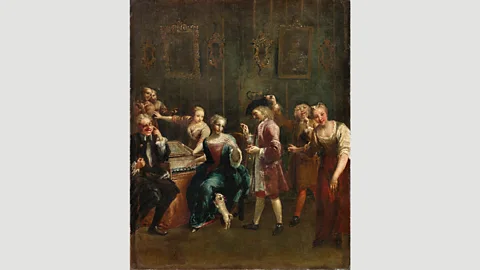
That’s not to say there aren’t any actual winks to be found fluttering on the walls of museums. The Courted Singer,a painting in the Uffizi Gallery in Florence by the Italian Rococo artist Giuseppe Maria Crespi (known by his contemporaries as ‘the Spaniard’), makes ingenious use of a wink to break down the barrier between the looker and the looked-at.
 Wikimedia Commons
On the face of it, the painting portrays the courtship of an aspiring songstress by a wealthy suitor, who tries to buy her affections by dangling before her all manner of expensive baubles. But it’s the wink we’re tipped by the man sitting on the far left of the painting that confirms our suspicions about the purity of the suitor’s motives. By shooting us a knowing glance, this figure bonds with us and brings us into the moral consciousness of the work. It’s the wink that ensures that we too haven’t fallen for the suitor’s superficial charms.
After all, that’s what winks are designed to do: to check our sensibility – to break the spell of nonsense swirling around us. Crespi may well have taken his cue from an early master of busy scenes who was keen to make sure that observers of his work delight in the ludicrous fun he’s conducting without being seduced by the vices his paintings depict.
 Wikimedia Commons
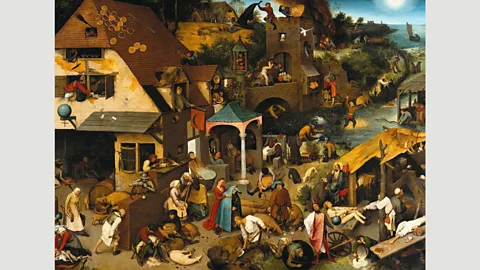
Two centuries before Crespi created The Courted Singer, Pieter Bruegel the Elder summoned a symphony of human folly in a captivatingly chaotic painting known variously as Netherlandish Proverbs and The Topsy Turvy World (c. 1559). A riotous array of foolish behaviour, the painting provides visual glosses on every cryptic adage and saying from ‘the herring hangs by its own gills’ to ‘fools get the best cards’.
 Wikimedia Commons
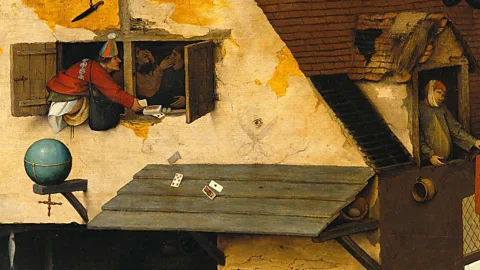
But Bruegel has a problem: how does he ensure we’re with him and not them – that, in the end, we follow him from this photo shoot and not the fools? If everyone on his canvas is a moral moron, whom can we trust? On the left side of the painting, just above the shingled awning on the side of the yellow house, the artist has subtly stitched a secret clue for anyone who can read the writing on the wall: an eye levitating between the open blades of a pair of shears. Known as a ‘snip eye’, the curious Renaissance emoji was understood as shorthand for the act of winking.
Once spotted, Bruegel’s disembodied wink becomes the axle around which our reading (and enjoyment) of every ethically ill-advised action in the work can pivot and twist. His secret snip-eye snaps us out of the festival of foolishness and gives our sensibility something solid to grab onto. Sometimes, when the carnival of crazy gets carried away, we need that.
If you would like to comment on this story or anything else you have seen on BBC Culture, head over to our Facebook page or message us onTwitter.
And if you liked this story, sign up for the weekly bbc.com features newsletter, called The Essential List. A handpicked selection of stories from BBC Future, Culture, Capital and Travel, delivered to your inbox every Friday.
