The kiss has far greater power than many realise

 Vaidas Bucys/Alamy
From Trump and Putin to Klimt’s masterpiece, BBC Culture takes a look at some of history’s most surprising and shocking embraces.
“The kiss itself is immortal. It travels from lip to lip, century to century, from age to age,” wrote Guy de Maupassant. The image of two lovers embracing is the epitome of romantic love, seen in great works of art and iconic photographs from throughout history, but the simple act of affection can have far greater power than many realise. For Valentine’s Day, we looked back into the BBC Culture archive at some of our most popular stories about the kiss, from Gustav Klimt’s shimmering masterpiece to a politically-charged mural that features Donald Trump and Vladimir Putin.
Romantic love or impending doom?
 Reuters/Alamy
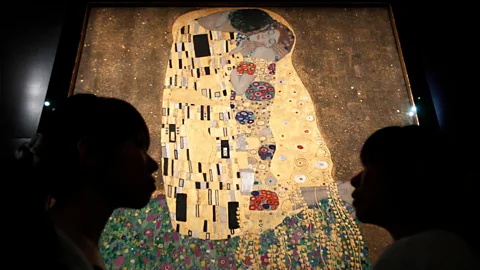
Klimt’s most famous work, The Kiss, has dazzled art lovers for over a century. Regarded as the highlight of his ‘Golden Period’, many look at the painting and see romance, but for some The Kiss represents a much darker vision – particularly when placed in its historical context.
Art’s other famous kiss, the sculpture by Auguste Rodin, is also open to alternative readings. Seen as a “universal representation of sexual infatuation”, it has a dark and complicated origins. Did you know that Rodin’s lovers actually represent a pair of doomed adulterers from Dante’s Inferno? And despite the sinister inspiration behind it, Rodin didn’t consider The Kiss to be provocative – or particularly interesting, dismissing it as “a large sculpted knick-knack following the usual formula”.
The political power of a kiss
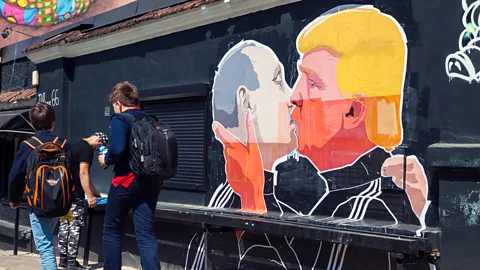
Vaidas Bucys/AlamyA kiss can also still have shock value, from popstars locking lips on stage at award ceremonies to political figures being depicted in an embrace on murals around the world. Last May, a street artist went viral after imagining a passionate embrace between Donald Trump, then a frontrunner for the Republican presidential nomination, and Russian leader Vladimir Putin.
Another kiss made headlines in 2016, and called to mind the work of Bansky, when two police officers got engaged during London’s annual gay pride parade. The image went viral at a moment when the news was dominated by growing intolerance towards minority groups – and just two weeks after the massacre at a gay nightclub in Orlando. Its political power was heightened by worldwide events, but it also showed how far society, particularly in Britain, has changed over the last decade.
A kiss from the future
 Paramount/NBC
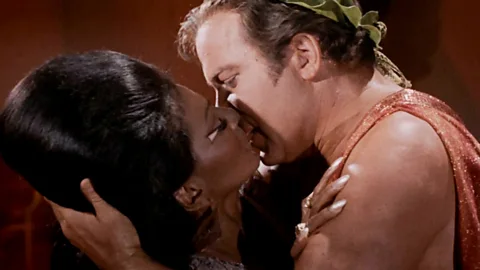
If you needed any more evidence of the power of a kiss, you only need to look to Star Trek. The sci-fi franchise was actually the first to feature an interracial kiss on US television, back in 1968. Star Trek’s creator, Gene Roddenberry, wanted audiences to know that by the 23rd Century tolerance is the norm. “All science fiction is telling two stories: about the world in which it is set and the world in which it is written. And the burdens of 20th-Century America lie heavily in the Star Trek universe,” wrote Natalie Haynes in her July 2016 story, which marked Star Trek’s 50th anniversary.
And if you liked this story, sign up for the weekly bbc.com features newsletter, called “If You Only Read 6 Things This Week”. A handpicked selection of stories from BBC Future, Earth, Culture, Capital, Travel and Autos, delivered to your inbox every Friday.
