The TV shows that have shaped us

 Efe Suárez
From being dismissed as an inferior art form, TV has become our primary pop-culture vocabulary during the 21st Century, writes Jen Chaney.
During much of its 20th-Century infancy and early childhood, television had a bad reputation. Known as a killer of intellects and a gateway to laziness and slothdom, it earned nicknames like "idiot box" and "boob tube". Actors cast in TV shows were considered inferior to those who did movies because cinema was the real art form. (Note: one cannot correctly pronounce "cinema" in this context unless one's nose is turned all the way upward.) A grown adult who knew a lot about contemporary film was a smart sophisticate. A grown adult who knew a lot about television was – to use a term that only a frequent TV viewer could understand – a total dum-dum.
Read more about BBC Culture's 100 greatest TV series of the 21st Century:
Of course, great television was made and seen in the mid-to-late 20th Century, a pioneering period that gave us I Love Lucy and Fawlty Towers, Roots and Brideshead Revisited, Twin Peaks (the original) and House of Cards (also the original). But the prevailing cultural attitude toward the medium was often dismissive, dictated by the idea that TV was lowbrow and that its quality programmes were happy anomalies rather than the norm.
Television and our view of it started to change early in the 21st Century, and now, two decades in, has completely transformed. The way it is watched, discussed, and regarded has done a full gymnastics routine, speeding forward, somersaulting and landing in a different place. Now television is our primary pop-cultural vocabulary, and if you're not paying attention to it, you're the idiot. The transformation, if I may use an image from the movies to draw another completely different television analogy, is akin to the moment in The Wizard of Oz when Dorothy opens her front door and her entire world switches from black-and-white to colour.
To be clear: there is still plenty of extremely silly, lowbrow television, more than we've ever had access to before. I mean, Sexy Beasts not only existed, it was adapted in several countries, then adapted again for Netflix. But because the amount of television available at any given time has swelled so much, there is also more good to great television than there ever has been in the history of the medium. That has changed what the conversation surrounding television sounds like, both in terms of the kinds of stories told and how they're consumed by the public.
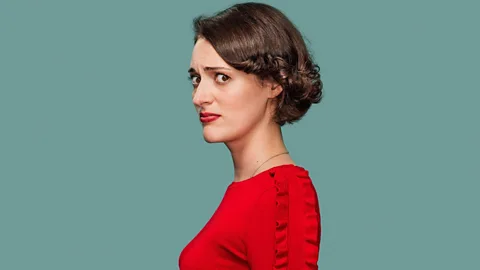
Given its episodic format and the amount of time it affords audiences to spend with characters, television has always been better equipped than film to root around in the thorniness of human behaviour. It just didn't always take advantage of that fact with the frequency that it has in recent years, prompted early on by the existence of one Tony Soprano, whose game-changing HBO drama missed being on BBC Culture's list of the greatest 21st-Century TV series because it premiered in 1999, a year too early to be included. Still, thanks in part to The Sopranos, the list does include series like Veep (No 24) and The Thick of It (No 20), that made us actually enjoy hanging out with corrupt and inept politicians; Fleabag (No 4), which made us not only empathise with a woman who had sinned grievously, but made us actively root for her to sin further by shagging a hot priest (in our defence, he was very hot); and Breaking Bad (No 3), which traced one decent man's full descent into immorality and made us ask the question, "Who among us might, under certain circumstances, become a meth kingpin?" Characters who are complicated, multi-dimensional and not always easy to like are now the norm and not the exception.
 Two Brothers Pictures
While plenty of 21st-Century television coasts by on the familiar – please see the number of Law & Orders that still exist – a lot of it has reinvented traditional formats and subverted expectation. Mad Men (No 2) may have looked like a stylish flashback to the 1960s, but it was actually a drama that revealed the misogyny of the era, which hung as heavy in the air as all that cigarette smoke. The Wire (No 1) was technically a cop show, but really, it was an exploration of how every aspect of society – politics, education, journalism – is complicit in making young black people feel like their only paths to any type of success involves working the corners.
In the 1960s, television gave us a talking horse in the form of Mister Ed, a show that was basically about how funny it is that a horse can talk and only one dude is aware of it. The 2010s gave us BoJack Horseman (No 11), an animated series about a talking horse who lives in a place called "Hollywoo" alongside other humans and anthropomorphised animals while coping with addiction, mental illness and the hypocrisy of the celebrity complex. I don't know that anything more clearly illustrates the difference between early TV and what we have now than the journey from Mister Ed to BoJack.
 Bad Robot Productions
Plenty of unadventurous television still exists, but it's now a much more ambitious medium, particularly from a filmmaking standpoint. Series like Lost (No 19), Game of Thrones (No 5), and Twin Peaks: The Return (No 13) were as vast in scope and bold in vision as any multiplex saga. This is true of so many series now that the idea that film is superior to TV, as was once considered irrefutable fact, sounds ridiculous.
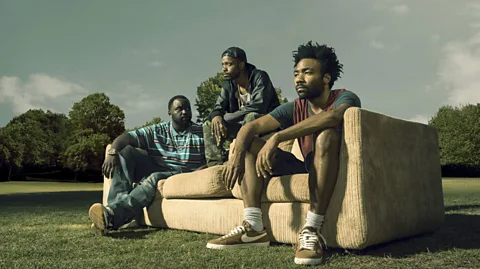
While the shows on this list are still dominated by white people, both in terms of creators and principal characters, television has begun to reflect far more perspectives than it once did. That this top 50 list includes a series about sexual assault written, co-directed and starring a black woman (I May Destroy You – No 6), a dramedy about the many facets of living and hustling as a black man in America, created by a black man (Atlanta – No 14), and a Spanish-language crime-drama, created by a man from Spain (Money Heist – No 43) is a testament to the notion that more voices can be heard on television in the 21st Century. That there aren't more examples like these speaks to the additional progress that needs to be made.
 FX Productions
But perhaps the most marked change for the average person is how differently we consume television now than we did even 10 or 15 years ago. Once upon a time, many of us watched TV in a casual way. While we had certain shows that we made sure to never miss, we often would pick up the remote during a spare moment and just flip around. Now we rarely flip. Watching television requires planning. It involves lists. It means staying on top of what to watch so we don't feel left out of the conversation.
That's the key part: the conversation. Arguably more than any other element of pop culture, television is central to the national and global conversations we have about entertainment and art. You can miss a movie in a theatre or an album drop or a book release without suffering from major FOMO. But if you weren't watching Game of Thrones during its run – or more recently, you haven't been watching Squid Game or Ted Lasso – you immediately feel left out of some vital experience that everyone else is having without you.
We don't just watch TV now. Many of us study and dissect it by reading recaps and essays. We discuss it with a fervour that we can rarely muster during book club meetings. We get into heated arguments on Twitter about why a certain character made a certain decision in a certain episode as though we are talking about misguided choices made by members of our own family. We are invested in TV to a degree that we haven't been before. If you don't agree, just bring up the name Nate among a crowd of Ted Lasso fans and watch the back-and-forth it provokes.
Even though we're all watching at different times and at different paces, television, more than ever, acts as the entertainment glue that binds us and, for all the reasons mentioned above, the art form that most readily provides a window into the experiences of other human beings. While television has grown up, thanks to the unfurling of more original programming on even more streaming platforms, it also seems to still be growing. Because of that, and the aforementioned heightened sense of ambition and narrative risk-taking in the medium, it doesn't feel like TV has reached its potential yet. Maybe that's what makes television, at this moment in a 21st Century that has often been disheartening on other fronts, so appealing. When we watch television, we see a place where possibility still exists.
Read more about BBC Culture's 100 greatest TV series of the 21st Century:
– The 100 greatest TV series of the 21st Century
Love film and TV? Join BBC Culture Film and TV Club on Facebook, a community for cinephiles all over the world.
And if you liked this story, sign up for the weekly bbc.com features newsletter, called The Essential List. A handpicked selection of stories from BBC Future, Culture, Worklife and Travel, delivered to your inbox every Friday.
