This is where the real profit in politics sit

 Getty Images
Betting on a Trump win? Or a Brexit? Experts say there are clever ways to benefit from the swirling political storms around the world.
As entertaining as it is to watch the US presidential election unfold, whoever wins will have a significant impact on the world beyond foreign policy. Global investors, in particular, are waiting anxiously to see what happens as the next president could ultimately dictate how well sectors, such as defence and healthcare, fare in the future.
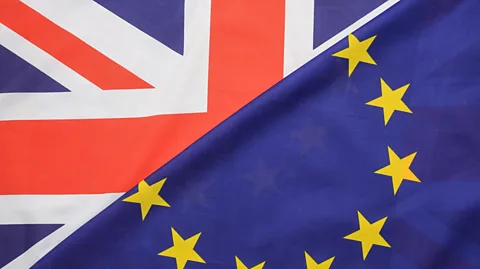
Meanwhile, in Europe, talk of Brexit — whether Britain will exit the European Union — has already sent shivers through the markets, devaluing the pound.
From growth policies in China to debt-ceiling debates in America, what happens in back-rooms and parliamentary floors in industrialised nations often affects investment portfolios directly.
People often think that stocks rise and fall purely on a company’s revenues and earnings. While that does play a big part in how markets move, people often underestimate the impact political decisions have on prices.
 Brett Carlsen/Getty Images
For astute investors, politics can present investment opportunities. Choose the right outcome and you could profit handsomely. But if you’re on the wrong side of history, you could be out of luck.
Uncertainty and the long-term game
In many cases, political-related market movements happen extremely quickly. Whenever Janet Yellen, America’s Federal Reserve chairperson speaks, markets react across the world, but you’d need to invest with Usain Bolt-like speed to take advantage of that kind of change.
Instead, investors should concern themselves more with the long-term impact of a political outcome. For instance, no matter who becomes president, those interested in investing in the US should expect a weak post-election year if history is any indication. Since 1929, the Standard & Poor's 500 Index has climbed, on average, just 1.58% during a new leader’s first term, according to a paper written by Peter Lee, an analyst at UBS. Markets rise the most during the final year of a president’s first four-year term, according to financial information provider S&P Capital IQ.
Why the difference? Uncertainty. You can't be quite sure how a president will act in his or her first term, but it’s unlikely that an incumbent will do anything drastic when he or she is trying to win another election. It’s the same thing with economic data, interest rate moves and policy changes: politics often creates a lot of uncertainty and that tends to move markets both up and down.
 Andrew Renneisen/Getty Images
“Uncertainty makes investors want to get a higher return for any perception of increased risk,” said Mark Haefele, the Zurich-based global chief investment officer at UBS Wealth Management. “Anything that throws uncertainty into the fortunes of a company tends to have a negative impact on the market, at least until more facts come through.”
Betting on Brexit
Investors who have an opinion on how a pressing political issue might resolve itself could make money investing in the sectors or markets that would benefit from a particular outcome.
At the moment, the June 23 Brexit referendum to decide whether Britain will remain a member of the European Union is causing consternation with investors. The FTSE 100, Britain’s stock market, is down 2.4% year-on-year, and while there are many reasons as to why it’s in the red, the uncertainty around what might happen if Britain leaves the EU is weighing on stocks, said Julian Jarmoszko, European equities analyst for S&P Global Market Intelligence.
Getty ImagesIf Brexit does occur, the pound will likely fall, he said, and that will give export-driven companies a boost. “If most of their inputs are from the UK, but they [sell] outside, then they’ll have pricing power,” he said. Industrial companies, IT development operations and goods and services businesses could all benefit.
On the flipside, a number of sectors could suffer. If the pound falls, domestic retailers and supermarkets could get hurt as the goods they’re buying from outside of Britain will now be more expensive. That cost would get passed onto consumers. It’s also possible that population growth will slow as it could become harder to move to the country due to less-open borders. That would result in fewer people spending money, which would impact companies across the board, Jarmoszko said.
Those, however, who think that Brexit won’t happen might be better off buying an exchange-traded fund that tracks the FTSE 100 as the British market as a whole will likely get a boost if the referendum comes back with a “No” vote, he said.
Election investing
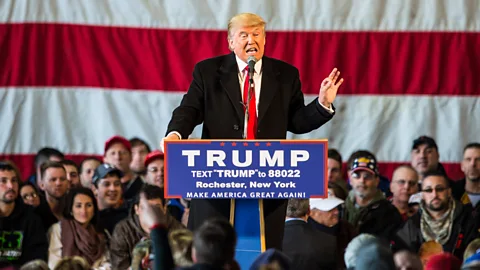
Those watching the US election also have a choice to make: Republican or Democrat and, more specifically, Trump, Cruz, Clinton or Sanders. In a conference call in early March, Jeffrey Gundlach, founder of Los Angeles-based Doubleline Capital, said that a Trump win would be a boon for the defence sector, but it would hurt industries involved in trade.
“Donald Trump… is talking a lot about tariffs and protectionism, which would not be helpful, clearly, for global trade,” he said. “But he said he's going to build up the military tremendously. So, I expect a lot of fiscal stimulus for the military if Donald Trump were to win.”
If Ted Cruz wins, the energy sector could get a boost. He’s said that, if elected, he would “approve pipelines across the country” and he’s criticised Barack Obama for not backing the Keystone XL pipeline.
Any Republican win would have a negative affect on the healthcare sector. Right now, the sector has gotten used to Obamacare and many companies are benefiting from increased coverage, said Haefele. If Cruz or Trump win and reform the system, as they’ve pledged to do, then the industry’s stocks could fall.
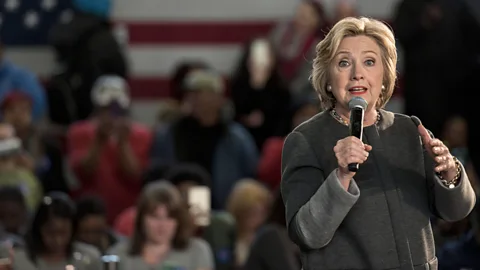
A Clinton win likely wouldn’t have as big of an impact on the market, said Haefele. He thinks investors are expecting her to win, which is why markets aren’t as volatile as one might expect them to be with all of the rhetoric being tossed around during the campaign. “Many people are betting on on Clinton,” he said. “They feel she’s a fairly well-known quantity and the status quo.”
One sector that could benefit from a Clinton victory is solar. She has said that she wants to install 500 million solar panels across the country by 2020, which would be good news for solar energy operations.
 Eric Thayer/Getty Images
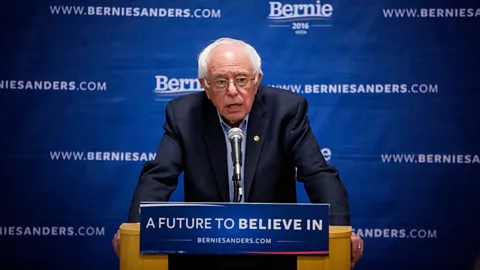
And if Sanders wins, the financial sector could be in trouble as he has said that he’d like to break up the banks. Some experts, though, think smaller financial institutions could benefit if the larger companies have less power.
Political betting
There’s one other way to play the political game: gamble directly on an outcome. Websites such as Ireland-based sports betting site Paddy Power and London-based Ladbrokes allow UK citizens to put money on the US election, the Brexit referendum and other political events.
It’s similar to betting on sports, said Rory Scott, a spokesperson for Paddy Power. You choose a side and then win or lose. With Brexit, there are 4 to 11 odds that Britain stays within the EU, meaning that a $100 bet would net you $136.36. Odds of an exit are 15 to 8, so that $100 bet would turn into $287.50 if the vote comes back as a “Yes” to leaving.
 Christopher Furlong/Getty Images
When it comes to US politics, Clinton is currently favoured to win with 2 to 5 odds. Bet $100 and you’ll get a total of $140 back if she wins. At 13 to 2 odds, a Trump victory would turn that $100 bet in $750. If you really want to make a gamble, you can bet on a Mitt Romney presidency. He’s not running, but could still, theoretically, jump into the race in an open Republican convention. If that happens, at 200 to 1 odds, that $100 wager would become a whopping $20,100.
Scott said that this is mostly for fun — don’t bet your life savings on a Clinton or Trump victory. While stock picking comes with risks, too, equities won’t go to zero if your candidate of choice wins or loses. If your Paddy Power bet doesn’t go your way, you will be left with nothing.
For those who do want to try and take advantage of political-based market moves, Jarmoszko said to stick to high-quality companies, think about which outcomes will impact markets long-term and then hope for the best.
This story was produced under the BBC's guidelines for financial journalism. A full version of those guidelines can be found at bbc.co.uk/guidelines.
