'Greenhushing': Are businesses staying silent about climate pledges?

 (AFP/ Getty Images
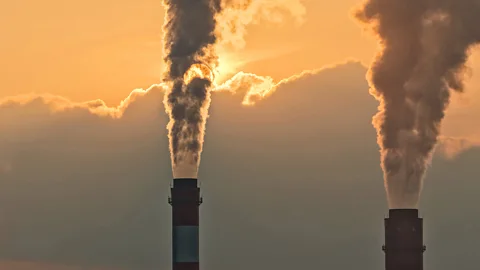
With Trump's call to "drill, baby drill" and sweeping changes to environmental policies, it's been suggested that some companies are talking less about their climate pledges. But the truth behind the trend is much more complicated than it first seems.
It happened gradually, then suddenly.
An alliance of banks dedicated to cutting greenhouse gas emissions lost some of its biggest members near the start of the year, just before Donald Trump took office. A few months later the Net Zero Banking Alliance abandoned its most ambitious goal, a pledge to limit global warming to 1.5C.
Then in early October the alliance, which was set up in 2021 and had nearly 150 corporate members at its peak, voted to disband entirely.
On the surface its dissolution seemed linked to the sweeping changes in environmental policy filtering down from the White House - Trump’s exhortations to "drill, baby, drill" and the Republican Party’s battle against "woke" companies and institutions.
A wave of coverage suggested that the US president was giving cover to companies to end their green pledges. And several headlines suggested that others were keeping their climate polices on the down-low to avoid the president’s wrath.
The latter trend has been dubbed "greenhushing" – deliberately downplaying climate pledges. But experts and researchers working in the field say the full picture is much more complicated, and pre-dates last year’s US presidential election.
In fact, the idea of greenhushing first got widespread popular attention back in 2022, when Switzerland-based climate consultancy South Pole identified it as a trend in their annual report, finding that a quarter of the companies they surveyed set "science-based emission reduction targets" – but did not plan to publicly talk about them.
It’s been a running theme since then. In early 2024 – a full year before Trump took office – South Pole found that nearly half of companies were struggling to communicate their climate pledges, due to new regulations, compliance schemes and lack of confidence.
South Pole’s most recent report, released earlier this year and focused on financial institutions, notes that general risk statements have supplanted more detailed climate risk plans. But tricky regulation – not pro-oil drilling policies – might be to blame. Companies, the consultancy says, "navigate a complex landscape where they can be sued for saying too little – and sued for saying too much."
"If we zoom out a little we can say that increased scrutiny has pushed companies to be more cautious and evidence-based in their claims – and that is positive," says South Pole’s Nadia Kähkönen.
"But it may be that the pendulum has swung a little bit too far, and some are choosing to stay quiet."
South Pole points out that greenhushing has the potential to "undermine trust and transparency".
But they also found that around half of financial companies plan to actually increase their communications about their net zero carbon strategies – complicating the idea of a green hush falling over the corporate world.
At the same time, many companies appear to be expanding rather than contracting their green pledges. Researchers at Harvard recently examined 75 top global firms before and after last year’s US election. Just 13 percent scaled back their sustainability efforts or their public messages on green issues, while 32 percent actually accelerated their efforts.
 Getty Images
Accounting giant PwC found similar figures in its latest State of Decarbonization report, which found that more smaller companies are making climate pledges and that in general companies are standing by their plans even after changing CEOs – signs, the firm says, that sustainability policies are becoming a permanent fixture rather than a passing fad.
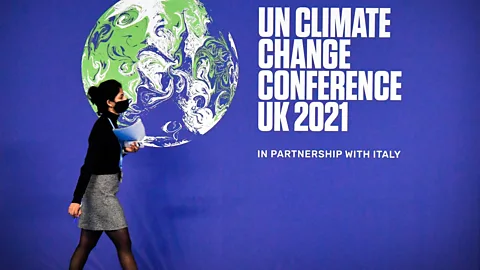
Experts identified several possible reasons driving the up-and-down nature of company communications on green issues – including a post-pandemic zeitgeist for climate action and momentum from COP26 held in Glasgow in November 2021, which created a buzz that has faded over time.
 Getty Images
And those companies that are keeping quiet usually have specific reasons for doing so – notably, the fear of being accused of "greenwashing" – putting out marketing spin designed to make a company seem more environmentally friendly than it actually is.
Last year, researchers at the University of Portsmouth and the University of Bath in the UK examined hundreds of hotels and hospitality businesses and found that greenhushing was rife – with few of the firms talking very much at all on their public social media channels about their environmental initiatives.
When they drilled down deeper, they found that the fear of being public accused of being "greenwashers" was a prime factor.
"Managers might think that sustainability is an important part of the business," says Marta Nieto-Garcia, a senior lecturer in marketing at the University of Portsmouth and one of the researchers on the project. "But the way they communicate their policies isn’t clear."
Some managers also lack confidence about the efficacy and details of their green policies.
"They might be worried that they can’t quantify, say, exactly how much energy used by their hotel is being produced by solar panels," Nieto-Garcia says. "If they don’t have that data, they’ll be reluctant to talk."
With that in mind, US environmental policy has definitely had some effect, according to Joshua Hilton, a professor at Grand Valley State University in Michigan who's studied greenhushing.
"There’s been some backlash to ESG (Environmental Social and Governance policy) and that’s certainly driving what we’re seeing in the US," Prof Hilton says. "Federal policy has changed remarkably quickly from pro-ESG to anti-ESG" under the new Trump administration.
But he too points to the complexity of regulation, not just from the US federal government but the 50 different states, where hundreds of anti-ESG bills have been proposed over the last few years.
"Firms really care about the largest states, and for example, we have Texas and California pulling in opposite directions on ESG," he says. "It creates a confusing environment."
In Europe, companies will be grappling with the EU's Green Transition Directive which comes into force next year which includes anti-greenwashing provisions as well as requiring more labelling about product sustainability.
Prof Hilton also points out that some greenhushing can be chalked up to specific circumstances.
In one example he cited from nearly two decades ago, computer chip maker AMD paused highlighting its membership in the Dow Jones Sustainability Index after being criticised for the environmental impacts of a new corporate campus in Texas. After the controversy blew over however – and after the company made further pledges on renewable energy and other environmental policies – AMD once again started talking about its membership in the index.
"When there’s stakeholder activism, lawsuits, or boycotts, it can cause firms to go silent for a while," he says.
And to complicate the picture further, other studies have suggested that the extent of greenhushing has been exaggerated.
The NewClimate Institute, a policy and research non-profit based in Germany, analysed 70 companies' climate policies and found major companies "retracting unsubstantiated carbon neutrality claims".
NewClimate researchers argue that the debate over the extent of greenhushing is a red herring. Instead, says analyst Thomas Day, corporations are becoming more realistic about their climate goals, and many are shifting from purchasing carbon offsets to focusing on reducing emissions.
"About two or three years ago there was a real shift in the understanding of how credible climate neutrality and carbon neutrality claims were, and many were found wanting," he says.
 Getty Images
NewClimate says less hot air about potentially weaker climate policies should be welcomed as a step towards greater transparency.
But despite the varied views on corporate communications, there is broad agreement among experts that sustainability is increasingly being folded into corporate policy and boardroom decision making.
More like this:
• Defying cocoa loggers in the Amazon
• The scramble for Greenland's rare earths
• How China won the world's EV battery race
While political uncertainty looks set to continue, any period of silence on climate policy might well be a blip rather than an indication of long-term direction of travel. In general, consumers are increasingly seeking out greener companies, and sustainability can benefit both the bottom line and the greater good.
"Greenhushing is generally a short-term strategy," says Hilton. "In the long term it doesn’t really make sense."
--
If you liked this story, sign up for The Essential List newsletter – a handpicked selection of features, videos and can't-miss news, delivered to your inbox twice a week.
For more on business and beyond, follow us on LinkedIn.
