Do mocktails scratch the Dry January itch?

 Alamy
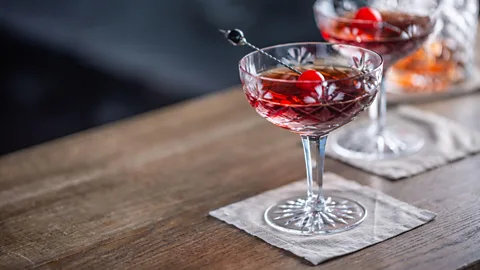
AlamyMany people abstain from drinking to kick off the year. Non-alcoholic cocktails are a growing option – yet they're more than just a substitute for the temporarily sober.
For Chicago comedian Kristi Durkin, 1 January ushered in a wave of new year's excitement – and a 31-day alcohol-free challenge. "Everyone on the internet is going sober," jokes Durkin. "Everyone is drinking, like, tart cherry juice, and I'm really susceptible to internet trends."
Durkin, 26, has latched onto Dry January, an annual challenge popularised by advocacy group Alcohol Change UK. Each January, participants commit to a month without alcohol, ostensibly to "dry out" after the holidays, and explore the merits of a sober lifestyle
There's widespread interest: the hashtag #DryJanuary has more than 425 million views on TikTok and 529,000 posts on Instagram, and business-intelligence company Morning Consult estimated that around 15% of US adults participated in Dry January last year.
In contrast with past years, Dry January doesn't necessarily mean fully ditching swanky mixed drinks. There are many non-alcoholic options on the market, particularly in cans, as the "mocktail" market surges.
US demand for non-alcoholic canned cocktails grew by 4% year over year, according to a study from Amsterdam-based behavioural research company Veylinx, seen by the BBC. Even big brands want in on the boom; last year, US beverage company Molson-Coors launched its first non-alcoholic cocktail, a canned concoction called Roxie. Meanwhile, a swath of emerging companies are offering upscale botanical spirits without alcohol.
 Andrew Kenney
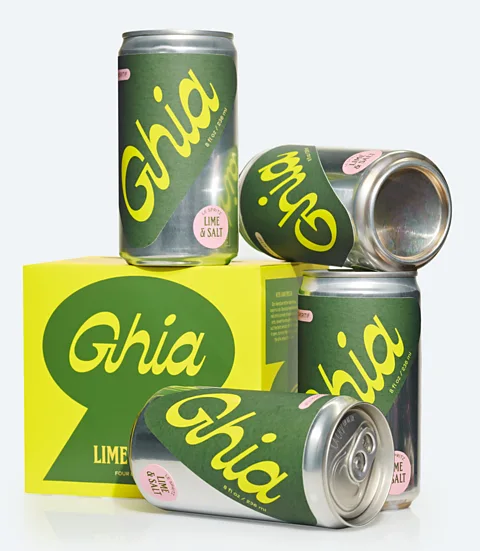
Some emphasise flavour, like California-based Ghia. Launched in 2020, the company serves up an artfully designed, booze-free apéritif with a "vibrant, fresh and satisfyingly bitter" taste meant to appeal to people who want a complex alternative to a cocktail – something more sophisticated than, say, a diet cola.
Other brands look to substitute alcohol for purported benefits, promising nutritional or mood-boosting enhancements. This is the slant of Kin Euphorics, a brand co-founded by American supermodel Bella Hadid, which touts "natural ingredients that nourish the mind and body".
Yet for all the options, Dry January participants may not be making a one-for-one swap from cocktails to mocktails, says Michael Bevan, head of marketing for Veylinx. The imbibers going sober for a month may be less interested in shifting to alternatives, and more interested in muscling through a month without alcohol.
"I don't need something that tastes like alcohol to trick myself," says Durkin. She says she'd rather save money and drink a fizzy non-alcoholic seltzer like Topo Chico in place of alcohol. "It's more about putting something in my hand to sip."
 Courtesy of Kristi Durkin
Along with consumer tastes during a month of abstention, one barrier to mocktail adoption may be the cost. For those who see Dry January as a way to save money, they may not be the best option.
Ghia's Apéritif Duo, which includes two 500ml bottles, retails online for $75 (£59); in contrast, a 750ml bottle of Aperol, an alcoholic apéritif, runs about $30 (£24). Beyond canned cocktails, another emerging category in non-alcoholic alternatives is spirits. California-based Monday, which makes zero-alcohol whiskey, mezcal, gin and rum, offers a Dry January pack of four bottles for $172 (£135), discounted to $130 (£102) as of this writing. (These high prices are not always the case – non-alcoholic beer from multinational beverage company The Athletic is priced comparably to other craft brews.)
Some industry experts, however, say the point of high-end mocktails isn't to offer a direct swap for alcoholic cocktails, or to be a budget option – whether during Dry January or in general.
Hector Diaz, the co-founder of In Good Spirits, a non-alcoholic bar and bottle shop in Chicago, suggests that these drinks are more about inclusivity. "It's less about replacing [alcohol] entirely and more about filling a need," says Diaz. "A lot of consumers that don't drink in general have lacked options in the past, and for them to have them now is really great."
Come February, Dry January practitioners may head back to alcohol, whether they're spending on canned cocktails, spirits or other beers, but Diaz is happy if the experiment teaches them something about their habits and attitudes around drinking.
"A lot of folks [visiting our store] aren't necessarily going to stop drinking alcohol, but they want to be more intentional about their choices – even if that means they're taking a quick break from alcohol during a night of drinking," says Diaz. "It's all about balancing themselves out."
Ultimately, mocktail companies may not find their prime market in temporarily sober participants, who are looking to scratch an itch for alcohol. However, the overall demand for these beverages exists – and it's growing, no Dry January needed.
