How Hong Kong is modernising love hotels

 Alamy
AlamyWith the majority of young people living with their parents, Hong Kong’s couples are turning to alternative means of having a private life.
Not far from Hong Kong’s Victoria Harbour, two university students were feeling excited and a little nervous as they stood outside an old commercial building with a neon-lit sign, just after dawn.
Two weeks into dating, the now 20-year-old Waddy and 23-year-old Moomoo found themselves unwilling to separate after talking until the early hours of the morning. Like the majority of other young Hong Kongers, they both lived with their parents, so going home was not an option if they wanted some alone time.
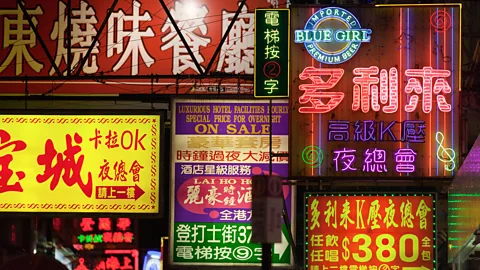
Their solution was to go to one of Hong Kong’s hourly love hotels. Popularised in Japan, short-stay hotels began to pop up in Hong Kong in 1960s. There are about 300 love hotels in the city, according to Hong Kong Guesthouse Association founder-chairman David Leung, ranging from slightly seedy to discreet and demure. And in one of the most densely populated cities in the world, these hotels offer something that is hard to come by in Hong Kong – affordable privacy.
 Alamy
Alamy60-year-old Cheng has been running her love hotel for more than 20 years. Her 18-room guesthouse is located in Mongkok, the busiest commercial district for local people. She says lack of space at home has long been an issue for many. “Some are even married couples who want to have some privacy to themselves at the weekend, when it is too packed at home,” says Cheng.
Although traditional love hotels are not a new phenomenon in Hong Kong, for a younger generation, they are becoming popular for reasons beyond passionate liaisons. Recently, a new breed of self-check-in hourly hotels has started to emerge. With remote check-in, advance booking and in-room facilities such as TV streaming services or video games, it appeals to young couples who want to just hang out as well as have alone time.
The next generation
After visiting an hourly love hotel for the first time, Waddy and Moomoo started going from once or twice a week to sometimes three times a week, prompting them to start reviewing both hourly love hotels as well as traditional hotels on social media.
“We have reviewed over 90 hotels in the city so far,” Moomoo adds and currently, their page has more than 20,000 followers.
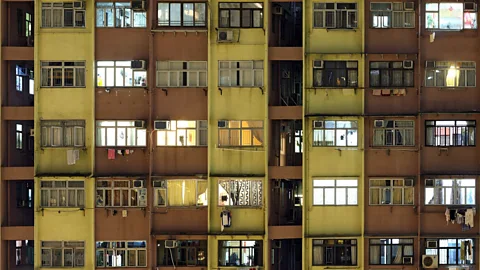
The popularity of their reviews is perhaps not surprising. Nine out of 10 young people aged between 15 and 24, and six out of 10 Hong Kongers aged between 25 and 34, are living with their parents, according to government data in 2019.
Young people complain about the lack of space in the city, which is ranked as the least affordable housing market among 309 metropolitan areas in eight countries. With a median monthly income for these age groups ranging between $13,000 Hong Kong dollars ($1,677; £1,332) to $19,300 Hong Kong dollars ($2,490; £1,978) it takes decades for the city’s young people to earn enough to afford their own living space.
 Alamy
Alamy“We want to buy an apartment, but we don’t think it’s possible,” says Moomoo. “The property price is too high. We will still live with our parents. After you save enough for deposits, you still need to pay mortgage loans for years.”
Being intimate with your partner at home, with only thin walls separating young couples and their parents, is a concern to most. A survey from local sex-education NGO Sticky-Rice in 2018 revealed that more than 70% of Hong Kongers find it difficult to seek a place for sex, and most visit hourly love hotels up to five times a month.
Dr Susanne Choi, a sociology professor at the Chinese University of Hong Kong specialising in gender, family and sexuality, said the city’s people have “no choice” but to visit love hotels. “The property price in Hong Kong is very high. In other countries with lower rent and property price, young couples or people are used to [moving] out, which is an indicator of transitioning into adulthood,” says Choi.
Going digital
In a city housing more than 7.5 million people, the older-style hourly love hotels do not always have available rooms. Young couples visiting on impulse would often find it difficult to be discreet, according to millennial self-check-in love hotel owner Jensen Tse.
“Some [traditional] hourly love hotels charge arbitrarily. And on some occasions, you have to line up for hours – it’s even more embarrassing if you bump into someone you know,” says Tse, who started his business Mansion G in a busy commercial district in Hong Kong, with a few university classmates in 2018 after studying hotel management.
AlamyMany clients of self-check-in love hotels make a booking online with a fixed price. Mansion G’s customers, upward of 90% of whom are younger than 30, usually find their services on social media platforms, and send the direct messages via social media. They make a digital payment before receiving a passcode for the door to the hotel.
One of the main attractions of self-check-in hotels is that customers don’t have interactions with others during their stay. At Fortress Hill No. 7, another self-check-in love hotel in the city, owner Yee changes the passcode for each room’s lock via her phone at home.
For Hong Kong couple Wayne, 26 and Grace, 27, finding privacy while living with Wayne’s parents is tricky. “We cannot make any noise [during sex], because we all live together and the space is limited. In love hotels, you can hear the noise from other rooms, but you don’t know who they are, so it’s less embarrassing,” says Wayne.
 Alamy
AlamyThe two prefer going to self-check-in love hotels, because these are often owned and operated by young people who understand their demographic and know that it’s not just about sex. Oftentimes, what they are offering is simply a place to spend time together. “They include Netflix or video games in the room so couples can enjoy spending time together. If we go to traditional love hotels we only watch Netflix on our phone. These hotels offer private space that feels like a home to a couple,” adds Wayne.
Waddy and Moomoo see similar demand from people contacting them via their Instagram review page. “The people who [direct message] us usually ask if the hotels we recommend are equipped with a kitchen or a bathtub – opposed to the older generation, our generation want to spend quality time together,” says Waddy. “Sometimes we just want to cook together, as dining out each date costs quite a lot.”
In Cheng’s traditional hourly love hotel, some twentysomethings also book a room together for some private time without being intimate.
Business amid Covid-19
During the coronavirus outbreak in February and March, upscale self-check-in love hotel Up-otel suffered a plunge in occupancy rate, renting only three rooms some days in their 25-storey hotel building. Hong Kong Guesthouse Association’s Leung also said that the virus took away about 70% of the usual business in hourly love hotels.
During the third wave hitting the city particularly hard, Cheng said her business has lost at least 80% of customers. She added that they might have to consider layoffs and even shut down two-thirds of her business to survive. She urged the government to provide more subsidies for the guesthouse industry that deals a blow amidst the shutdown of global travel due to the pandemic.
 Alamy
AlamyAt the time of this writing, Hong Kong is nearing the end of a third wave of local transmission cases, which prompted the strictest social distancing measures the city has implemented. The city has been praised for its containment efforts, as the general public have been aware of public health and the wearing of face masks following the 2013 SARS outbreak. The citizens had started wearing face masks in public months before it was recommended by the WHO.
Yet, for self-check-in love hotels like Mansion G and Fortress Hill No. 7, sales surged among locals during the waves of outbreaks.
Fortress Hill No. 7’s founder Yee says that after getting almost no customers in January, business picked up and in February and March, and they started getting 10 customers a day – twice what they would normally get. The third wave did not affect its sales, as students and white collars still sneak out to have an intimate time. With a dinner-time ban on restaurant dine-in, Tse said he actually had more customers, with half booking a room just to have space to enjoy their food.
Even without the worrying backdrop of a global pandemic, the continued use of love hotels highlights the lack of personal space for Hong Kongers. But with people spending their hard earned cash on seeking out that space, it also shows the creative lengths people will go to find it.