How to not embarrass yourself in a British pub

 Alamy
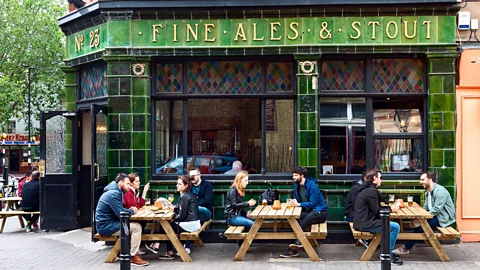
AlamyA British pub may look informal but it runs on strict rules, from invisible queues to round-buying, tipping and last orders.
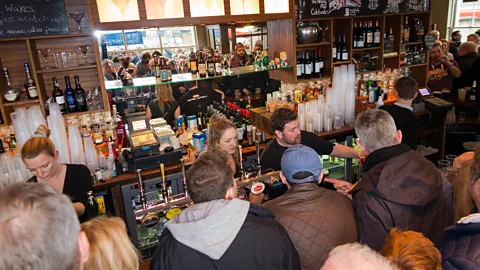
It's standing room only on Saturday evening at The Guildford Arms, a Victorian-era pub just off Princes Street in Edinburgh. Beneath its ornate ceiling, revellers – three-deep – press towards the wooden bar where ale pumps gleam and bartenders move briskly between pints, wine glasses and whisky measures. There's the loud gossip of friends, the awkward chit-chat of hovering tourists, and every so often, the sound of a bartender shouting, "Who's next?"
To an outsider, the British pub can look like cheerful chaos. There's no host, no visible queue and very little explanation. But the whole ecosystem runs on elaborate, unspoken rules. Get them wrong, and you risk irritating staff, baffling locals or marking yourself instantly as a first timer.
This is not a guide to what to drink; it's a guide to how to behave. These are the most important pub rules Brits rarely state out loud but generally expect everyone one understand.
Rule #1: There is no queue – but there is order
At a busy British pub, one of the first things visitors notice is a lack of a line. People jockey for position at the bar and drinks are ordered in a seemingly haphazard, territory-grabbing squeeze. To the untrained eye, it can look like a free-for-all – but there is an inferred, yet rigorous system in place.
Most pubs operate on a mental queue. The bartender is usually keeping track of who arrived when, and so are many of the customers. Your job is not to barge forward or out-manoeuvre everyone else. It is to work out where you are in the invisible order, wait your turn and be ready when it comes.
 Alamy
AlamyThe trick is to be confident, not cocky. Stand where staff can see you, make eye contact and know what you want to order. If one of those drinks is a Guinness, say so upfront rather than tacking it on the end: it takes longer to pour and needs time to settle. Let anyone who was there before you go first – that small act of fairness matters more than you might think. Still not getting served? Upgrade to a half-smile or eyebrow raise to communicate silently with the bartender.
"Just respect your fellow pub-goers and bar staff, it's quite simple," says Gillian Hough, vice-chair of Camra, the Campaign for Real Ale. "Sometimes staff magically know who arrived at a busy bar first, but often it requires honesty from you, the customer. Be patient and wait your turn."
Rule #2: Order at the bar, unless someone tells you otherwise
In other parts of the world, people are used to opening a tab, settling in and ordering through waitstaff. In a British pub, the default is simpler: you go to the bar.
That remains true even if you are sitting at a table and even if the pub serves food. Unless a member of staff explicitly says table service is available, assume it is not. If you wait to be served where you are sitting, you may be waiting a long time.
Quick pub survival guide
- Be aware of the order of people waiting to be served
- Order at the bar unless someone tells you otherwise
- Don't wave money, click your fingers or try to hack the system
- Buy in rounds – but know when you can opt out
- Don't expect American-style tipping or tabs
- Know the signals for last orders and leaving time
- Respect quizzes, live music and pub events
- Keep children close and well-behaved
That does not mean every pub works identically. Some gastropubs, airport pubs and newer venues do offer table ordering, often via QR code. But in a classic pub, especially an older one, the bar is where things happen.
If in doubt, look around. If everyone else is going up to order, you should too – or risk looking confused and feeling ignored when you've simply got the ritual wrong.
Rule #3: Don't be a round dodger
If there is one pub custom that confuses visitors, it's the round system, when one person buys drinks for the group and then another takes the next turn.
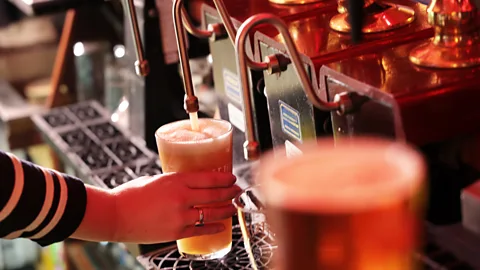
Unquestionably, round-buying embodies the values of the British pub and is its most beloved ritual. It creates camaraderie, helps share the cost and effort of buying drinks and prevents service areas getting too busy. No one wants to endlessly run the gauntlet whenever it's time to order again.
But just as the round system can elevate you amongst friends, it can shape your whole evening. Buy the first round and you might have to pick up another more expensive one later. Be too slow and it'll mark you as a cheapskate.
 Getty Images
That said, there are limits. If you're in a larger group, it's OK to skip a round – you can feel pressured to drink more than is good for you, and no one wants that. And if you're leaving early, just say as much. Your British pub experience should smell of hoppy beer, not regret.
"Round-buying is really sociable and helps solidify a group of friends or colleagues you're hanging out with," says Morgan Schondelmeier of the British Beer and Pub Association (BBPA). "There's an element of helping each other out. It also works as a leveller, as it becomes apparent who never reciprocates and you can quickly get shamed."
Rule #4: Don't expect tipping to get you faster service
British pubs don't work like bars in many other parts of the world, where everyone is vying to catch the bartender's eye, credit card at the ready.
In the UK, tipping culture is for restaurants only. In most pubs, you order and pay immediately and there is no expectation that flashing cash or tipping will speed things up. Waving money or a credit card is a strict no-no – smacking of desperation – and asking to "start a tab" in many traditional pubs may earn you a blank look.
That doesn't mean tips never happen. There's a gentle, good-natured buzz when drinks are rounded up ("keep the change") or bartenders are bought a drink (say: "and one for yourself" after you place your order). But this is low-key, not mandatory and not the main event.
Hough puts it simply: "Unlike restaurants you'll almost never be asked to tip. But with many pubs and bar staff struggling financially, they will always appreciate [one]."
 Getty Images
Rule #5: The pub is not just a place to drink
When Samuel Johnson wrote, "There is nothing which has yet been contrived by man, by which so much happiness is produced as by a good tavern", he wasn't indulging in hyperbole.
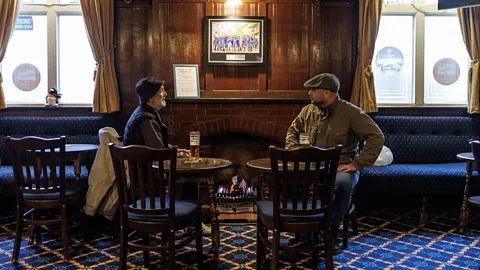
Visitors sometimes assume a pub is simply the British version of a bar. It is not. At its best, the British pub is an all-day living room of shared community: part meeting place, part local institution and part refuge from the weather.
More like this:
• The truth about British stoicism
• 10 things all visitors to Japan should know
• The tiny slice of 'America' in England
This has an impact on how you need to behave. Conversation is seen as an art form by many locals, with noise levels often lower than outsiders expect. Phones should be turned down and shouting is scowled at by regulars.
In the most traditional of pubs, behave respectfully – almost as if you've been invited into a community hall, church or someone's home. If there is an empty table, but it has a pint glass with a beer mat on top, that's an indication its drinker has popped to the bathroom or outside for a cigarette. Just as you'd never hijack your host's seat in their own house, don't assume an apparently empty table is fair game.
"Etiquette like this holds British pub culture together," says Schondelmeier. "It's part and parcel of the whole UK experience, which is why a trip to the pub is such a universal, shared event."
Rule #6: Pub snacks come with their own code
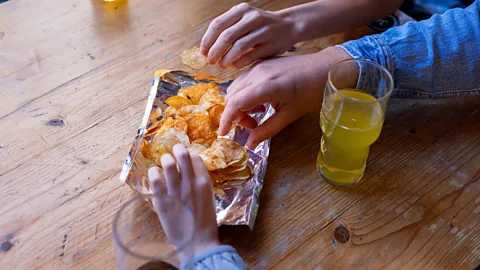
Visitors should also be aware that pub snacking has its own low-stakes etiquette. You can learn a lot about UK culture from what turns up on the table between pints. The first rule is simple: anything put in the centre of the table needs to be shared. Crisp packets, preferably salt and vinegar or cheese and onion, must be ripped open and presented picnic-style. The same logic applies to salty peanuts – which were first introduced in the 1950s as cheaper substitutes for pickled eggs and oysters.
 Getty Images
There is also a hierarchy to pub snacking, and it tends to favour the unapologetically retro. The most traditional boozers sell pork scratchings (rendered, fried or baked pig skin) and Scampi Fries (breadcrumb nuggets with a seafood and lemon hint) – which taste better than they sound and are far saltier than they need to be, a ploy to make pub-goers drink even more. If you've arrived in pub utopia, there'll be Scotch eggs or pork pies for sale on the counter – to be eaten by hand and never with a knife or fork.
Rule #7: Know when the evening is over
British pubs can feel timeless until, suddenly, they do not. Like the final whistle at the football, the last order bell generally sounds 15 minutes before closing time – around 23:00 on weekdays or midnight at weekends.
This is your cue that you'll have one final chance to order before leaving considerately when the bell rings for one last time. Like football too, this signals victory for the staff, but defeat for the pub-goer. Once it rings out, don't negotiate with staff, don't hang around and don't make a racket when you leave.
"It's another great pub tradition and a historical but efficient way to inform customers that now is your last chance to get your nightcap," says Hough. "Rung again, the bell indicates that no further service takes place. This is when the fun's over and the bar staff get their well-deserved rest. No one likes a hanger-on, so when you're told to leave – leave!"
--
If you liked this story, sign up for The Essential List newsletter – a handpicked selection of features, videos and can't-miss news, delivered to your inbox twice a week.
For more Travel stories from the BBC, follow us on Facebookand Instagram.
