Why luxury travellers are paying to work for their dinner

 Getty Images
Some high-end tourists are turning to posh properties where they can fish, forage and harvest their meals – and immerse themselves in local culture in the process.
At Casa Angelina, a luxury hotel on Italy's Amalfi Coast, a handful of guests leave their suites as the night sky turns violet. One by one, they board a wooden boat and set sail into the Tyrrhenian Sea, fishing line in hand, to hunt for their next lunch: squid.
No, there hasn't been a mix-up at reception. Around the world, patrons of posh properties are swapping plush robes and pool naps for windbreakers and food-sourcing excursions, where they'll forage, hunt, harvest or fish for their own food. And they're paying top dollar for the opportunity to do it, with singular activities costing as much as several hundred pounds and multi-day resort and luxury farm stays costing into the thousands.
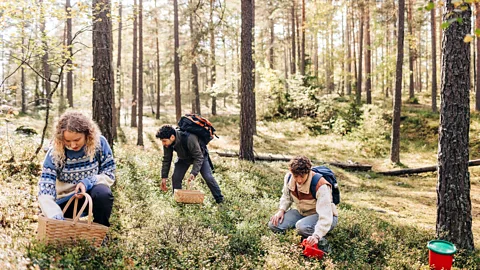
People have been searching for food for survival since the dawn of mankind, but in the past decade or so, travellers at five-star hotels have started paying to do so as a leisurely tourist activity. In Italy, hotels like Rosewood Castiglion del Bosco in Siena and Hotel Savoy in Florence offer truffle hunting excursions. Similar food gathering experiences are popping up around the world. The Fife Arms Hotel in Braemar, Scotland, for example, offers guided foraging tours of local plants and vegetation led by an in-house forager who identifies and shares information about plants that can be used for teas, tinctures, condiments and cosmetics. And at Rosewood Mayakoba in Playa del Carmen, Mexico, guests forage at the hotel's onsite garden, gathering food for their meals. At Fogo Island Inn in Newfoundland, Canada, guests gather plants on the island and learn how to use them in drinks.
But why are people choosing to work for their food while on holiday? It might be as simple as a hunger for something different.
 Wildflower Farms, Auberge Resorts Collection
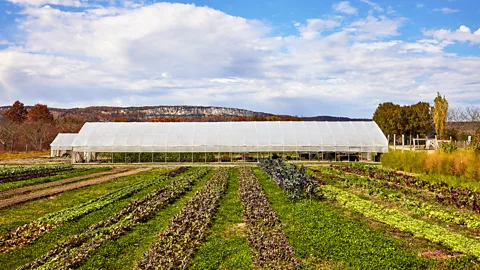
"As the pace of modern life accelerates and technology consumes so much of our attention, there's growing value in slowing down and touching the soil, engaging the senses and rediscovering where nourishment truly comes from," said Vinod Narayan, general manager at Wildflower Farms, Auberge Collection, a resort in New York's Hudson Valley that offers immersive walks through the woodlands surrounding their 65 cabins and cottages. "[Activities like] foraging reflect a broader cultural desire to reconnect with the natural world in a tangible, meaningful way."
Dina Falconi, the herbalist, educator and author leading these walks, echoes the sentiment: "People are genuinely craving a deeper sense of authenticity and reconnection." On the hikes, which cost $500 (£373) for up to four guests and $75 (£55) per additional guest, participants learn to identify, harvest and use plants in both culinary and wellness contexts.
The results of food gathering can be unexpected, which helps make it an exciting break from everyday routine. "There are no guarantees that you will find what you are foraging for, which makes it all the sweeter when you come upon a roving colony of ramps or a perfectly pink radicchio," said Kristin Soong Rapoport, co-owner of Wildflower Farms, Auberge Collection.
And few activities are less predictable – or more delicious – than fishing; an experience that has become as much of a draw for Casa Angelina as its pool surrounded by lemon trees.
 Getty Images
The Casa Angelina team wanted to design an activity that went beyond sightseeing, "where guests could step into the shoes of the Amalfi fishermen", said Marina Rumolo, the hotel's concierge who created the squid fishing expedition. "It's about slowing down and experiencing the sea as locals here in Praiano do."
Kyle Seltzer, a Casa Angelina guest, said he's participated in many curated hotel experiences, "but Casa Angelina's squid fishing was unlike anything else". Being out on the water with local fishermen at night "felt raw, real and unforgettable", he added. "It connected me to the soul of the Amalfi Coast in a way no restaurant or tour could ever replicate." Giampiero Irace, the local fisherman who guides Casa Angelina's excursions, said, "The sea has been our life for generations. Taking guests with us is a way of sharing our world, our patience and our respect for the water."
The experience unfolds over the course of two days and is only bookable through the concierge onsite or during the trip planning process, making it feel exclusive. The first night involves a fishing trip aboard a traditional handcrafted wooden boat, where guests venture to coves along the coast's inlets, fishing with a totanara – a fishing line – under the guidance of local fishermen. The following day, the hotel's executive chef, Leopoldo Elefante, teaches them how to turn their catch into totani e patate, a traditional Campania-region squid dish made with potatoes. The meal is then enjoyed on the restaurant terrace with regional wine pairings.
The activity allows guests to experience the effort and uncertainty of a catch, which helps them appreciate the dish. Similar ocean-to-table experiences are drawing guests at coastal resorts worldwide. At the Four Seasons Resort in Bali at Jimbaran Bay, guests participate in "A day as a Fisherman", a six-hour trip where travellers cruise across the bay along the cliffs of the Uluwatu Peninsula. After a morning on the water, guests and a local fisherman guide stop by the fish market for a tour, then head to the resort where the hotel's chef leads a class on preparing the fresh catch.
 Alamy
AlamyBut whether guests are fishing for squid or harvesting olives, the appeal is the same: actively participating in local culture rather than simply observing it.
Falconi believes luxury travellers are also choosing foraging experiences as an antidote to their digital lives, seeking tactile, unplugged hours in nature. "Social media plays a strange dual role," she said. "It creates an artificial world that often drives people to seek something real again." She added that guests arrive wanting to feel grounded and "of the earth", seeking something tangible and real rather than the endless scrolling of the digital world.
More like this:
Yet beneath these polished experiences lies a more radical proposition: that true connection requires not just witnessing food production but understanding how to sustain yourself from the land.
"In a world where food systems feel fragile and disconnected, learning how to feed yourself directly from the land feels revolutionary," Falconi said, adding that foraging is ecological activism in practice. "Every time we eat from our environment responsibly, we're rejecting destructive systems and reconnecting with sustainable ones." For luxury travellers accustomed to curated experiences, this represents a paradox: using resources to learn skills born from necessity.
Most importantly, the trend reflects a change in the definition of luxury itself. Where the very term once had connotations of being served, it now encompasses travellers willing to pay to do the work themselves – so long as it offers a hands-on local experience no luxury amenity can replicate.
--
If you liked this story, sign up for The Essential List newsletter – a handpicked selection of features, videos and can't-miss news, delivered to your inbox twice a week.
