The nostalgic winter drink dividing Germany

 Getty Images
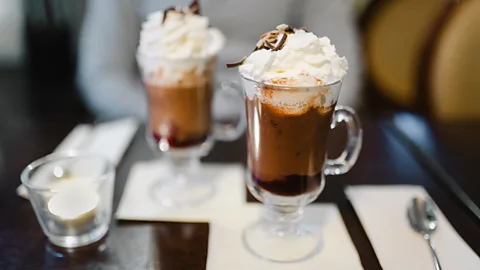
The Lumumba cocktail is one of Northern Europe's most popular winter drinks, but its name – borrowed from a Congolese politician – is now sparking a cultural controversy.
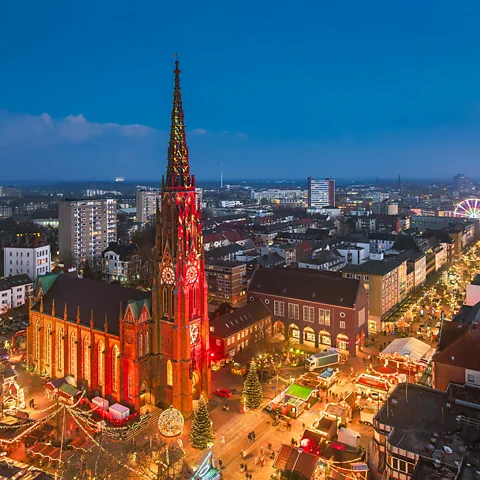
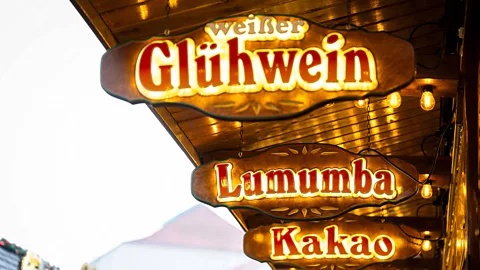
On a December evening, a Christmas market in a German town glows beneath strings of lights. The cobblestone square is crowded with wooden stalls, and vendors ladle hot chocolate into glass mugs, adding a shot of rum and topping with whipped cream. With temperatures well below zero, customers clutch the steaming glasses gratefully.
"Zwei Lumumba," someone calls out to a stallholder. The phrase passes casually between friends, as familiar as a Christmas carol.
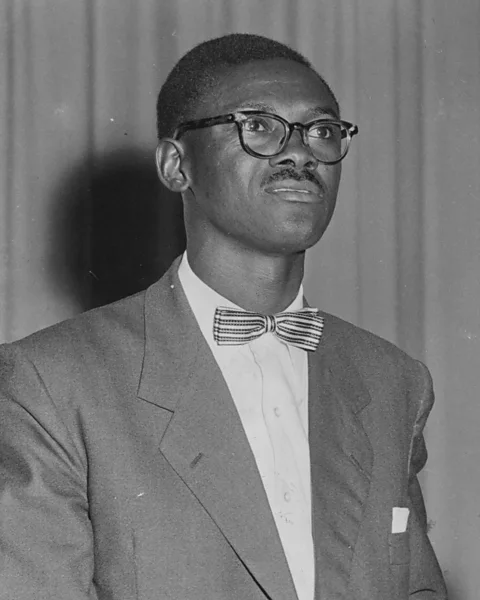
But these days, some people occasionally pause at the name. After all, Patrice Lumumba was a Congolese politician and a symbol of African anticolonial struggle, assassinated in 1961 at the height of the Cold War. How did a murdered independence leader become shorthand for a mug of spiked cocoa?
As debate grows over colonial memory, one of Germany's most nostalgic seasonal drinks is being reconsidered.
A winter ritual under scrutiny
Served warm at Christmas markets and ski resorts, the Lumumba cocktail is a rich, bittersweet drink that has been popular across Germany, Austria, Denmark, the Netherlands and Spain since at least the 1960s.
In northern Germany and the country's mountainous regions, ordering a Lumumba is as much a winter ritual as Glühwein. It's the drink you sip while watching children on ice rinks, queueing for roasted almonds or warming up after an evening walk through snowy town squares. For many Germans, it's rooted in nostalgia and childhood memories.
 Michael Abid/ Erlebnis Bremerhaven
Recently, however, the name has become the subject of a fierce public debate. In 2023, Annalena Schmidt, a Dresden-based former Green Party politician, tweeted that the name is racially insensitive. Bild, a German tabloid, amplified her post, igniting an online culture war.
"The debate was very heated, it included insults and even threats against me," Schmidt recalls.
Every festive season since, the argument resurfaces with social media erupting in arguments over whether the drink commemorates Lumumba's anti-colonial struggle or trivialises it.
Schmidt says her own reaction began in confusion. When she first encountered the name, she assumed it was fictional. Only later, after reading about Lumumba's assassination, did she connect the dots. "My intention was not to shame people who have used the term out of habit," she says, "but to raise awareness of the historical figure behind the name and why it can feel disrespectful."
However, not everyone agrees with Schmidt that the drink's name reflects racist intent. "We see it as a harmless decades-old tradition and prefer to keep the original name," says the owner of a Christmas market stall in a south German town that still serves the drink, who asked to remain anonymous. "For many Germans it has simply become part of the classic Christmas market experience."
What's in a name?
As with many cocktails, the origins of the Lumumba are hazy. Some historians trace its first documented recipes to Germany in the early 1960s. Others point to Spanish seaside bars, where a cold version remains popular. While the drink is most commonly known as a Lumumba, in parts of Denmark and Germany, notably North Frisia, it appears under names such as Død tante or Tote Tante, meaning "dead aunt". Variations include coffee instead of chocolate milk or cocoa, or Cointreau or amaretto instead of rum or brandy.
 Alamy
AlamyWhat is certain is that the drink is named after Patrice Lumumba, the first prime minister of the Democratic Republic of the Congo (DRC), who was assassinated in 1961 with the involvement of Belgian officials.
While Belgium's colonial role in the Congo is central to Lumumba's death, the naming debate is resonating in Germany for distinct historical reasons. The drink appears to have emerged in West Germany during the early 1960s, when sections of the press portrayed Lumumba as a destabilising figure aligned with Soviet interests. In that Cold War climate, his image was shaped less as a liberation leader and more as a political threat.
Today, as Germany confronts its own colonial legacy – including the genocide of Herero and Nama people in present-day Namibia – questions about how colonial history lingers in everyday language have gained renewed urgency.
How Lumumba's name became attached to a chocolate drink in the first place remains contested. Some argue the reference is macabre – a pun linking the "shot" of alcohol to his violent death. Given the negative coverage of Lumumba in parts of the West German media at the time, this is plausible, says Julien Bobineau, an expert on Lumumba and postcolonial discourse in Belgium and Germany at the University of Jena.
"Lumumba was never recognised as a fighter for freedom and African independence in West Germany," he says. "He was seen as an enemy of Western values."
Others suggest the name may have emerged in left-wing circles as an act of solidarity. A more troubling theory connects the drink to colonial imagery itself: pairing a Black politician with a dark-coloured drink echoes colonial trade routes embedded in cocoa and coffee.
"In colonial history, this is a common image since the end of the 19th Century: products from the colonies, like coffee and chocolate, were associated with dark skin colour," Bobineau explains.
 Getty Images
A different memory
Lumumba's reputation has shifted dramatically since his assassination. Once a polarising figure, he is now widely regarded as a symbol of decolonisation and pan-African unity. Boulevards and public institutions in the DRC bear his name. Admirers dress like him at football tournaments. Like Che Guevara, in death, he has become an icon.
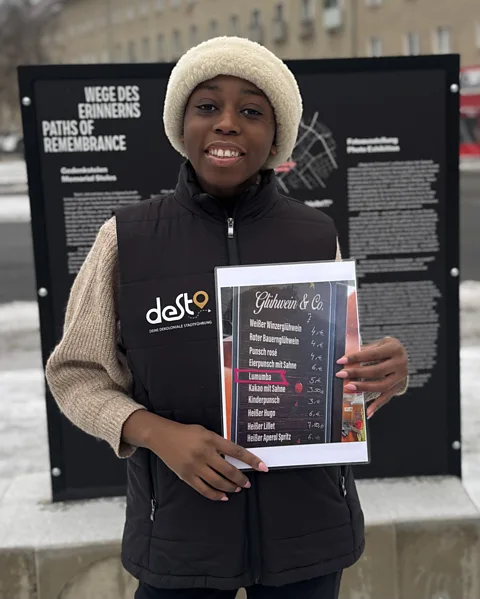
For many members of Germany's Afro-German and Congolese communities, the naming issue feels less abstract. Justice Mvemba, born in the DRC and raised in southern Germany, first encountered the drink at a Christmas market in Cologne.
"I was surprised because I grew up knowing about Patrice Lumumba as the first [Congolese] prime minister, someone my parents were really proud of," she recalls. "It was pretty shocking that there was a drink named after him. And it's a drink with a shot of alcohol. Knowing how he was murdered and treated, even his dead body, I was shocked."
More like this:
Mvemba runs Dekoloniale Stadtführung, a company that runs colonialism-themed city tours in Berlin and Hamburg, One stop is the site of the Berlin Conference (or Congo Conference) of 1884–85, organised by the first German Chancellor Otto von Bismarck, where European powers, including Germany, formalised the partition of Africa.
 Justice Mvemba & Dekoloniale Stadtführung
"Most Germans don't know anything about German colonial history and therefore about the conference," she explains. Lumumba often becomes part of the conversation. Visitors frequently recognise the name from the drink – but not the history behind it. "I ask them, do you know whom the drink was named after? They usually say 'no'," she explains. "This is where I tell the story. Then I ask how they feel about the name. Usually people are pretty shocked."
For Schmidt, a historian specialising in the Holocaust, the reactions highlight a broader blind spot in Germany's Erinnerungskultur (culture of remembrance). "The controversy has exposed a gap in historical awareness," she says. "We learn a lot about the Third Reich, WWII and the Shoah. But colonialism and post-colonialism are not topics extensively taught at school or widely discussed in public."
Rename or reclaim?
German municipalities have largely opted for recommendations rather than outright bans. In the city of Bremerhaven, authorities encouraged stallholders to avoid using the name this past Christmas. Many vendors had already opted for alternatives, such as "hot chocolate with rum". Those who were still using the name experimented with variations like "Lümümba" or "cocoa with a shot".
"Our visitors did engage in passionate discussions about whether and why a drink should have its name changed," says Michael Gerber, head of Erlebnis Bremerhaven, the city's marketing, events and tourism department. "Overall, however, there was more support for the recommendation than criticism."
In Dresden, inspections of the city's famous Striezelmarkt, Germany's oldest documented Christmas market, found that two stallholders were still using the name; both changed it after discussions with the market's management.
Still, it may take years before the last Lumumba is served in Germany. Just hours before our interview, Schmidt spotted it on the menu of a local Dresden restaurant. She also favours an approach centred on public education rather than prohibition. "You have to explain the historical background and people can decide if they want to have a drink at a place where the term is still used."
 Alamy
AlamyDetractors argue that the drink is an integral part of German popular culture – and that renaming it reflects unnecessary "cancel culture". Others contend that there was never any racist intent behind the name, pointing to other drinks playfully named after politicians, such as The Nixon, a cocktail created as a tribute to Richard Nixon's visit to the UK. For them, the whole issue is a storm in a mug full of hot chocolate.
Some members of the Congolese community in Germany view the drink as an opportunity for education rather than erasure.
"When someone drinks a Lumumba, they might ask themselves, 'Why is this drink called Lumumba?' says Simon Mputu Ngimbi, Chairman of the German-Congolese Society. "That makes it possible that they might discover the person behind the name. That's why I don't see this in a negative light, but rather as an opportunity to talk about our history, to explain to people who Lumumba was."
Schmidt, however, argues that intention carries little weight when it comes to language, even if it's about the name of a winter drink. "It can have a racist effect, even if many people use it playfully," she says. "If a term can reproduce colonial stereotypes or trivialise the history of political violence, that is significant regardless of individual intent."
Mvemba agrees: "Even if it's playful, I don't think that Lumumba's story is something to joke about. We wouldn't have a drink called 'Hitler'. People would find that very offensive."
--
If you liked this story, sign up for The Essential List newsletter – a handpicked selection of features, videos and can't-miss news, delivered to your inbox twice a week.
