Gloucestershire farmers help protect endangered curlew

 Wildfowl and Wetlands Trust
Vital work to help an endangered species of bird is seeing encouraging results following "essential" support from local farmers.
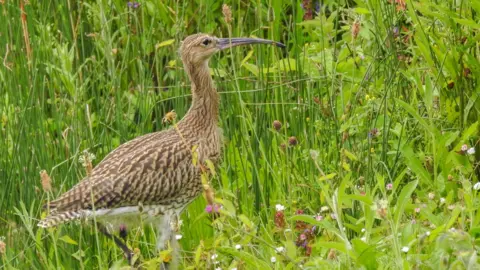
The number of Curlews has been been in decline over the past 10 years.
But the Wildfowl and Wetlands Trust (WWT), based in Slimbridge, said it is now finding more nests with the help of farmers delaying their harvest.
A spokesman for the Trust said without farmers looking after the hay meadows "there wouldn't be a curlew here".
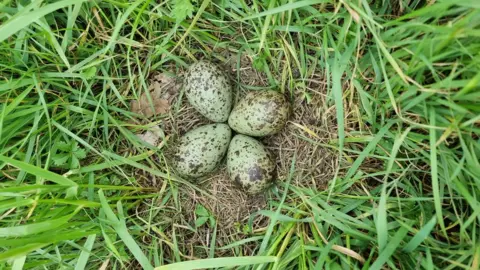
The trust is currently monitoring the ground-nesting curlews, which lay eggs in Gloucestershire's meadows on the River Severn floodplain.
But their chosen nesting site means the nests can easily be destroyed through modern farming techniques, when farmers harvest their hay.
 Wildfowl and Wetlands Trust
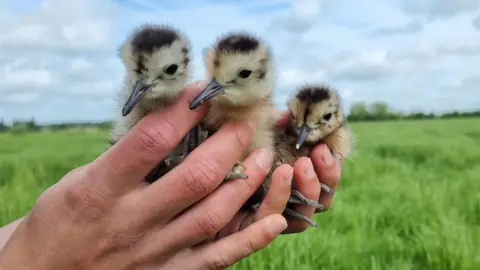
Now, with more farmers looking out for the birds, the trust said that the chicks it ringed a few years ago are attempting to breed.
Mike Smart, from the WWT, said: "They nest in these flood plains where they're under threat from a number of factors.
"Unless the farmers were looking after the hay meadows and cutting their hay late in the season there wouldn't be a curlew here."
So far the Trust have found around 18 nests.
"This is a lot more than in previous years, although sadly not many of the chicks have survived," a WWT spokeswoman said.
"Research into why so few chicks survive will be used in other curlew projects all around the country."
 Wildfowl and Wetlands Trust
The WWT is now trying to encourage more farmers to help the curlews to give them the best chance of survival.
Farmer Dave Banwell said: "We share the ground with an awful lot of creatures and birds, so we've got to respect their habitat as well as try to make a living."
The WWT wants the government to encourage this by offering funding and support to those who do.
In 2021 the curlew was added to the Red List on the UK Conservation Status report, meaning they are in the highest conservation category, and need urgent action.

Follow BBC West on Facebook, Twitter and Instagram. Send your story ideas to: bristol@bbc.co.uk
