Pliosaur sea monster enters world record books

 BBC/Tony Jolliffe
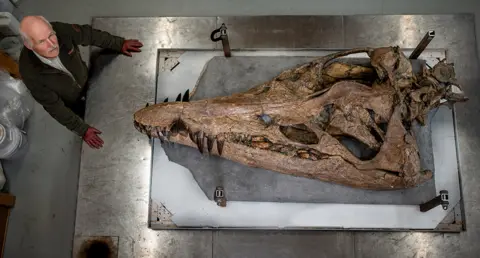
The skull of a prehistoric sea monster found on the Jurassic Coast has made it into the world record books.
The 2m-long (6ft) skull of a pliosaur, excavated from high above a beach in Dorset, was the subject of a BBC film presented by Sir David Attenborough.
Guinness World Records confirmed it was the "most complete" of its type on the planet.
It said it was about "95% complete by surface area", with "previously unobservable details" of the genus.
 BBC Studios
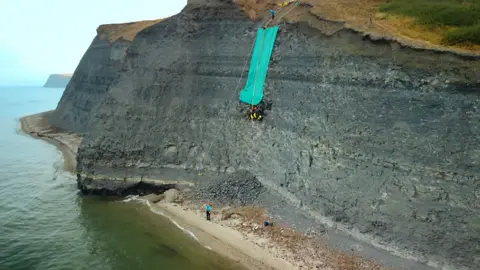
The snout of the pliosaur was discovered in 2022 by fossil enthusiast Philip Jacobs, prompting an excavation involving teams suspended by ropes high above the beach.
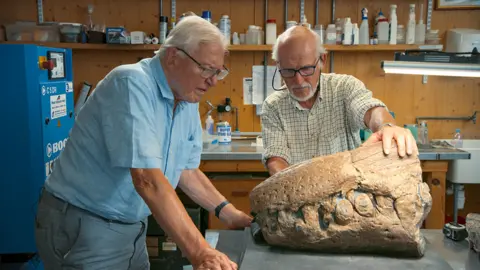
Sir David investigated the discovery in a BBC film broadcast on New Year's Day.
It is now on display at the Etches Collection museum in Kimmeridge.
Founder Dr Steve Etches is crowdfunding to recover the rest of the 150-million-year-old creature that remains embedded in the fast-eroding cliff face.
 BBC Studios
Dr Etches said: "Receiving the news that we have been awarded a Guinness World Record title in recognition of the fact that it is the most complete skull of its kind ever found is a really nice accolade to share as part of the ongoing story."
The marine reptiles, which grew up to 12m-long, powered through the ocean using four paddle-like limbs.
The Kimmeridge skull bears features not seen on other pliosaurs, including a high head crest, suggesting it may be a species new to science.

