Surge in species diversity since rewilding scheme

 PA Media
Conservation efforts have led to a jump in species numbers since a rewilding project began, according to monitoring.
A 20-year ecological review at the Knepp estate in West Sussex shows soaring numbers of birds that are on the conservation "red list" and an increasing variety of butterfly species.
Isabella Tree, who owns Knepp with her husband Charlie Burrell, said they had "absolutely no idea" they would see such increases when they began the project at the estate in 2000.
According to Knepp ecologist Fleur Dobner, the estate has "gone from a very open monoculture landscape to a real mosaic" of habitats.
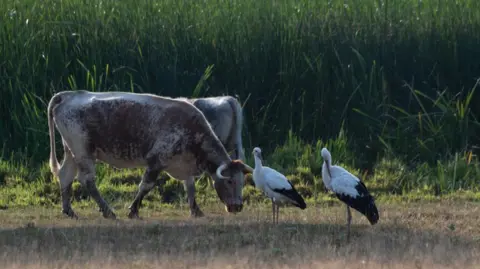
Animals including longhorn cattle, deer, Exmoor ponies and pigs have been introduced so their grazing and foraging can provide new habitats.
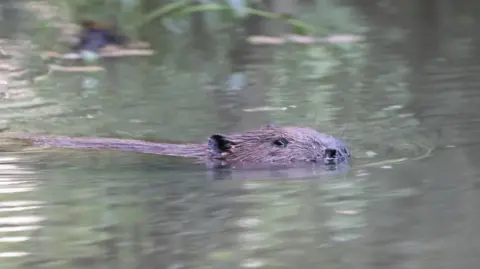
Since 2000, enclosed beavers have turned a small stream into wetlands and a reintroduction project has brought white storks back to the landscape.
 PA Media
Tree said: "We were a depleted, polluted farmland, so any uplift in nature was going to be positive.
"In a rewilding project you don't have goals, don't have targets, and so we weren't striving for anything in particular, we were literally sitting back and seeing what would happen."
She added: "We're actually showing that nature reserves can be much more ambitious for the carrying capacity of the land, which is exciting."
Comparisons from the latest ecological review to baseline surveys from 2005 and 2007 show the number of different species on the estate has more than doubled.
 PA Media
Ecologists recorded a peak of 55 individual birds from 22 species in part of the estate in 2007. Eighteen years on, 559 birds from 51 species were found on the same route.
Knepp had 27 bird species of "conservation concern" breeding on the site, which included 12 red-listed birds, according to the 2025 review.
Ecologists also counted 62 singing male nightingales, up from nine in 1999.
Numbers of turtle doves, common whitethroats, lesser whitethroats, chiffchaffs and wrens have also skyrocketed since the original counts.
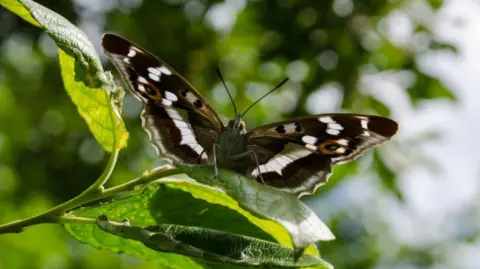
Insect populations and biodiversity, including butterflies and dragonflies, have also responded positively to rewilding.
Dobner said: "It's a positive trajectory and it's increasing still, year-on-year."
Additional reporting by PA Media.
Follow BBC Sussex on Facebook, on X, and on Instagram. Send your story ideas to southeasttoday@bbc.co.uk or WhatsApp us on 08081 002250.
