Poet-inspired project sees gains for wildlife

 Emma Baugh/BBC
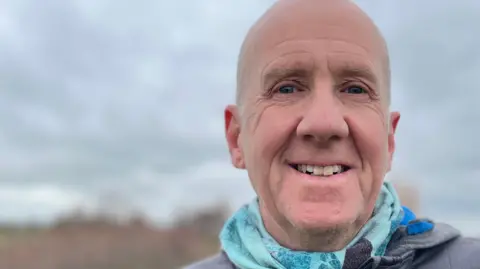
A landscape restoration project inspired by one of the nation's most beloved nature poets has already seen good results, according to the project's chairman.
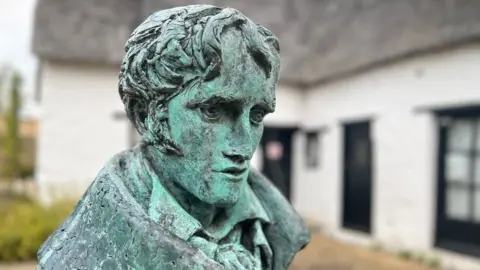
The 19th Century poet John Clare grew up in Helpston, Cambridgeshire, then a part of Northamptonshire, and wrote about the loss of the scenery he loved as a child.
The John Clare Countryside Project was set up in 2019 with the aim of connecting Peterborough to Stamford, Lincolnshire, through green corridors of farmland.
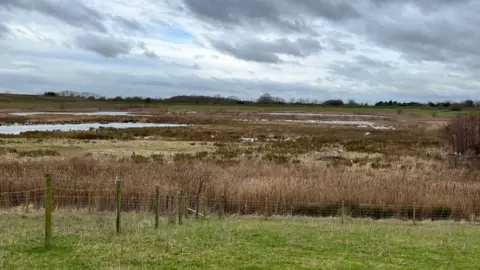
Richard Astle said the nature reserve at Etton Maxey Pits was "a real example of how you can restore nature in a landscape".
"This was originally just a pretty barren agricultural fields, good for food, not great for nature," said Astle.
"Then there was gravel extraction and after the extraction, they restored it to this wonderful wetland which is now full of nature and a great place to come and visit," he added.
 Emma Baugh/BBC
Astle said he suspected Clare would be "quite depressed" about statistics around nature loss across his beloved landscape.
The trust said in the past 50 years turtle doves have declined by 98%, nightingales by 90% and hedgehogs and brown hares by 75%.
"But I really hope that he'd come somewhere like [Etton Maxey Pits] and recognise some of the wetlands that he roamed around, writing his poems and would say, 'Goodness me, at last some of the nature is bouncing back', and I think he would take great solace in that," he added.
 Emma Baugh/BBC
The project, led by the Langdyke Countryside Trust, hopes to create a wildlife corridor through Burghley Park, Barnack Hills and Holes, Southey Woods, Castor Hanglands and Milton Park.
It is a partnership of local landowners, charitable environmental trusts, businesses, civic organisations and local government, including 21 parish councils.
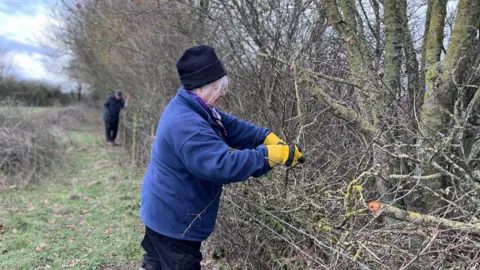
Hundreds of volunteers have got involved in nature recovery and creating nature friendly private gardens, while every parish in the area has its own nature recovery plan.
 Emma Baugh/BBC
Astle said: "We want to recreate some of John Clare's lost landscapes, but we absolutely want people to come and enjoy them, to walk in the countryside, to come and visit some of the woodlands, the visitor attractions in this area, and just to take that bit of time out of our busy lives.
"There's so much evidence now about the power of nature in healing us both mentally and physically and I think we all need to do a little bit more to spend time in nature."
Follow Peterborough news on BBC Sounds, Facebook, Instagram and X.
