The hospital deaths that could lead to criminal charges

 BBC
BBCScotland's independent public prosecution and death investigation authority is now looking into seven deaths for potential links to the hospital environment at Glasgow's Queen Elizabeth University Hospital campus.
In four cases - Milly Main, two other children and 73-year-old Gail Armstrong- police have submitted a "standard prosecution report" to the Crown Office and Procurator Fiscal Service (COPFS).
That means they have uncovered evidence they believe could support a prosecution for an offence such as corporate homicide.
In three other cases - the deaths of Andrew Slorance, Tony Dynes and Molly Cuddihy - police have been asked to gather information about the circumstances, but so far no prosecution report has been submitted.
What do we know about each of these cases?
Milly Main - aged 10
 Kimberly Darroch
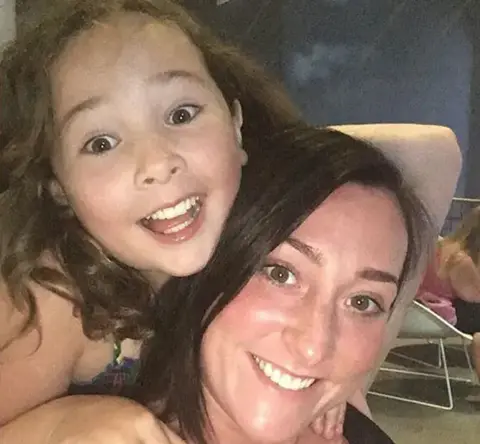
The death of 10-year-old Milly Main in August 2017 was one the first cases to hit the headlines when concerns about the safety of the hospital become public two years later.
Milly had been treated for leukaemia since the age of five, and in the summer of 2017 she had a successful stem cell transplant at the Royal Hospital for Children', part of the QEUH campus.
A short time later, her Hickman Line, a tube used to administer drugs, became infected with stenotrophomonas maltophilia bacteria, often linked to contaminated water systems. She developed toxic shock and died.
The bacterial infection was listed as a possible contributing factor on her death certificate.
An independent review later concluded the infection was "probably related to the hospital environment".
A year after she died, cancer wards at the children's hospital were closed for an £8.9m upgrade to the water and ventilation systems.
But NHS Greater Glasgow and Clyde maintained it was not possible to say with certainty where Milly's infection originated as the water was not being tested at the time of her death.
The health board's recent admission that defects in the water system probably caused some infections among child cancer patients between 2016 and 2018 does not address individual cases.
Two unidentified children - aged 10 and three
The corporate homicide investigation is also looking into the deaths of two other children.
One of them is a three-year-old child but very little is known about this case.
The other is a 10-year-old boy who died in December 2018 with a cryptococcus fungal infection - commonly linked to pigeon droppings – listed as a contributory factor in his death.
He had initially been treated in the Royal Hospital for Children but was moved to a temporary paediatric ward in the adult hospital when the children's hospital cancer wards were closed because of the water contamination issues.
Gail Armstrong - aged 73
 Armstrong family
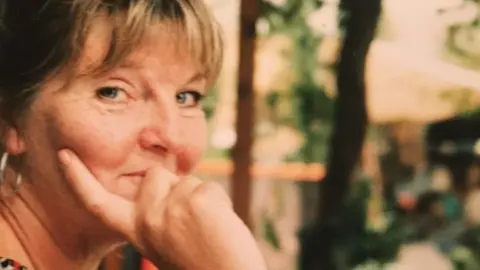
Far more is known about a fourth death, that of 73-year-old Gail Armstrong which took place a few weeks later in January 2019.
She was being treated for an aggressive form of non-Hodgkin lymphoma when she contracted a cryptococcus fungal infection.
While she was considered terminally-ill with her cancer by the time she died, her family believe the fungal infection, which she contracted a few weeks earlier, "knocked her back" and may have limited her treatment options.
Pigeon excrement at a plant room near a ventilation intake on the 12th floor of the hospital was at first thought to be the "likely source" for these cryptococcus infections.
A review commissioned by the Scottish government later cast doubt on this and, while it found problems with the hospital, it said there was "no sound evidential basis" for concluding there were avoidable deaths.
Other experts have told a BBC documentary pigeon droppings are strongly linked to cryptococcus, and it is unusual for hospital patients to become infected with it.
Andrew Slorance - aged 49
In addition to these four deaths, a specialist hospitals unit at COPFS is gathering evidence surrounding the deaths of Andrew Slorance, Tony Dynes and Molly Cuddihy.
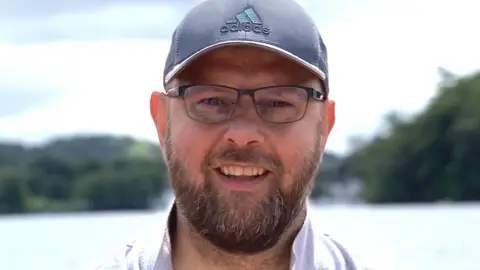
Andrew Slorance was a Scottish government official who died with Covid-linked pneumonia in December 2020.
Six weeks earlier, the 49-year-old had undergone a stem cell transplant to treat his mantle cell lymphoma and had a weakened immune system.
His widow Louise claims mistakes were made over his care and he was moved between different rooms, including one she described as a "general ward" for Covid patients.
When she requested his medical notes after his death she found he had also tested positive for aspergillus mould shortly before his death but says this had not been disclosed to her.
Tony Dynes - aged 63
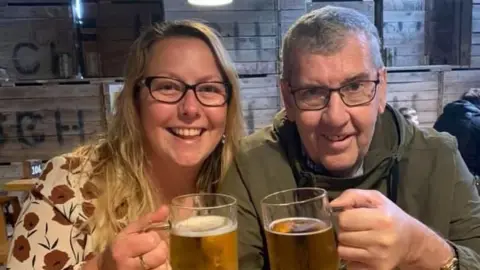
Tony Dynes died in May 2021, aged 63, while being treated at the QEUH for non-Hodgkins lymphoma.
While in the hospital the previous year for a stem cell transplant, he had an infection caused by aspergillus mould which his widow Maureen says left him with a persistent cough.
She says he was not able to properly clear the infection and it remained with him until he died.
After his death she requested his medical notes and found out he had also tested positive for stenotrophomonas maltophilia – the same bacteria found in the case of Milly Main - in a line used to administer his drugs.
Molly Cuddihy - aged 23

Molly Cuddihy was 15 in 2018 when she was diagnosed with a type of cancer called metastatic Ewings Sarcoma.
She was treated at both the Royal Children's Hospital and then, when the cancer wards there were closed due to water contamination issues, at the QEUH.
During her treatment at the children's hospital she became seriously ill with mycobacterium chelonae, a rare and difficult to treatinfection found in an intravenous line used to administer her medication.
She later gave evidence to the Scottish Hospitals Inquiry in which she told how her treatment for that infection, along with her chemotherapy, left her with irreparable liver damage.
She died last August, aged 23, after being readmitted to the QEUH adult hospital.
A consultant at the hospital reported her death to COPFS whose role is to investigate all sudden, suspicious, accidental, or unexplained deaths as well the prosecution of crimes.
The case is now being considered by a specialist hospitals unit within COPFS.
What would a corporate homicide prosecution mean?
The Corporate Manslaughter and Corporate Homicide Act 2007 allows for a health board like NHS Greater Glasgow and Clyde to be prosecuted as a single entity rather than individual managers or staff members.
For a conviction, prosecutors must prove that the way senior management organised hospital activities was a gross breach of a duty of care that fell "far below" what was reasonably expected.
If found guilty, the health board cannot be "imprisoned," but it faces:
- Unlimited fines
- Remedial orders forcing it to fix specific safety or infrastructure failures
- Publicity orders requiring it to publicly advertise its conviction and failings.
COPFS is now considering whether the evidence is sufficient and there is a public interest in proceeding with a corporate homicide or health and safety prosecution in the cases of Milly Main, the two other children and Gail Armstrong.
A standard prosecution report has not yet been submitted in the cases of Andrew Slorance, Tony Dynes and Molly Cuddihy.
