Plans to mark wartime tragedy which killed 100 Scottish Italians

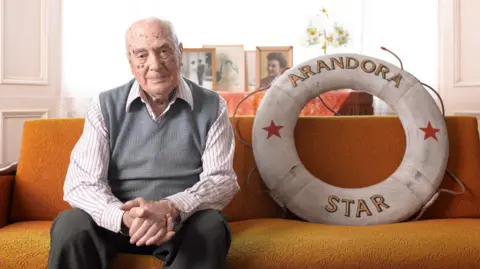 Philip Melia
Plans for a memorial day in Italy to honour the hundreds of emigrants who lost their lives in a wartime tragedy have been welcomed by Scottish Italians.
The proposal to mark the sinking of the Arandora Star - which has cross-party support - has been agreed by the Italian parliament.
It will be held on 11 October - the date that the last survivor of the disaster, Rando Bertoia from Glasgow, died in 2013.
Ronnie Convery, Italian honorary consul in Glasgow, said it was "deeply appropriate" for the national day of memory to coincide with the anniversary of Bertoia's death.
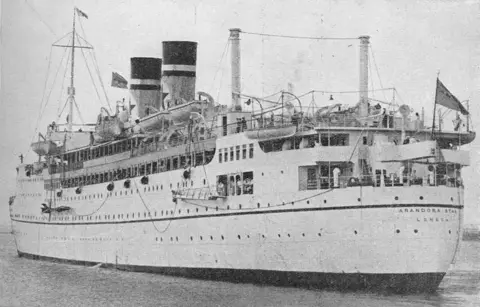 Getty Images
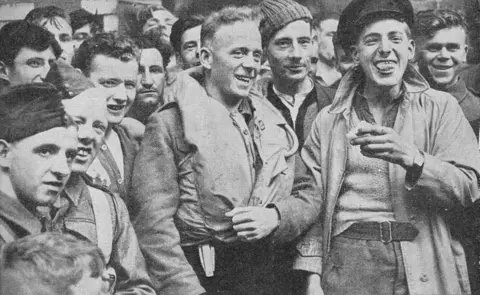
When Italy entered World War Two, Prime Minister Winston Churchill ordered the internment of all Italian men over the age of 16 in Britain.
Hundreds of them were on board the Arandora Star - a converted liner being used to transport internees - along with some German prisoners of war.
It was en route to a camp in Canada when it was sunk by a torpedo from a U-boat off the Irish coast on 2 July 1940.
About 100 Italoscozzesi (Scottish Italians) were among the more than 800 victims of the attack - the vast majority of whom were Italians rounded up around Britain as "enemy aliens".
MP Deborah Bergamini told her colleagues recently that it remained - in terms of lives lost - the most serious tragedy in the history of Italian emigration.
She said the story of the disaster had "long been forgotten" by many and the law creating a national day would "keep alive the memory of their loss".
 Getty Images
It will not be a national holiday but it could see events held, classes given on the subject in schools and media coverage of what happened 86 years ago.
The law was approved this week.
Convery said he had known Bertoia and felt that holding a memorial day on the date of his death was a fitting honour.
"He was one of the most humble and serene men I have ever met," he said.
"He came along to the opening of the Italian Cloister Garden in Glasgow in 2011, and although he was in the company of politicians and prelates, he was the real hero of the evening, as the last survivor of the Arandora Star tragedy.
"When journalists covering the event prompted him to allocate blame or demand apologies his response was always the same: 'It was a time of war. These things happen in war.'"
 Getty Images
Born in the Friuli region of Italy, Bertoia came to Glasgow before the outbreak of World War Two.
As an Italian national, he was arrested and among more than 700 British Italians put on the Arandora Star destined for Canada before it sank.
After being rescued, he was assessed as being fit to travel and deported to Australia on a 55-day journey by boat.
He returned to Glasgow after the war and ran a clock and jewellery business set up with his brother in the city for many years.
He died, aged 93, in 2013.
Convery said he was pleased the move to have a national day on the date Bertoia died enjoyed cross-party support.
"Rando was a man of peace, who found himself caught up in the tragedy of war," he said.
"His example is one that everyone can be proud of, both here in Scotland and in Italy.
"A special mosaic was commissioned years after the Arandora Star tragedy which carries the inscription 'Non vi scorderemo mai - we will never forget you'.
"This new day of national commemoration will make sure that the victims of this terrible wartime tragedy are, indeed, never forgotten."
 Ronnie Convery
Glasgow-based historian Raffaello Gonnella said the memory of the tragedy remained "vitally important" to this day - especially for the families of the men involved.
"While the story of the Arandora Star is still unknown to many and forgotten by others, the families of those men continue to tell it, ensuring that their loved ones are not erased from history," he said.
"The tragedy represents the sudden loss and unjust treatment of many innocent Italian men who had lived and worked in Britain for decades.
"Following the disaster, many families were discouraged from speaking about what had happened."
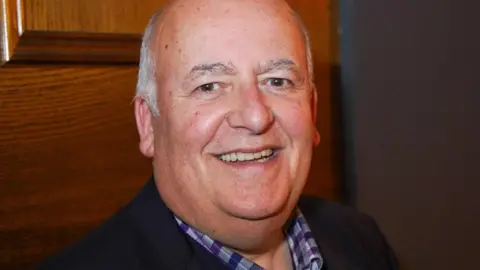 Raffaello Gonnella
He said that had created further issues which the national day could help to address.
"This enforced silence created a further loss - the loss of recognition, understanding, and acknowledgement of the individuals who suffered and died," he said.
"Today, remembering the tragedy through storytelling and memorials is one of the most meaningful ways families can pay true respect to those men and honour the profound loss they endure even today."
