'It's important children see themselves in books'

 Listen to This Story!
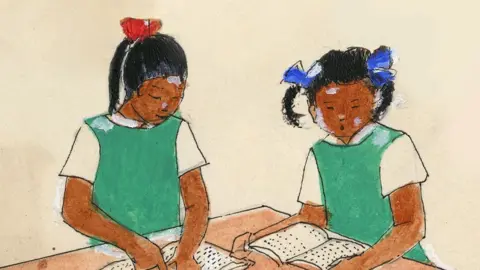
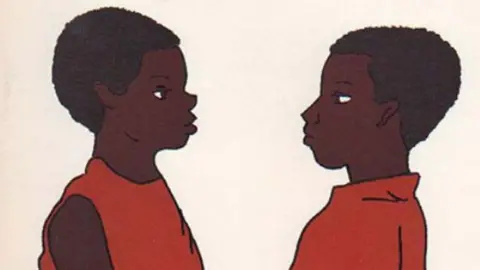
The curator of the first display on black British children's literature said it was exciting "seeing children staring at pictures who look like themselves".
A new touring version of the exhibition on how black people have been represented in UK children's literature has opened in Cambridge's main library.
It revealed black culture has been part of British literature for 200 years.
However, curator Prof Karen Sands-O'Connor warned: "If pressure is not kept on publishers, we could lose ground again, so it's not a done deal."
She told BBC Radio Cambridgeshire's Louise Hulland: "Most children's books go out of print after about five years."
The Listen To This Story! exhibition, which first appeared in Newcastle, has been brought to the city by University of Cambridge children's literature researchers.
 Listen To This Story!
Prof Sands-O'Connor was inspired to research the area after meeting her husband, the son of Jamaican immigrants.
"When he grew up, he didn't read and he told me he didn't read because he didn't see himself in books, so why should he?" the literature expert said.
"So for me, it's both a personal and professional interest."
Years of research followed, uncovering a history of black representation in British children's literature that is longer and more varied than many people realise.
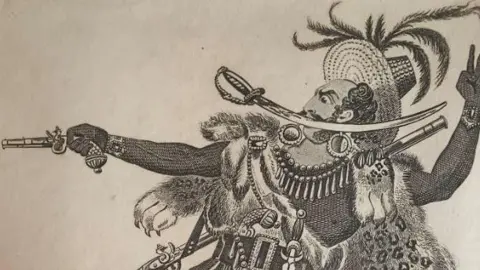
One early example is an 1808 pantomime poster, based on the real leader of a community of runaway slaves.
Sometimes Three-Fingered Jack was portrayed as a hero, and sometimes – as in the pantomime – as a villain, providing an example of a black character who could be presented from different, sometimes prejudiced, viewpoints.
 Listen To This Story!
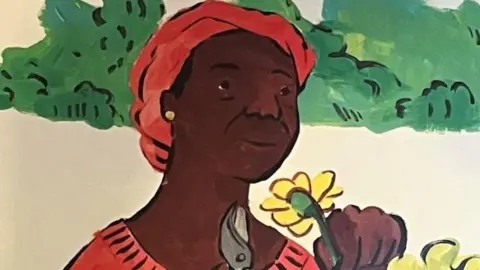
Jamaican nurse Mary Seacole's story featured in a 1903 book by Henry Charles Moore on heroines.
"There are problems with how Moore represented her and used the civilising rhetoric of Empire," Prof Sands-O'Connor said.
"What interested me, though, was that she was shown doing important work and treated with respect. It wasn't a negative account."
 Listen To This Story!
The exhibition explores the lives and work of the authors, poets, illustrators and publishers who, across generations, strove to ensure black children in the UK could open a library book or schoolbook and see their own lives reflected in its pages.
Prof Sands-O'Connor said: "We are a multi-cultural, diverse country and it's really important that all children see themselves - but also their neighbours and the people in their nation and people in their world.
"So yes, it is getting better but it's really important that we keep the pressure on publishing."
The display will be at Cambridge Central Library until 16 January.
Follow Cambridgeshire news on BBC Sounds, Facebook, Instagram and X.
