Puffin aged 34 dies after being washed up in stormy weather

 New Arc Wildlife Rescue
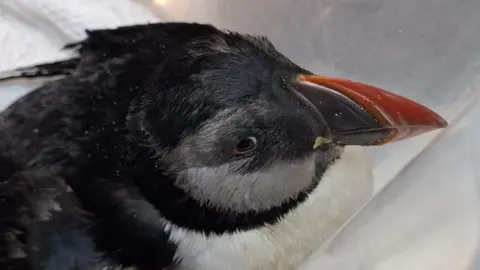
A puffin aged 34 has died after being washed up on an Aberdeenshire beach in stormy weather.
It was found at Balmedie on 29 January and was taken to New Arc Wildlife Rescue in nearby Ellon, along with eight other birds.
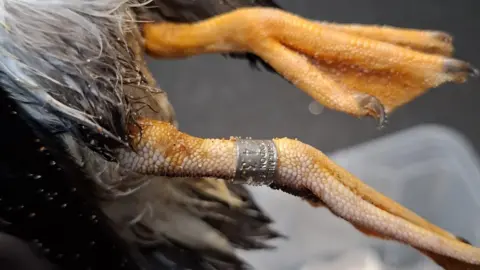
Sadly it died later that night but rescuers noticed that is had a ring on its feet, issued by the British Trust for Ornithology.
From that they were able to discover that the bird was ringed on the Isle of May in 1995, when it was aged three. By the time it reached Ellon, it was 34 and the oldest bird the rescue had ever encountered.
Rescue centre co-manager Paul Reynolds told BBC Scotland News the puffin was rescued during "terrible weather".
"Sadly this one came in during the afternoon and died that night," he said.
"There was no prior indication that this was going to happen but the stress of being rescued must have taken its toll."
He said they contacted the British Trust for Ornithology for information about the bird - but it took much longer than usual for the data to come back.
"Possibly because it is from before their digital records started," he said.
"I couldn't believe how old it was," he added. "The first two digits of the year was enough to leave me gobsmacked.
"It is very unusual none of my colleagues have seen a puffin this age before and there aren't many on the database."
Many puffins live more than 20 years, according to the National Trust. In 2022 a puffin aged 38 was discovered on a beach near Dunbar.
 New Arc Wildlife Rescue
Reynolds and his team were delighted to discover the fascinating history of the bird and told how important records like this are.
He said: "Sadly, despite our best efforts, this resilient seabird, like so many others affected by the wreck, was too weak to recover and passed away in our care.
"While we could not return them to the sea, we are honoured to have cared for such an extraordinary individual in their final chapter.
"Over more than three decades, this puffin would have weathered countless storms, shifting oceans, and changing seas.
"Their story is a powerful reminder that no bird is 'just a bird'. Each one carries a lifetime of journeys we rarely see and stories we may never fully know."
Threatened species
Last month experts warned that puffins were struggling to survive the stormy weather that has torn across the country because they struggle to feed in strong winds.
Dozens of the birds have washed up on beaches across Scotland - about 1,000 miles from their winter home in the North Atlantic.
Conservationists said it was "concerning" to find so many of the country's "most loved birds" turning up dead months before they were set to return to Scottish shores.
Atlantic puffins usually return to Scotland between March and August to breed.
The birds are listed as vulnerable on the global IUCN red list of threatened species.
Emily Burton, conservation manager at the Scottish Seabird Centre, in North Berwick, said the species were already facing "huge pressures" caused by climate change.
"Puffins only return to land for a short period each year to breed, spending most of their lives out at sea, so finding them washed up on our beaches in winter is concerning," she added.
"Seabirds can struggle to survive during periods of stormy weather, as it makes it harder for them to feed.
"Changes to our oceans driven by the climate crisis, threats from disease, and unsustainable fishing practices can all reduce food availability or contribute to these tragic mortalities."
