Puffins struggle to survive as Storm Chandra sweeps country

 Claire Anthony
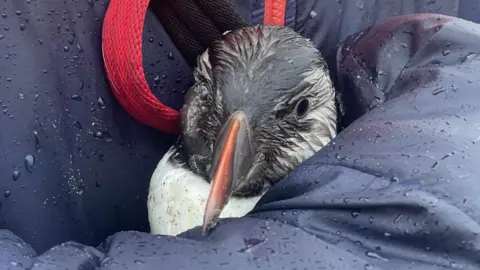
Puffins are struggling to survive Storm Chandra because they cannot find food in strong winds, experts say.
Several of the birds have washed up on beaches across Scotland - about 1,000 miles from their winter home in the North Atlantic.
Conservationists said it was "concerning" to find so many of the country's "most loved birds" turning up dead months before they were set to return to Scottish shores.
Local residents have been rescuing the birds but the Scottish SPCA has urged people not to touch them and to instead call the charity for advice.
Atlantic puffins usually return to Scotland between March and August to breed.
The birds are listed as vulnerable on the global IUCN red list of threatened species.
Emily Burton, conservation manager at the Scottish Seabird Centre, in North Berwick, told BBC Scotland News they were already facing "huge pressures" caused by climate change.
She said: "Puffins only return to land for a short period each year to breed, spending most of their lives out at sea, so finding them washed up on our beaches in winter is concerning.
"Seabirds can struggle to survive during periods of stormy weather, as it makes it harder for them to feed.
"Changes to our oceans driven by the climate crisis, threats from disease, and unsustainable fishing practices can all reduce food availability or contribute to these tragic mortalities."
 Claire Anthony
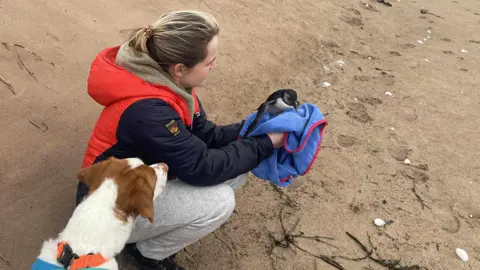
One couple in Montrose were out walking their dog on 24 January when they spotted crows attacking something in the distance.
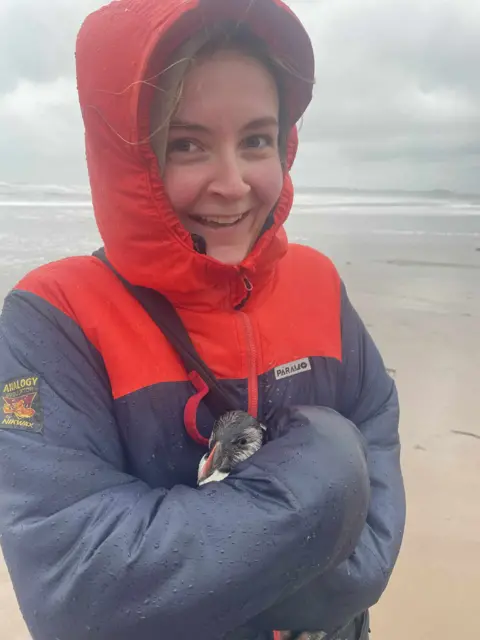
Claire Anthony, 25, and boyfriend, Joel Swindle, 24, said they discovered a puffin being attacked by crows while walking their dog in Lunan Bay in Angus on Saturday.
She said she was "thankful" they found it in time.
"I truly think it had given up by the time the crow had found it," Claire said. .
"We took it back to the car and wrapped it in a towel. We phoned the SSPCA, they advised us to let it rest for a while and try and see if it would fly.
"We went back out to the beach to try to release it, the puffin tried to fly but it just couldn't."
The puffin was later collected by the wildlife experts who told her it was skinny and was likely to have been struggling a while.
 Claire Anthony
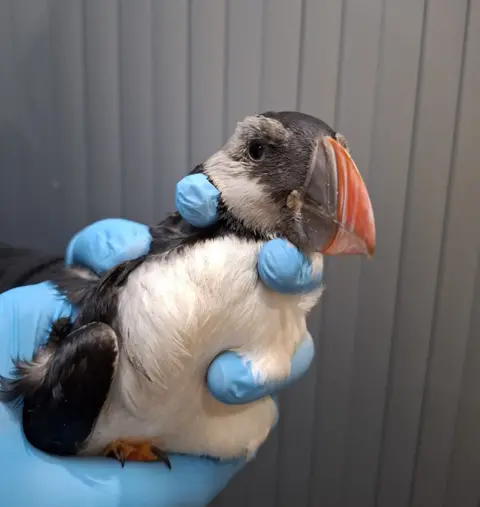
Another puffin was brought into New Arc Wildlife Rescue located outside Ellon in Aberdeenshire.
The rescue service said the prolonged harsh weather conditions placed significant strain on many wildlife species that relied on calmer conditions to forage successfully.
A spokesperson said one puffin had been found "waterlogged" in Cruden Bay but was being cared for by rescuers.
"The weather has been relentless lately, shifting from snow and ice to heavy rain and strong winds over the last four weeks," they said.
They added that the puffin started to "look brighter" after being "dried and rehydrated" and would be ready to return to the wild in the near future.
 New Arc Wildlife Rescue
A local resident in Carnoustie, in Angus, also found one of the seabirds and brought it to a vet for the SSPCA to collect.
Lori Downie at Wallace Vets in Broughty Ferry said the animal had been "blown off course" by the conditions.
"It's not every day we get to see such an iconic and adorable seabird up close," she said.
Highland Wildlife Rescue in Brora, in the Highlands, has also taken storm-hit seabirds into its care.
They include a puffin and little auks, including one found in a silage pit.
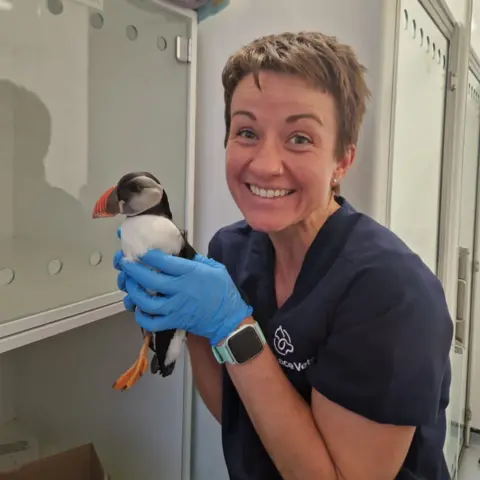 Wallace Vets
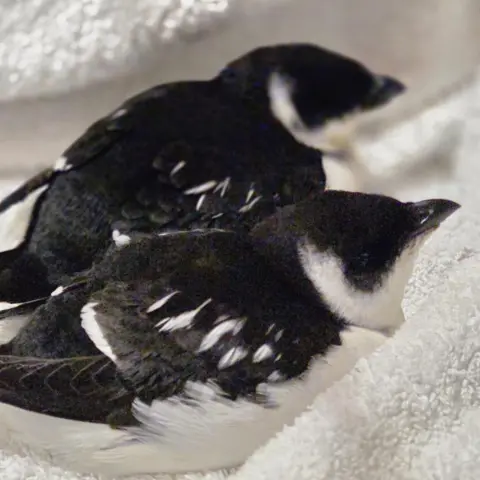 Highland Wildlife Rescue
The Royal Society for the Protection of Birds Scotland (RSPB) said the "increasing intesity" of storms hitting Scotland had driven a rise in the number of birds suffering injury.
A spokesperson said: "Many of the precious seabirds that return to Scotland to breed every spring spend their winters out at sea.
"Sadly we are seeing an increase in dead, starving and exhausted birds reaching our coastlines.
"It has been a particularly brutal start to 2026, with three named storms hitting already."
She added: "This situation further highlights why we need to see immediate, ambitious and urgent action if we are to have any hope of saving our internationally important seabirds."
