Marsh harriers find new home at Solway coast nature reserve

 Alistair Cutter
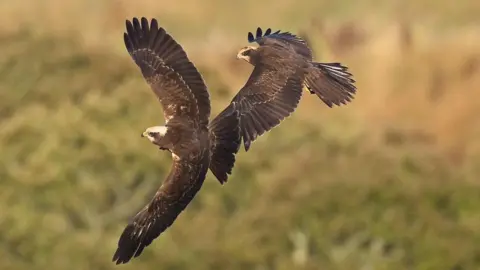
A once rare raptor is making a slow comeback thanks to the painstaking restoration of their favourite habitat at a nature reserve in the south of Scotland.
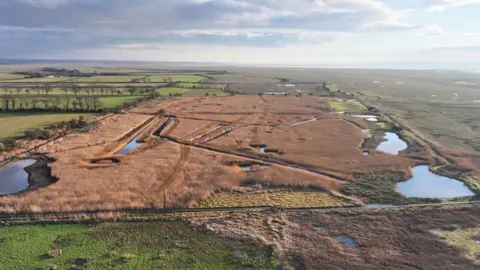
Staff at Caerlaverock nature reserve on the Solway coast worked to expand and improve seven hectares (17 acres) of reed bed over four years in the hope of attracting marsh harriers.
The project was sparked by the sighting of a pair in the summer of 2019 which attempted to breed at the reserve but their nest failed.
Employees decided to investigate ways of improving the birds' chances, if they returned.
They made visits to other breeding sites and conducted vegetation and hydrology surveys.
The data suggested that raising the water table - the level below which soil and rocks are permanently wet - was pivotal to the project's success.
Old reeds were cut to allow fresh ones to grow and the habitat was expanded. Each year, one quarter of the area was attended to.
 NatureScot
Excavators dug out old sections to create open water areas with ongoing management done by hand, using scythes.
Last summer a pair of marsh harriers nested at the site.
Suzanne McIntyre, who manages the nature reserve, said: "With the nest hidden in the reeds it is very difficult to get a good visual, but from closely observing flights in and out of the nest and from the number of birds we identified later in the season, we are confident that we had chicks fledge from the site."
Restoration at Nature Scot's Caerlaverock nature reserve will continue with the long term aim to extend the reed bed to 12 hectares (30 acres).
Marsh harriers are highly protected birds and visitors are asked to respect exclusion zones during the 2026 breeding season.
