Scottish shag makes unusual 319-mile urban trip

 BBC
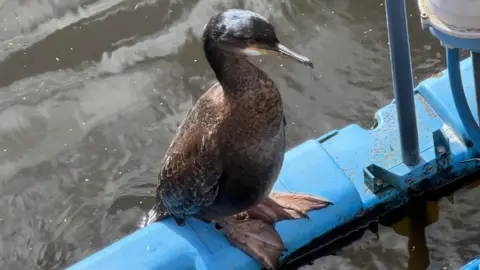
BBCA vulnerable young seabird, ringed on the Isle of May in Scotland, made an "unusual" 319-mile (513km) trip south and was spotted basking on a housing estate in Hull.
The juvenile shag was fitted with a ring in June 2025 while it was a nestling chick off the Firth of Forth, according to the British Trust for Ornithology (BTO).
It was spotted on Saturday in the basin of Victoria Dock, which was once a major 19th Century commercial dock before it closed in 1970 to be redeveloped.
Until 2024, the species was on the UK's red list of birds at most need of conservation after dwindling numbers. The BTO said it was "quite unusual for shags to be seen in residential areas".
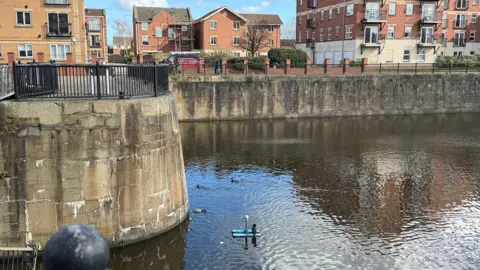
However, sightings of the seabird were "not unprecedented" in areas around the Humber as shags tend to nest on coastal cliffs, a BTO spokesperson said.
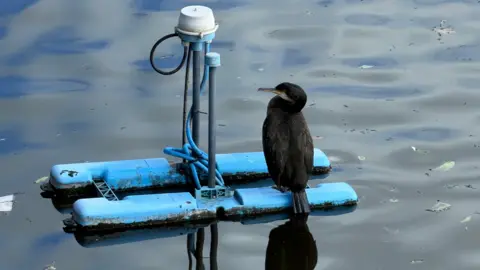
"Apparently, this bird is currently in the company of another couple of shags in the same area, so it's quite a gathering," they added.
Shags are identifiable by their dark green shiny plumage and long necks. They look similar to cormorants but are smaller and slimmer with a distinctive steep forehead and a narrower bill with a yellow gape.
The UK is known for its colonies of seabirds nesting in huge numbers on cliffs, but populations have been plummeting amid a host of pressures, from climate change to a lack of food.
Shags were moved to amber status in 2024 and populations are being monitored.
According to a report from the Seabird Monitoring Programme, there was a 20% decline in shag numbers between the latest seabird censuses.
In the 1998-2002 census, there were 32,324 shags, but this fell to 25,961 by the next one (2015-2021).
According to the RSPB, shags breed on coastal sites – mainly in the north and west – and more than half of their population is found at fewer than 10 sites.
They usually stay within 200km (124 miles) of their breeding grounds.
Listen to highlights fromHull and East Yorkshire on BBC Sounds, watch the latest episode of Look North.
Download the BBC News app from the App Storefor iPhone and iPad orGoogle Play for Android devices
