Training for 'life at sea' - in Scunthorpe

 BBC
BBCAs the offshore wind industry continues to expand, it is thought about 50,000 skilled workers will be needed to meet demand over the next decade. At North Lindsey College in Scunthorpe, more than 100 apprentices from around the UK are gearing up for a future career at sea.
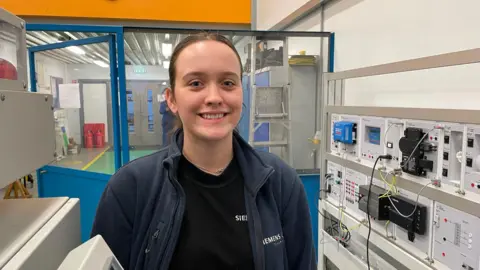
Daisy Rendall, 19, has travelled from Aberdeen to study after seeing her own family work in the oil and gas industry. She says she thinks renewable energy offers "better prospects" for the future.
"I started thinking about a job that will see me to the end of my career and it's pretty clear that oil and gas won't do this," she says.
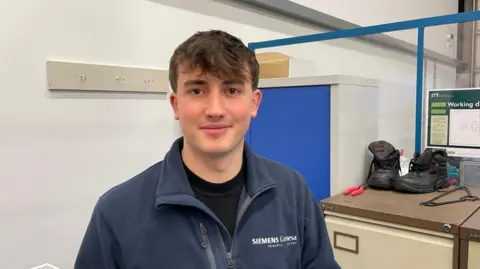
For others, working offshore has been a "childhood dream". Alfie Bone, 17, joined the course after relocating from Newcastle.
"I used to see them [the turbines] when I was walking along the coast up in the North East and I have always wanted to work on them," he says.
"I think it's going to be very enjoyable."
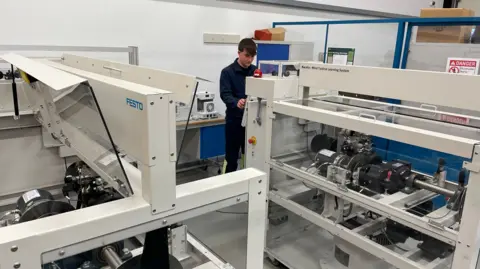
The students begin their training using state-of-the-art simulators based in the college workshops in Scunthorpe, North Lincolnshire.
The machines replicate the engineering and electronics found in offshore turbines but allow for learning in a safe environment.
Henry Timson, 20, from East Yorkshire, says: "Working offshore can be extremely challenging and these workshops are not only teaching us technical skills but they are also showing us the importance of working as a team."
Once qualified, the apprentices will work out at sea on turbines that tower more than 200m (650ft) above sea level.
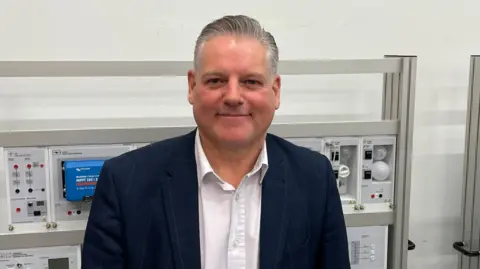
"It's physically demanding, technically demanding and you obviously need a head for heights," says George Machin, director of engineering and construction apprenticeships at the college.
Investment by Siemens Gamesa in Hull has created more than 1000 jobs in wind turbine blade manufacturing and about 700 people work across Ørsted's East Coast operations from turbine technicians and marine specialists to data analysts and apprentices.
Training courses and apprenticeships similar to those at North Lindsey College are also available in Hull and look to support future growth in the industry.
Mr Machin describes the possibilities for offshore wind as "extremely exciting" and says it bodes well for career prospects on both sides of the Humber.
"The industry is recognising us as an epicentre for engineering technicians and we're getting interest not just in this country but from Poland, Ireland and we've even had a delegation from America coming to see us," he adds.
Listen to highlights from Hull and East YorkshireorLincolnshireon BBC Sounds, watch thelatest episode of Look Northor tell us about a story you think we should be covering here.
Download the BBC News app from the App Store for iPhone and iPad or Google Play for Android devices
