What does Neet stand for and how many are there in the UK?

 Getty Images
The government wants to reduce the the number of young people who are currently not in education, employment or training - also known as Neets.
They account for one in eight people aged 16 to 24 in the UK, according to the latest official figures.
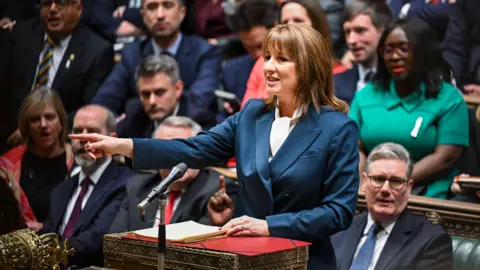
In the November Budget, Chancellor Rachel Reeves announced £820m of funding to support 18 to 21-year-olds into education or paid employment.
What does Neet mean?
A young person is considered Neet if they are:
- unemployed - looking for work; or
- economically inactive - not actively looking for work and not waiting to start a job or caring for family
They are not considered to be Neet if they are in formal education, such as school or university, doing an apprenticeship or vocational course, or in full-time or part-time work.
How many Neets are there?
Every three months, the Office for National Statistics (ONS) releases figures on the number of Neets in the UK.
The ONS produces its estimates from its Labour Force Survey. Fewer people have responded to the survey in recent years, which makes the results more volatile than in the past.
There were 957,000 young people who were Neet in the UK in the period from October to December 2025. That's equivalent to 12.8% of all people aged 16 to 24.
Most of those (547,000) fell into the economically inactive category.
The number of Neets tends to fluctuate throughout the year.
The total for the July to September period was slightly lower at 946,000, whereas the April to June total was 948,000.
The largest quarterly Neets total was recorded in July to September 2011, when the number peaked at over a million after the 2008 financial crisis.
Who are the Neets?
Historically, more women than men have been Neet.
But in recent years that trend has reversed, and the ONS says a young man is more likely to be Neet than a young woman.
Research by the government into 16 and 17-year-old Neets found they were more likely to be white than have another ethnicity.
Outside of this age group, however, the Youth Futures Foundation found that Black, Black Caribbean and Black African young people had a higher Neet rate than the UK average.
Further analysis by the foundation showed significant regional variation too, with young people in the North East and East of England more likely to be Neet than those living elsewhere in the country.
Qualification levels are also a factor in how likely someone is to be Neet.
Research by the Impetus charity found that young people with fewer than five GCSEs by age 18 were more likely be Neet than those with more or higher qualifications.
Why are there so many Neets?
 Getty Images
The Youth Futures Foundation says one of the main causes of economic inactivity over the past three years has been a rise in long-term sickness among young people.
Figures from the Department for Education (DfE) showed that more than half of the Neets in England in 2024 had a health condition.
Around one in five (18%) had a mental health condition.
DfE data also suggests that more than 10% of young people who are Neet have learning difficulties.
The jobs market is also particularly challenging for young people, with 2025 figures showing a falling number of vacancies and fewer people on payrolls.
Analysis published in August 2025 suggested that more than half of jobs lost since the previous Budget had been in the hospitality sector - a sector which traditionally employs a disproportionately high number of people in the 16 to 24 age group.
Low pay and lack of availability has previously been an issue for young people finding apprenticeships, while some graduates have also experienced difficulty finding work after university too.
What is the government doing about Neets?
 House of Commons/PA Wire
In her budget speech, the Chancellor Rachel Reeves promised £820m over three years to provide anyone aged 18 to 21 in England with access to an apprenticeship, training, education opportunities or help to find a job.
Those who have been Neet for more than 18 months will also be given a six-month paid work placement, to help them prepare for a full-time job.
Anyone who refuses to take up the offer could be stripped off their benefits.
Reeves also said the government would fund a scheme to make apprenticeship training for under-25s at small and medium businesses "completely free".
Association of Colleges head David Hughes said the money would enable colleges to support more young people so they do not end up not in education, employment or training.
But he said more money was needed, adding: "To fully support the nearly one million young people who are Neets, there will need to be more adult education funding, and to ensure millions of adults are not left behind by the tech and green revolutions we are seeing before our eyes, that budget will need to grow even more."
The Department for Work and Pensions (DWP) also announced that former Health Secretary Alan Milburn would lead an independent investigation into what's behind the rise in youth inactivity.
It will focus on the impact of mental health conditions and disability, and aims to report in summer 2026.
What else is being done across the UK?
In Wales, the Young Person's Guarantee was introduced in 2021 to help 16 to 24-year-olds choose the right course, find an apprenticeship, search for jobs or start a business.
In Scotland, the Developing the Young Workforce (DYW) scheme was announced in the wake of the Covid pandemic to connect young people with appropriate opportunities such as apprenticeships, work experience or formal volunteering.
In Northern Ireland, there are a range of schemes aimed at helping Neets.
