'Excessive' force used on teenager killed during Troubles

 BBC
BBCThe use of lethal force by a soldier in the shooting dead of a teenage boy during rioting in 1971 was not justified, an inquest has found.
Desmond Healey was 14 when he was killed by a bullet to the heart amid disorder in west Belfast on the first day of internment.
Coroner Maria Dougan found he had been involved in the rioting in the Lenadoon area but that, while she was satisfied that petrol bombs were present in the area, the teenager had been throwing a glass bottle.
Ms Dougan said the use of a live round in the circumstances "would have been unreasonable and therefore excessive".
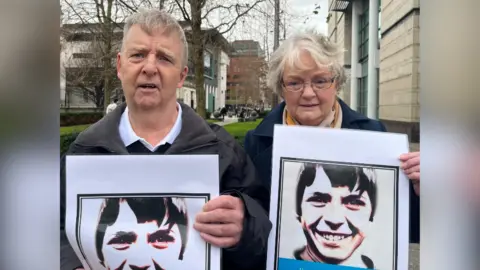
Desmond's twin brother Ted Healey attended the final hearing of the inquest.
Speaking on his behalf afterwards, his solicitor Pádraig Ó Muirigh said it was "another shameful day in the history of the British Army in this part of Ireland".
"In a democratic society when a child has been killed in controversial circumstances it should be scrupulously investigated immediately," he said.
"It shouldn't take the 54 years that this family have had to wait on these very important findings today."
Mr Ó Muirigh added it was a "relief" to the family to finally have a "proper legal verdict" on their loved one's death.
'Significant civil disorder'
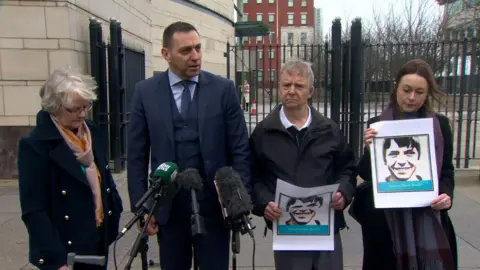
The Coroner's Court, sitting at Laganside in Belfast, heard that soldiers from D Company of the Parachute Regiment were involved in the incident.
The coroner referred to the soldier who fired the fatal shot at Desmond as Soldier D, however concluded that she was unable to identify him.
Desmond was killed on 9 August 1971 - the day the controversial policy of internment without trial was introduced in Northern Ireland.
The aim of the policy was to deal with the worsening security situation of the time, but rather than reduce disorder, violence increased with rioting flaring in nationalist and republican areas.
Desmond was killed amid disorder after soldiers moved in to arrest and intern suspected IRA members.
Ms Dougan said his death occurred "against the backdrop of significant civil disorder" across Northern Ireland.
'Desmond Healey was not engaged in the act of throwing a petrol bomb'
The circumstances around Desmond's death have long been disputed.
A review carried out by the Historical Enquiries Team in 2012 found there was no evidence to counter claims by four soldiers that they thought they were under attack by petrol bombs and that they were acting in self-defence.
Ms Dougan said the petrol bomb dispute was intertwined with the use of lethal force.
She said she was satisfied, on the balance of probabilities, that "petrol bombs were present in the area and that they were brought to the scene of the riot on Lenadoon Avenue".
However she added: "Desmond Healey was not engaged in the act of throwing a petrol bomb. Rather he was engaged in the act of throwing a glass bottle."
She said she had taken into account competing evidence, including a report of forensic results which indicated that an examination of the clothing and swabs taken from the hands and neck did not reveal signs of inflammable substances.
'It won't bring his brother back'
Friday would have been Desmond's 69th birthday.
The solicitor representing his twin brother Ted Healey said: "They're celebrating their birthday tomorrow, and he's had many birthdays without him - 54 now.
"You have to remember that Ted was a child then as well when this happened. It had big consequences for him and his family, and his family life after that. And has lived with him."
Mr Ó Muirigh added that it had taken "a lot of bravery and courage" for Mr Healey to bring this case forward.
"It won't bring his brother back. But certainly it can be a measure of healing for him that he finally has a legal verdict," he said.
"He knew on 9 August 1971 that his brother shouldn't have been shot and the force used was unjustified. It's unfortunate that it took the courts and the legal system many decades to come to the same conclusion."