DUP leader warns London not to 'surrender' over legacy bill

 PA Media
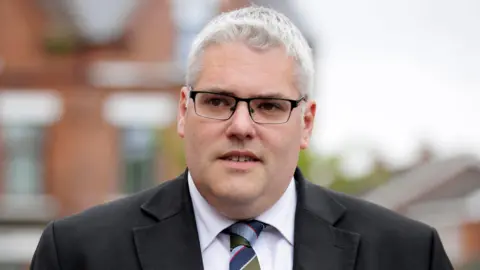
London must not "spinelessly surrender" to the Irish government when it comes to ensuring Army veterans are protected in new Troubles legacy legislation, Democratic Unionist Party (DUP) leader Gavin Robinson has said.
His comments come after Prime Minister Sir Keir Starmer suggested amending the Troubles Bill, which is going through Parliament, to give those who served in the armed forces greater safeguards.
However, Irish Foreign Minister Helen McEntee then said there could be no changes that "shift the balance" of what the two governments agreed on the issue last year.
Labour had promised to repeal and replace laws brought in by the last Conservative government.
These included a ban on inquests and civil actions related to Troubles-era incidents.
The Northern Ireland Troubles Bill seeks to do this, and includes "robust" protections for former soldiers.
These were omitted from the wording of the legacy agreement struck by the British and Irish governments in September, but announced separately by London.
'Delivered nothing for victims'
In Robinson's email to party members on Saturday, he said it was vital any legal framework "clearly distinguishes between those who upheld the law and those who sought to undermine it through terrorism and violence".
He said he recognised the prime minister's commitment to addressing this, after Sir Keir told MPs on Wednesday the government had met veterans' groups and that those conversations will be reflected when the bill reaches the point that amendments can be made.
 Northern Ireland Office
Robinson then criticised the Irish government for insisting that significant changes cannot be made without its support, adding: "That's a clear challenge to the prime minister - will he side with sovereignty and protect our armed forces; or spinelessly surrender to the republic who have delivered nothing for victims?"
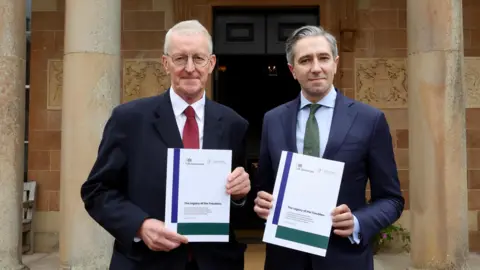
The Irish government insists what was agreed last year marks a "fine balance" and that large amounts of work went into making sure it represents all voices.
The prime minister previously said the plans include protections for Army veterans, but not paramilitaries.
What is in the legacy deal?
The government said the deal involves a package of protections for veterans, including "a protection in old age".
The Legacy Commission, born out of the Independent Commission for Reconciliation and Information Recovery (ICRIR), will have independent oversight.
The new commission will also be "under a statutory duty not to duplicate the work of any previous investigations unless there are compelling reasons to do so".
It will have two new directors for investigations.
The commission must also "take into account the health and well-being of potential witnesses at all times".
 PA Media
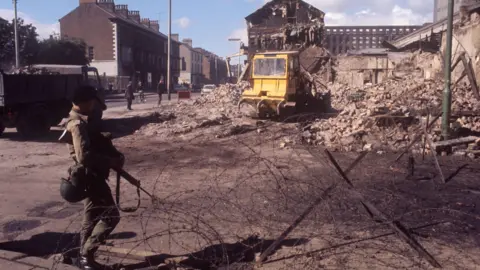
Inquests, which had commenced but had not ended before the current Legacy Act came into force in 2024, will be restored.
Others which had not begun will be reviewed to identify a way forward.
The bill passed its second reading in the Commons last year and will also have to be passed by the House of Lords before it can become law.
While both governments said the plan aims to deliver truth, reconciliation and protections, many families of those killed during the conflict and some politicians have expressed scepticism.
