Reservoir wins poll on where blue plaque should go

 Getty Images
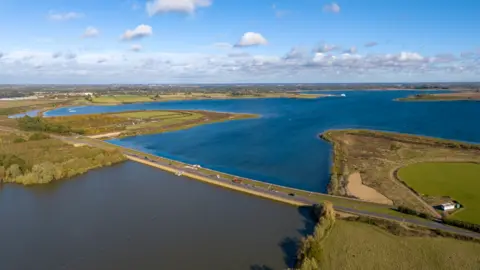
A reservoir will get a blue plaque after it topped a county-wide poll to decide which person or place should be commemorated.
To mark Essex Day, on 26 October, residents were asked to suggest plaque sites that reflected the county's history.
Abberton Reservoir - a globally important wetland site where the Dambusters practised for their World War Two mission - got hundreds of nominations.
"It's an incredible achievement, said Kieran Ingram from Essex and Suffolk Water, which runs the reservoir, near Colchester.
The poll was run by Visit Essex, which promotes the county as a place for tourists to visit.
Lisa Bone, from the organisation, told BBC Essex: "It was great to get our Essex residents involved to choose where they think is a really good story, or to celebrate people around the county current and past.
"I know there are so many great stories in Essex but it was really good to bring them to the forefront."
 Visit Essex
At 700 hectares (1,700 acres), Abberton Reservoir, built between 1935 and 1939, is the largest body of freshwater in Essex.
In World War Two it was mined to deter invading seaplanes.
It was used by the RAF's No. 617 Squadron, known as the Dambusters, for practise runs for the bombing of German dams in the Ruhr.
The reservoir is important for its breeding cormorants, wintering and moulting waterfowl, and migrating birds.
Essex Day, on 26 October, celebrates the county and commemorates its patron saint, St Cedd, a bishop born in the 7th Century.
He established numerous monasteries and churches including the Chapel of St Peter-on-the-Wall at Bradwell-on-Sea, one of the oldest churches in Britain.
Blue plaques commemorate historical figures and events.
Already in Essex there are plaques for, among many others, Winston Churchill, radio pioneer Guglielmo Marconi and the actress Joan Sims.
Follow Essex news on BBC Sounds, Facebook, Instagram and X.
