Who was Ann Lee who inspired a Hollywood film?

 Searchlight Pictures
From humble beginnings in Manchester, Ann Lee became the leader of a radical 18th Century religious sect she took to America.
She led the Shaker movement and was known as Mother by her followers.
However, little was known about her until now - as Hollywood film The Testament of Ann Lee, starring Amanda Seyfried of Mean Girls and Mama Mia fame, shines a light on her extraordinary life.
Find out more on how an illiterate woman born in poverty in Manchester took her faithful to the US, with her movement ending up with thousands of followers.
Who was Ann Lee?
She was a charismatic and visionary leader of the Shaker movement who her disciples claimed to embody Christ's second coming.
What was her background?
She was born in Manchester in 1736, the daughter of a blacksmith.
She was one of eight children and worked in the textile industry and as a cook at Manchester Infirmary, said author and former professor of American Studies at the University of Manchester Richard Francis.
At the age of 26, she married a blacksmith and had four children who all died shortly after birth.
How did she first get into religion?
She got involved with a couple from Bolton, called the Wardleys, who had fallen away from the Quaker movement and were part of a group known as the Shaking Quakers, or Shakers, known for ecstatic and wild dancing and singing during worship.
She soon took over the group in about 1770 and presented herself as the "female redeemer" and the "Mother" of the Shakers, Francis said.
What was the theology behind her Shaker movement?
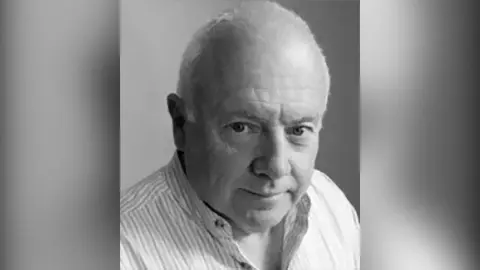 Richard Francis
Lee believed the apocalypse was near and her mission was to lead her faithful into the final moment of salvation, said Francis, who wrote the biography Ann The Word: The Story of Ann Lee, Female Messiah, Mother of the Shakers, the Woman Clothed with the Sun.
She championed celibacy, communal living, and gender equality.
What was she like as a leader?
Francis said she was fiery and charismatic and even though she was "battered by life she never gave up".
He said there were accounts of people hiding from her as they were frightened of her reputation for having a "magnetic pull" to convert people.
Why did she leave Manchester?
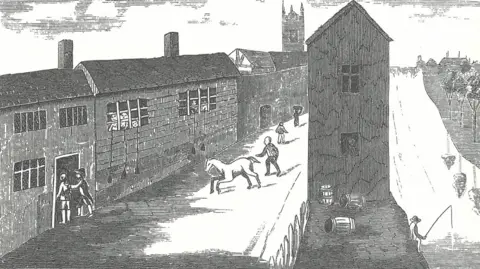 Richard Francis, Ann the Word (Fourth Estate, 2000)
Things had become heated with neighbours, which included being attacked by mobs disgruntled about the wild ceremonies they held, and she was also sent to prison to the House of Correction at Hunt's Bank for breaking up divine services, Francis said.
To escape persecution, she took about 10 of her faithful, including her husband and father, on a pilgrimage to America, settling in Niskayuna, New York State.
Francis said the move in 1774 was also due to the pull of possibilities in a new land, "full of souls to harvest".
What happened in America?
She faced controversy in America too and was jailed briefly on suspicion of spying and faced attacks by men who questioned whether a female should be a leader and so powerful, Francis said.
Lee had a dramatic flood of followers to her utopian community following a gathering of hundreds of people - who believed there was a "second coming" - at land near where Lee and her adherents were living, Francis said.
Two people from the group stumbled across Lee's log cabin and believed she was the Messiah they were waiting for.
"Hundreds suddenly joined her," he said.
She died at the age of 48 in 1784 but the Shaker movement continued to grow and, by 1850, it was estimated to have more than 5,000 followers.
How did being from Manchester shape her?
Being from Manchester was integral to her indomitable spirit despite the trials and tribulations of her life, Francis said.
"She was a tough Mancunian... her Manchester cheek gave her the ability to confront authority," he added.
What is her legacy?
She created the Shaker community, which went on to create the Shaker furniture that is probably what the movement is best known for today.
However, Lee was an early pioneer of the equality of women far ahead of her time.
What did Amanda Seyfried say about playing her?
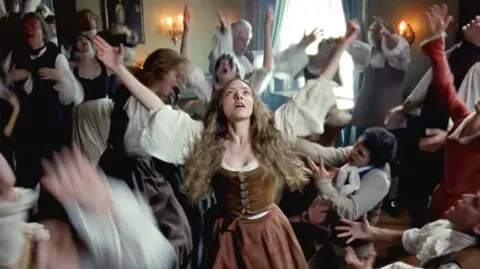 Searchlight Pictures
Seyfried told the BBC's Front Row it was "very liberating" playing someone like Ann Lee because her story was not well known, although it was "a really intense look" into her life so a lot of responsibility too.
She said the film was "honouring her".
"Not necessarily the religious aspect of it... a human being who suffered and came through and found her place in the world and created a place for everyone else".
Listen to the best of BBC Radio Manchester on Sounds and follow BBC Manchester on Facebook, X, and Instagram. You can also send story ideas via Whatsapp to 0808 100 2230.
