'Why is it always the women that get punished?'

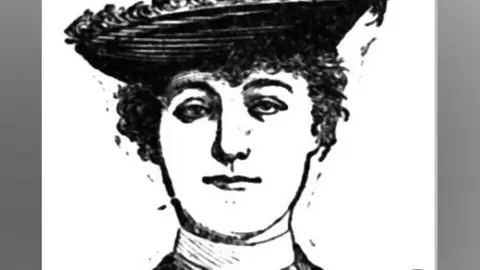 Cambridgeshire Collection
Volunteers from a family history group have begun transcribing the records of at least 6,000 women, imprisoned by Cambridge University in the 19th Century.
The Cambridgeshire and Huntingdonshire Family History Society team was inspired to do so after learning about the private prison from author Caroline Biggs.
They were shocked to hear the women, locked up on suspicion of soliciting students, did not receive fair trials, while no evidence of wrongdoing was recorded.
"To quote one of the volunteers, 'Why is it always the women that get punished?'," said Terry Garner, the society's project officer.
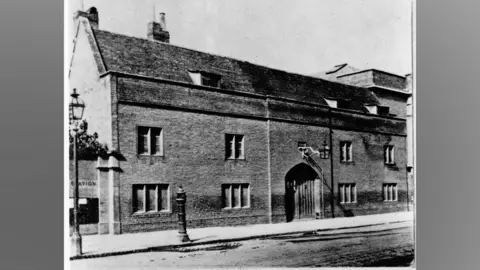 Museum of Cambridge
No information of any kind was recorded about the men they were alleged to have been caught with, at a time when the university prioritised protecting the reputation of its mostly upper class students.
"It was an abuse of power, but Cambridge is run by the university," said Garner, who grew up in the city and now lives in Elmswell, near Bury St Edmunds in Suffolk.
An Act of Parliament in 1825 had given the university a private police force of special constables, nicknamed the Bulldogs by townspeople, who targeted women found "in the company" of a member of the university after dark.
Once arrested, they were taken to the university's vice-chancellor for sentencing.
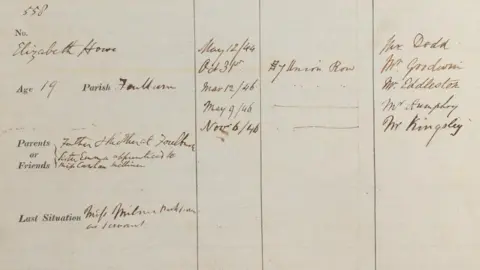 Cambridge University Library/Cambridge University
The ledgers of the prison, which was called the Spinning House, are in the archive at Cambridge University Library.
"They provide a rich source of information for family historians tracing the lives of working class women; so little is written about working class women," said Biggs, who spoke to the society in 2024 about her book charting the decades-long campaign to abolish the prison.
Some of the entries were sparse, with just the names and ages of the arrested women. Others included addresses, occupations and even their parents' or siblings' details.
"If you look at one or two of the entries, suddenly they become people," she said.
"There was no evidence they were prostitutes - although some must have been - and once they were inked into that book, their characters were ruined and that of their families. It was a big thing and very emotional."
The prison was abolished in 1894 after Daisy Hopkins, 17, secured her release by bringing a landmark case still referred to today.
 Caroline Biggs
Garner said: "It's my job as project officer to look for more material to transcribe - we've already covered county, parish and census records and most of the non-conformist churches.
"After Caroline's talk, we realised this was a very rich source of material that had not been transcribed."
Chairman David Copsey approached the library about a joint project, transcribing the records in a manner suitable to be added to both the library's and society's databases.
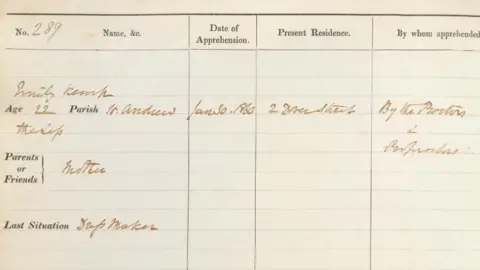 Cambridge University Library/Cambridge University
The society's "kind and generous donation funded the digitisation of the records", said Jacky Cox, keeper of the university archives.
She said: "From our perspective, it's marvellous to have these resources of town and gown out there.
"These were poor women who don't otherwise appear much in the records and their stories deserve to be told."
In January, Garner appealed for volunteers to start the transcriptions and he currently has 14 hard at work.
"One volunteer found out he'd got one of these women in his family history - he's loving it, as he's finding out a bit more about an ancestor," he said.
The Spinning House Committal Records can be seen on the university library website, while family historians should contact the Cambridgeshire and Huntingdonshire Family History Society about access to the transcriptions.
Follow Cambridgeshire news on BBC Sounds, Facebook, Instagram and X.
