History professor's Iron Age hoard sells for £33k

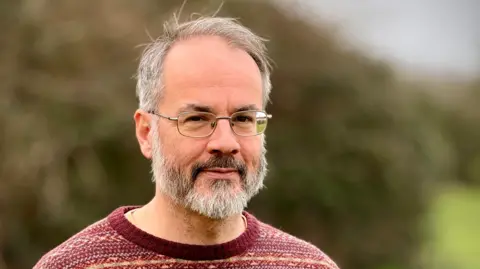 Tom Licence
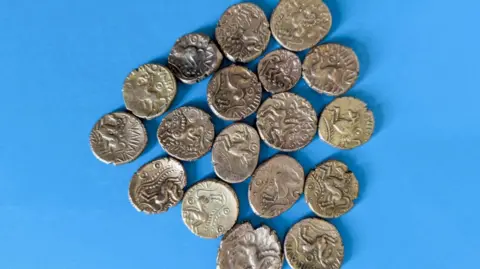
A hoard of 18 Iron Age gold coins discovered in a field by a metal detecting history professor has sold for £33,200 at auction.
The coins are the largest known find from the reign of Iron Age king Dubnovellaunos, who ruled the Trinovantes tribe in eastern England between 25BC and AD10.
Known as The Bury St Edmunds Hoard after the Suffolk town, the coins went under the hammer at auctioneer Noonans Mayfair. The money raised was shared with the landowner.
The finder Prof Tom Licence, from the University of East Anglia, said: "With the share which the landowner is generously granting me, I will be supporting archaeological work in Suffolk."
 Tom Licence
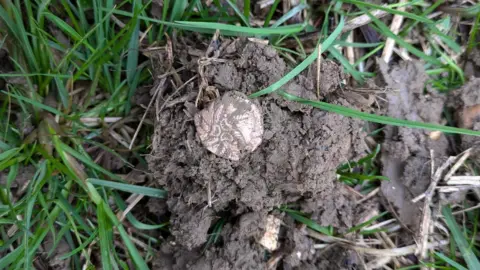
Licence, a professor of medieval history and literature at the Norwich-based university, found the hoard in the autumn of 2024.
Among the find were 16 coins known as staters and one quarter-stater.
The professor, who was born in Essex, found the field while looking for somewhere to take his niece metal detecting.
He first found some Viking hack silver and then struck gold.
 Tom Licence
Towards the end of the day, he took the coins to show the landowner and his wife, returning to the site a few months later and finding one more stater.
"It was an honour to see expert collectors taking these coins into their care," the detectorist said.
"So much of the research on ancient coins is done by the collecting community, all around the world. Without their contribution, we would know very little."
 Noonans
The Trinovantes tribe were based in what is now mostly Essex and Suffolk.
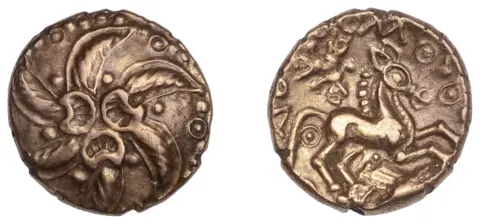
Among the hoard's highlights was a Addedomaros wheel stater, which confirmed the spelling of the name on that early type, which was previously uncertain. It was estimated to fetch up to 3,600, but instead made £4,600.
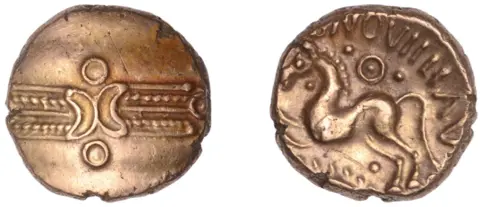 Noonans
A Dubnovellaunos stater, with a previously unrecorded die, fetched £3,400, against an estimate of up to £2,000.
They were bought by the same anonymous collector from the United States.
All the auctioned coins were sold, but Licence and the landowner chose to keep a single stater each.
Follow Suffolk news on BBC Sounds, Facebook, Instagram and X.
