Volunteers discover 'significant' Roman building

 Albion Archaeology
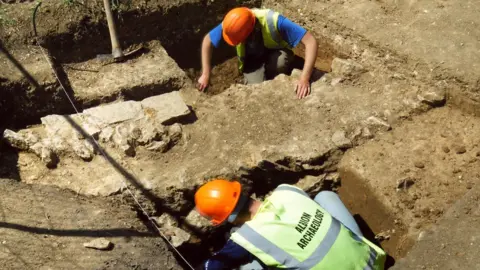
Volunteer archaeologists are set to return to the remains of a Roman settlement after making the most significant discovery of their 15-year project.
Ancient items such as roof tiles, pottery and coins have been found during the Bedford Roman Villa Project on Manton Lane, in the town, since excavation work began in 2011.
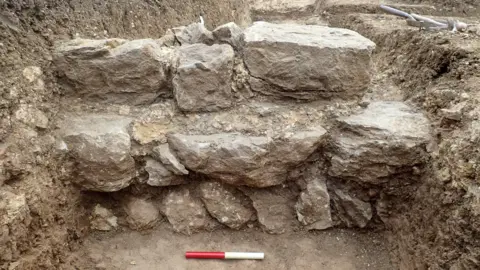
But in October, the presence of a previously undiscovered large rectangular Roman building was unearthed.
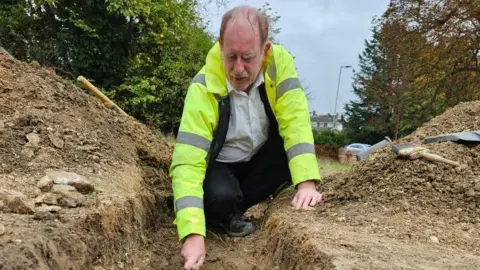
Archaeologist Mike Luke, who has been working on the project, said the latest finds were "putting Bedford on the map of Roman Britain".
 Bedford Roman Villa Project
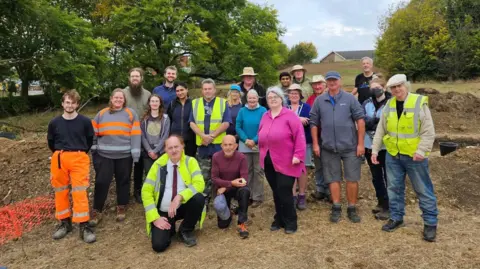
The community project was started by amateur Roman historians, Steven Cockings and Elizabeth Sayer, on land owned by a care homes company.
Stone and mortar, and iron tools, have also been discovered over the years.
In 2016, a larger excavation area was opened up, revealing a room with an under-floor heating system known as a hypocaust, a collapsed wall and evidence that the hillside had been terraced during the Roman period.
Stucco work - a rare type of decorative moulding found at only a small number of Roman sites in Britain including at Fishbourne in West Sussex - has also been found.
"The type found at Manton Lane is currently the only example of this particular style found in Roman Britain," said Mr Luke, who works for private firm Albion Archaeology, but has volunteered on the project in his own time.
The latest digging took place between 21 September and 5 October, and he hopes "fundraising by the community" will ensure the teams can return.
 Mike Luke
Mr Cockings, who is chairman of the project, said: "In the 1980s it was thought that there was little of interest to do with Roman Britain in Bedford and this part of the Ouse Valley, and that we were a bit of a backwater.
"We now know that we are located in one of the heartlands of this Roman province."
He said he thought the Bedford Roman villa appeared to be one of the most lavishly decorated buildings in late Roman Britain.
 Bedford Roman Villa Project
Volunteers, mostly from Bedford area, but also from Scotland, Ireland, National Highways and the British Museum, have joined in.
Mr Cockings said the latest excavations "have unexpectedly uncovered a substantial new section of our villa complex in an area that was thought devoid of occupation".
He hoped that after returning to the site, information could be published in book form so "details of this nationally important site are made available to the general public".
Mr Luke added: "The results of the community archaeological investigations are putting Bedford on the map of Roman Britain."
Follow Beds, Herts and Bucks news on BBC Sounds, Facebook, Instagram and X.
