How alcohol-free venues ended up as pubs

 BBC
BBCMany of the buildings on high streets up and down the country have their origins in a movement that swept through Victorian England and encouraged people to give up or cut down on alcohol.
The purpose-built buildings, many of them to be found in the North West, were constructed as part of the temperance movement, a popular campaign against the perils of drunkenness that took off in the 1800s.
But these booze-free billiard venues, meeting rooms and music halls built in the 19th Century by those championing sobriety and teetotalism have found a second life.
In what might have raised eyebrows among early advocates of temperance, the surviving sites have been repurposed and now have uses including shops, gyms, and even pubs.
There was not one singular temperance movement, but many campaigns across Britain and the US in the 19th Century to encourage people to stop drinking.
Some permitted the drinking of beer, but the North West is thought to be the birthplace of the push towards teetotalism.
In 1832, Preston cheesemonger Joseph Livesey and six other local men signed a pledge of total abstinence at a public meeting which was viewed as the beginning of teetotalism.
As the movement grew, those involved began setting up their own venues to rival licensed premises.
The earliest temperance billiard halls were found in Liverpool, before many more cropped up in Manchester.
Andrew Davison, author of the book Built Heritage of the Temperance Movement, said he was inspired to look into the buildings after the temperance movement kept cropping up as he researched another book he co-wrote on the history of pubs.
"Like a lot of things with the temperance movement, they started as a reaction to buildings with billiard halls which were being developed by the licensed trade," he said.
"The temperance movement was very much into providing alternative facilities for people who didn't drink."
One of the most well-known firms which built the sites was Temperance Billiard Halls Limited, based in Pendleton.
In 1904, the Manchester Courier said the first temperance billiards hall in Manchester, which opened in Moss Side, had been "specifically designed to provide facilities for health and indoor amusement and enjoyment amid temperance surroundings at a price within the reach of everybody".
That building still survives, although altered, and is now a furniture shop.
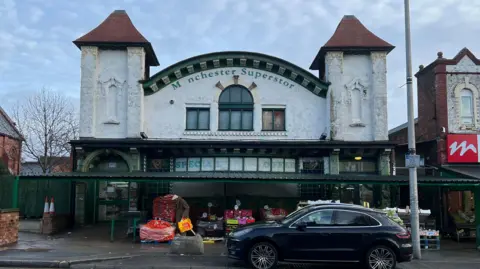
In the north of Manchester in Cheetham Hill, a former temperance hall built in 1906 later became Hot Shots Snooker Club, and now lives on as a large Asian grocery store.
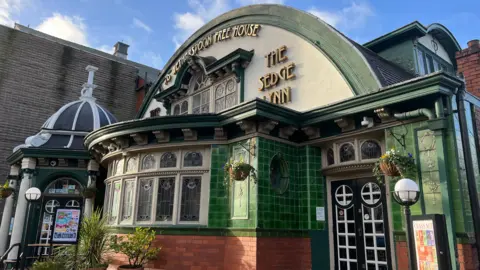
Another former temperance billiard hall site on Manchester Road in Chorlton also became a snooker club for a number of years, and was known as Chorlton Snooker Centre when it was listed in 1996.
It has now become a pub named The Sedge Lynn run by Wetherspoon, but retains its distinctive look.
Elsewhere, another Manchester former temperance hall that has also since become a pub is the Embassy in Harpurhey which was owned by the controversial late comedian Bernard Manning.
Mr Davison said all these temperance sites helped create some of the more ornate pubs we have today.
In the middle of the 19th Century many licensed premises were "pretty nasty places" while the temperance versions "were far improved", he said.
"They very much humanised the idea of the pub and indeed the pub we have today where you can get a soft drink, most places you can get something to eat," Mr Davison said.
"And that's very much a result of the impact of the temperance movement on licensed pubs," he said.
But for a movement that eschewed alcohol, Mr Davidson said he suspects those early advocates of sobriety would have "been a little bit disturbed" by the buildings becoming pubs.
"But on the other hand, one strand of the temperance movement always was moderation. You didn't drink hard liquor but you could drink beer in limited qualities.
"But they might not, in the social context of today where alcohol isn't quite such an evil as it was in the 19th Century, they might not be as perturbed as you might think but who knows!"
