The inclusive school blazing a path on SEND reform

 BBC
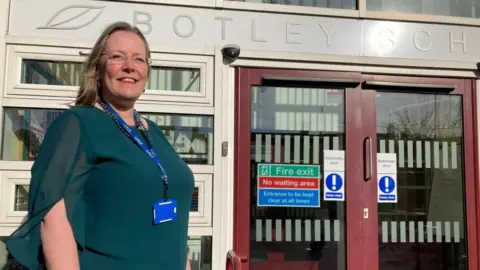
BBCA headteacher says her primary school is "three years ahead" of national plans to include more children with special educational needs and disabilities (SEND) in mainstream classrooms.
Botley School, in west Oxford, is much like any other primary, welcoming children from nursery age all the way up to year six.
But unlike many schools, Botley has a dedicated programme, supporting children with SEND to learn and play alongside their friends.
Describing the scheme as "transformative", head teacher, Jo Reid, says it has led to improvements in behaviour, attendance and learning outcomes.
This week the government published its Schools White Paper, setting out sweeping reforms to the SEND system in England.
Known as an enhanced pathway, the Botley programme is backed by funding from Oxfordshire County Council.
It provides a flexible, dedicated space for children to access when learning in a mainstream classroom becomes too difficult.
Additional teachers provide specialist support for pupils with more severe learning challenges, including for non-verbal children.
Each child who has been identified as benefiting from the pathway will have their own bespoke learning programme, helping them to achieve individualised learning goals.

Reid said: "Previous to having a pathway, children would be in a mainstream classroom that was overwhelming. There was too much to stimulate them. So there was a lot of dysregulated behaviour which then has a wider impact on the school.
"Opening a pathway meant we could allow the children the space they needed to be in school, where they could work at their own pace.
"They didn't have the pressure of following the classroom rules that were overwhelming for them. It immediately meant they could start learning, so for us it was a transformative programme."
The enhanced pathway programme has been rolled out to 40 schools in Oxfordshire, with an additional 20 schools due to join after the local authority committed another £1.2m to the project earlier this week.
Councillor Sean Gaul, Oxfordshire County Council's cabinet member for children's services, described the project as a "spend to save" model, enabling the council to support more people in the county.
"Delivering 20 enhanced pathways can support just over 300 children. If that money was spent on delivering alternative educational provision, we would be able to support just under 100 children.
"If that £1.2m was spent on delivering education in independent special school places, we'd be able to support 17 children," he said.
There are already 76 Oxfordshire schools that have expressed an interest in setting up their own pathway through the new funding.
Both primary and secondary schools can apply and will need to provide a business case to be considered.
You can follow BBC Oxfordshire on Facebook, X, or Instagram.
