The 18th Century mud walls built to beat brick tax

 BBC
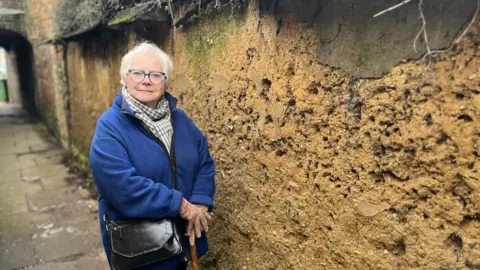
BBCRare walls made of mud from the 18th and 19th Centuries that are "in danger of completely disappearing" have been given extra protection.
The walls in Whittlesey, near Peterborough, were made in response to the brick tax, which was in force between 1784 and 1850 to raise money for the American War of Independence.
Fenland District Council has made a direction that means any alterations to the 28 remaining walls in the Cambridgeshire town would need planning permission.
Chris Terrey, from the Whittlesey Society, said the walls were "very mundane, ordinary looking" but added: "When something is in danger of disappearing altogether, that makes it even more important that it should be retained."
A paper for the council's cabinet said the number of mud walls was declining and "those which remain are increasingly fragile".
It added: "Once lost, these structures cannot be readily replaced, and their cumulative erosion undermines the distinctive historic identity of Whittlesey."
Seven of the walls are already listed but a report recommending the direction said: "This means that 21 surviving sections remain with little or no formal protection."
The cabinet has agreed to what is termed an article four direction, which conservation officer Sam Falco said was "a vehicle that local authorities can use to remove permitted development rights for alteration [and] demolition".
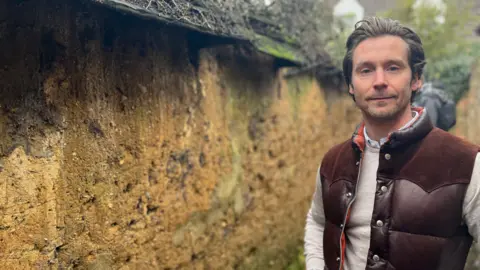
He said the walls were developed as a cheap and effective method of enclosing boundaries, made with clay mixed with gravel, sand and straw, and they were traditionally thatched.
"Now most of them have got timber boarding to protect them from washing away."
He said there was a tradition, particularly in East Anglia, of these mud walls but "Whittlesey seems to retain an unusual amount".
Dee Laws, a Conservative councillor whose portfolio includes building control and planning, said the plan went back to 2006, and she and others had "mapped, visited, climbed over brambles, fallen down ditches to look at mud walls to bring this forward".
She added: "It offers slightly more protection. It gives us a little bit more muscle."
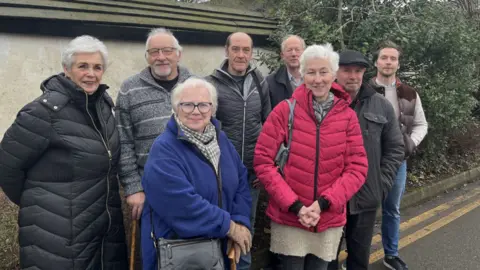
Terrey said some residents of properties that abutted the mud walls did not realise understand that they were rare and that it was probably their responsibility to help preserve them.
"Lots of people would prefer a wood-panelled fence, but our mud walls could never be replaced by a wood-panelled fence, in my opinion."
She added that "if you lose all of your history, you have no past at all".
Follow Cambridgeshire news on BBC Sounds, Facebook, Instagram and X.
