Scottish Parliament backs new tax on housebuilding

 PA Media
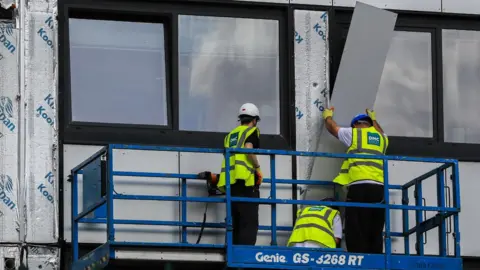
MSPs have backed a new housebuilding tax designed to raise money to repair unsafe cladding.
The Building Safety Levy Bill (Scotland) has been designed to raise about £30m a year to help fund work to fix buildings with unsafe cladding in the wake of the Grenfell disaster.
But critics have warned the proposals could hinder housebuilding and unfairly penalise developers.
MSPs backed the general principles of the bill by 65 votes to 54. It will need to pass two more stages of parliamentary scrutiny before passing into law.
The levy - which is yet to be set - is to be charged on the construction of certain new residential properties from April 2028, a year later than originally planned.
The proposals mirror legislation south of the border.
The tax would apply to new homes built by developers for sale, student flats, build-to-rent properties and buildings being redeveloped for residential accommodation.
The funds raised will contribute to the Scottish government's Cladding Remediation Programme, which was launched in response to the 2017 Grenfell Tower disaster in London.
It has been estimated that the programme could cost up to £3.1bn over 15 years, with up to 1,460 high-rises thought to require work, although those figures are disputed.
The Scottish government has been given about £97m by the UK government as a result of remedial work south of the border.
 PA Media
During the stage one debate, Scottish Conservative MSP Stephen Kerr said the government had only spent £14m of that funding, accusing ministers of making "pathetic" progress.
Tory finance spokesman Craig Hoy, citing concerns of housebuilders, told MSPs: "This is the wrong bill.
"It will be negligent for parliament to pass it."
Labour's Richard Leonard raised concerns that the bill would lead to the "scrupulous having to pay for the unscrupulous".
The party's finance spokesman, Michael Marra, called for the introduction of the legislation to be delayed.
He urged the government to consider a "better way of getting on and spending the money that they have to deal with the cladding situation" before coming back to parliament with a "better proposal".
Public Finance Minister Ivan McKee said the bill was "essential" to raise the funds needed for the "much-needed" remediation programme.
He added that the government was willing to work with those with "constructive" complaints about the bill, including rules on exemptions from the tax.
 Getty Images
Residents of high-rise buildings with unsafe cladding have backed the proposals, but expressed frustration at a lack of progress in dealing with the issue.
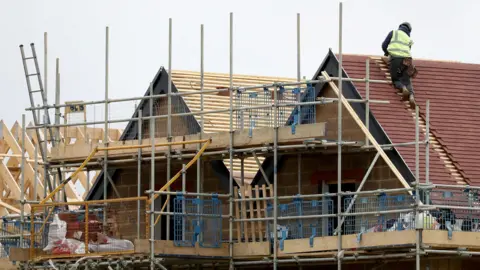
Meanwhile, some critics have claimed the tax could could add thousands of pounds to the cost of building new homes.
Trade body Homes for Scotland, whose members deliver the vast majority of all new homes in Scotland, told the finance committee the tax was unfair to firms that were not responsible for installing unsafe cladding, while parts of the supply chain that were would not have to contribute financially.
It said many developers were already contributing to remedial work through UK taxes and that a new levy could slow down housebuilding during a housing emergency.
Housebuilders also raised concerns about the accuracy of data on the number of buildings in Scotland that needed to be fixed, how much it would cost and the size of the tax base.
The Law Society of Scotland, meanwhile, warned that the bill as proposed would create a "significant amount of uncertainty".
It noted that many of the key details of the plans - including the tax rate, the definition of a residential unit and reliefs - would not be included in the bill. Instead, it will be decided by MSPs at a later date.
Affordable housing is meant to be exempt from the scheme, but Cosla raised concerns that the definition of such developments was too narrow.
Bill poses 'significant risk'
Unusually, Holyrood's finance committee did not recommend support for the government bill.
The committee warned that the proposals carried a "significant risk" to the housing market.
MSPs said that they were "unconvinced that the Scottish government had fully considered the implications of the bill on the nation's 'housing emergency".
The committee also said there was a "strong case" for exempting remote rural areas from the levy and a 15-year sunset clause.
Ministers declared a national housing emergency in 2024 and pledged last year to invest up to £4.9bn in affordable homes over the next four years.
However, progress has slowed in recent months. As of September, 31,064 affordable homes had been completed.
In the year until then, compared with the previous 12 months, there was a 5% drop in all sector housebuilding and an 8% decrease in completions.
