Red eyes and black beaches: How one of the worst environmental disasters left its mark

 Huw Evans Agency
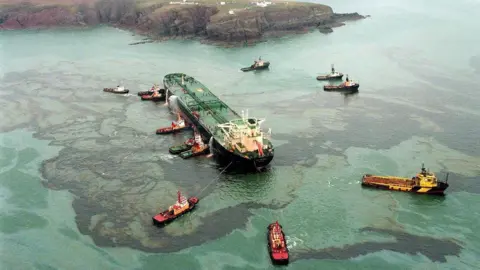
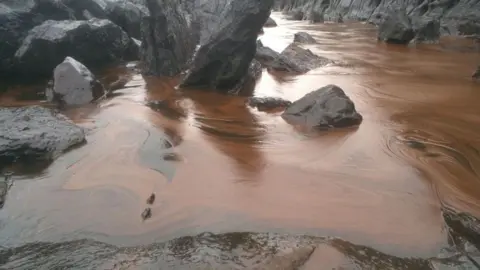
When the oil tanker Sea Empress ran aground 30 years ago, some of south Wales' best-known beaches turned black.
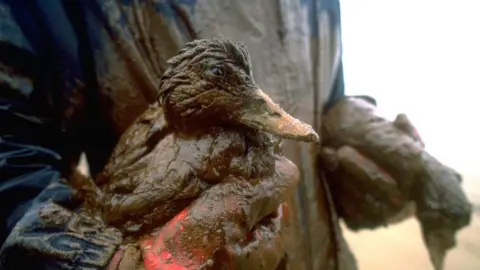
Thousands of seabirds were killed off a globally significant stretch of coastline for wildlife in Pembrokeshire, while salvage crews fought for almost a week to lift the stricken tanker off the rocks and tow her to safety.
Described as "a wake up call" that led to changes in public attitude towards the environment, to this day there is anger and debate over how the disaster could have happened.
Experts warn climate change increases the risk of major pollution events in future on busier and more hazardous seas.
 Getty Images
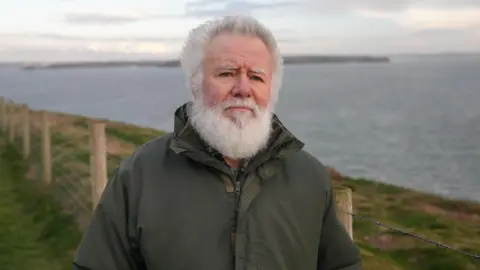
"It's all coming back to me 30 years later," said retired BBC reporter Hefin Wyn, looking out to sea at St Anne's Head, a remote spot at the entrance to Milford Haven waterway, one of the busiest ports in the UK.
He recalled "the humming of the tanker" against the lashing wind and rain and then the "heart-breaking" sight of "thick, treacle-like oil" on the sea.
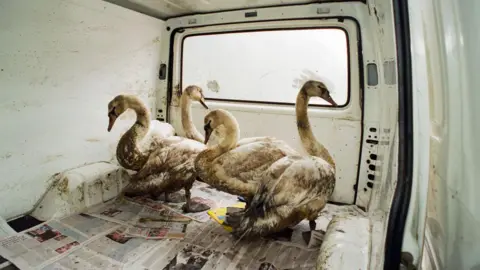
"One could see the birds landing [on the water]… but they couldn't fly away," he said.
"It was a wake-up call - by now we are far more aware of the need to look after the environment than we were at the time."
It was "the single worst incident I've ever seen", said conservationist and TV presenter Iolo Williams, who worked at the time for the RSPB in Wales.
The oil "got into [the pores of] your skin, it got into your hair... and everybody went around with these bright red eyes", he told a new BBC documentary marking the 30th anniversary.
About 7,000 oil-coated birds were picked up along the coast but "the amount killed would have been at least double that because a lot of them would have sunk offshore," he said.
 Getty Images
In rockpools, starfish, limpets and other wildlife were smothered - while Pembrokeshire's fishing industry was brought to a standstill for more than 18 months.
The disaster happened in what is the UK's only coastal national park, with 35 Sites of special scientific interest (SSSIs), a marine nature reserve and islands home to internationally significant seabird populations.
 Mirrorpix
What happened when the Sea Empress ran aground?
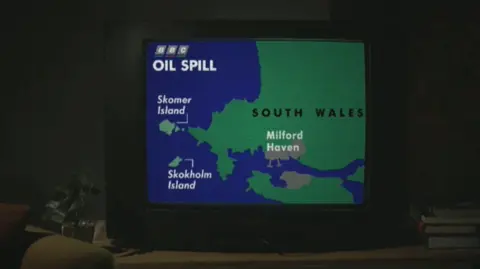
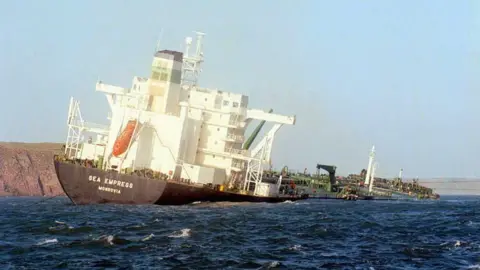
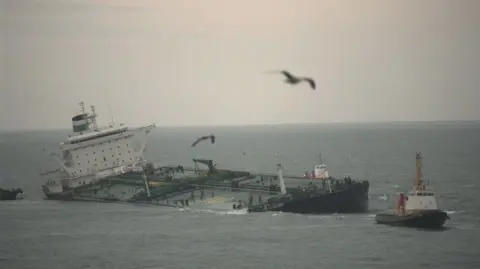
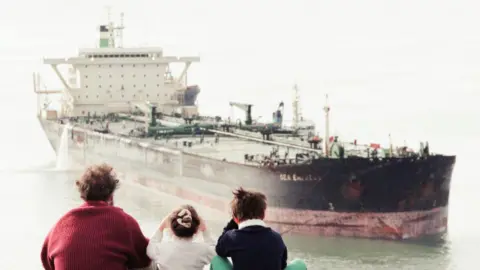
The 274m (900ft) long, Liberian-registered tanker Sea Empress was on its way to an oil refinery when it hit rocks at the entrance to Milford Haven waterway at 20:07 on 15 February 1996.
The initial response focused on trying to bring another vessel alongside to offload the Sea Empress' cargo of crude oil.
But gale force winds led to the crew and tugboats having to evacuate and the ship was left to ride out the storm for several hours.
Eyewitnesses described the tanker "swinging around like a compass" as waves crashed over the abandoned ship and black plumes of oil spurted out into the sea.
 Black Waters: The Sea Empress Disaster
There were repeated attempts in the days that followed to refloat the vessel.
It was finally towed to a jetty on 21 February, ending six days of dramatic scenes which had made headlines around the world.
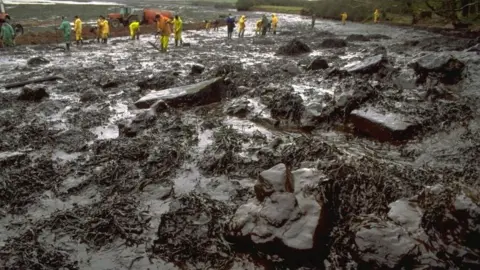
More than 70,000 tonnes - or 32 Olympic-sized swimming pools worth - of oil had spilled into the sea, affecting an estimated 200km (124 miles) of coastline.
 Getty Images
"It was such a shock to the local community," said Gordon James, then director of Friends of the Earth in Wales.
"I remember going down to Tenby and seeing the beautiful North Beach covered in black and there were people there in tears.
"We set up a legal team and we interviewed a lot of people... and the evidence was damning.
"The tugboat men and the marine pilots, they'd issued warnings that safety was being compromised [at the port], there were cutbacks and they were saying more or less it's a disaster waiting to happen."
An inexperienced pilot had been tasked with taking the tanker into Milford Haven and "then we learnt that the radar [at the port] hadn't been working properly for months".
Milford Haven Port Authority was eventually fined £4m, which at the time was the biggest penalty ever issued for a pollution case in Britain.
It was later reduced on appeal to £750,000 to enable the port to make changes to improve safety.
 Getty Images
James still feels angry at what he sees as mistakes made during the response to the incident.
He insists the tanker should not have been held in place before the weather turned.
Local pilots and tugboat crews had said they could take the vessel further out to sea or to a jetty to offload the oil but "were ignored", he claimed.
"The storm came in and they lost control."

'Risk of explosion'
Joe Small sees things differently.
He was senior operations manager for the the UK's Marine Pollution Control Unit and one of the first people to step on board the Sea Empress after it ran aground.
It became apparent upon inspecting the ship that oil had moved internally into tanks not designed to hold it, presenting "a huge safety issue" and "risk of explosion".
That limited their options, he said, adding that they wanted to make sure the ship was safe before bringing it into a populated area such as Milford Haven.
The salvage operation was "a huge technical challenge" and the fact it was managed within a week was "pretty good going", he claimed.
 Getty Images
Tom Sawyer, the Port of Milford Haven's chief executive, called the Sea Empress disaster "a defining moment", saying it had "exposed shortcomings in our industry and caused profound harm to a coastline whose natural beauty and biodiversity we all treasure".
The port had strengthened pilot training and invested in "world-leading navigational technology" as a result, he said.
The disaster led to major changes in how the UK prepares for and responds to maritime incidents, while the shipping industry worldwide "accelerated the adoption of double-hull tankers, mandatory emergency towing points and improved compensation frameworks for environmental damage," Sawyer said.
 Mirrorpix
Could a major oil spill happen again?
"We're constantly looking for ways to improve, better prepare and make things safer," said Joe Small.
Fiercer and more frequent storms brought by climate change was a major challenge - as are busier and more hazardous seas, he warned.
The loss of oil refining capacity in the UK meant a greater need to import refined products like petrol, which comes in on smaller tankers.
"We're now having four or five vessels to carry the same volume [as the Sea Empress]," he said.
"More ships, worse weather - no matter how safe our operations are, things go wrong".
Globally tankers were facing "a resurgence in piracy and other attacks", while a newer phenomenon of so-called "dark fleets - vessels engaged in sanction busting activities" brought further problems.
'The real price of oil'
The Sea Empress disaster could have been much worse.
The time of year it happened meant many key migratory birds had not arrived back to Pembrokeshire's cliffs and islands - and the wind direction blew some of the oil away from the coast.
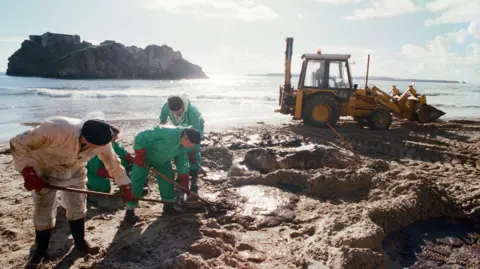
A massive effort by the community to clean up the beaches was seen as a huge success, allowing the county to recover far more quickly than had been feared.
First Minister Eluned Morgan, then a member of the European Parliament for mid and west Wales, revealed she still had a pair of wellington boots "with Sea Empress oil on them" after helping out.
It had shown "how important it is that we treat our seas with respect", she told S4C.
 Getty Images
"One of the long-term things that changed was people's attitude," said Nick Ainger, the area's MP at the time.
"Those images they saw - that's the real price of oil. And I think it was the beginning of this substantial change in public attitude towards the environment: how precious it was, and how easily it can be damaged if we're not sensible and caring about it."
"I think about it at every anniversary," added Iolo Williams. "Thirty years on it's important to tell the story so we learn from our mistakes."
Additional reporting by Clare Hutchinson
