Rail enthusiast gets historic lime kilns listed

 Rob Langham
Historic kilns opened by a railway in a doomed attempt to boost business have been given listed status following work by a local enthusiast.
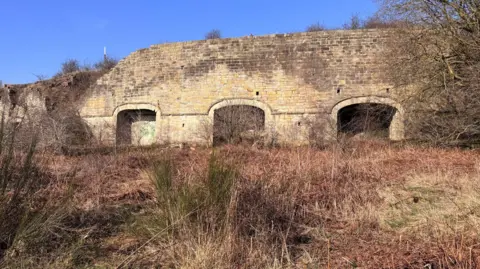
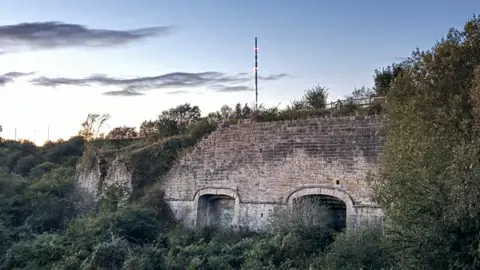
The lime kilns, near Consett, were built in 1835 by the Stanhope and Tyne Rail Road Company to try and capitalise on local demand for quicklime.
Rob Langham, from County Durham, said the "absolutely huge" kilns were unusual because they had been built by a rail company.
Last week Historic England designated them a Scheduled Monument following an application by Langham and he was pleased because they had been "overlooked" for a long time.
He said a friend showed him the kilns years ago and that during the Covid pandemic he would take walks to the site to "admire the architecture".
He also said the bank of six kilns were built to boost the company's business, just a few years before it went bust.
 Rob Langham
Trains on the Stanhope and Tyne Rail Road Company ran between Stanhope and South Shields and collected coal from across the region to be put on to boats for London.
Langham said the rail company's owners wanted to take advantage of the region's limestone which could be turned into quicklime used in iron and steelworks as well as fertiliser.
"They thought this was going to be a huge business," he said.
The firm also built lime kilns in Stanhope, but went bust nine years later.
Langham said he had an interest in early rail history and he had wanted to see the kilns protected because they were type of structures that were typically overlooked.
"It's not that sort of pretty romantic view of heritage that a lot of people have," he said.
"No one has really given them much thought."
The designation means no changes can be to the structure without permission from the government.
The kilns were designed by Thomas Harrison before he became the engineer-in-chief of the North Eastern Railway.
