Falklands statue safe for 10 years after appeal

 Barry Shimmon
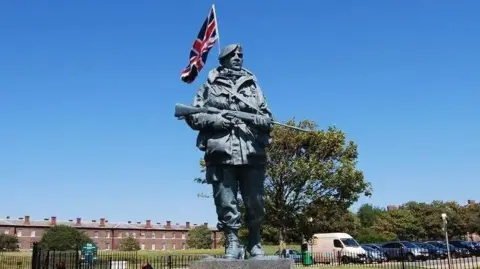
A fundraising campaign to protect a military statue has secured enough donations to protect it for a decade.
The National Museum of the Royal Navy (NMRN) has been appealing for donations to save the Yomper statue in Eastney, Portsmouth, from a corrosive disease.
The museum said the amount raised would fund expert treatment from a bronze conservator, as well as regular checks by the museum's team, for the next ten years.
The campaign has raised more than £17,000 from an initial £9,000 target after the museum promised to match donations from the public between 2 and 9 December.
The Yomper statue, which stands on the Eastney seafront by the Royal Marines Museum, has been corroded by weather since its unveiling in 1992.
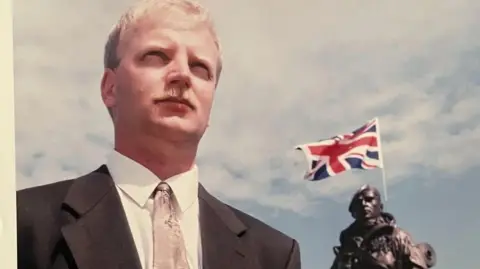
It is based on Royal Marine Corporal Peter Robinson of 45 Commando, who was captured in a famous image as he "yomped" across East Falkland during the 1982 conflict.
The NMRN said the statue was suffering from bronze disease, a form of corrosion in which sea salt reacts with bronze in the presence of moisture and air.
It said the disease can cause flaking and possible structural damage to bronze sculptures.
Specialist treatment was needed to prevent further corrosion and stabilise its surface, it added.
 MOD
MODMatthew Sheldon, chief executive of the NMRN, said the statue was a "timeless reminder of courage, grit, endurance, and unbreakable spirit of those who served" in the conflict.
Mr Robinson told the BBC in 2022 that he was "proud" to have been in the photo that inspired the statue, but that he didn't like "being turned into a hero".
"A lot more guys out there did a lot more than what I did. It was just the fact that my photograph became the image," he said.
