Asthma study looks at children's overuse of inhalers

 BBC
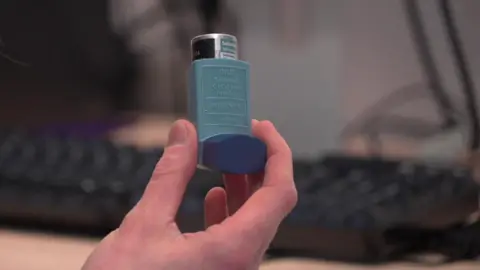
BBCA new study is offering children with asthma an enhanced check-up to see whether it can bring down the overuse of inhalers.
The Prescription Alerts for Reliever Inhalers in Children (PARC) study at University Hospital Southampton (UHS) is examining whether the extra check with a specialist nurse will lead to fewer asthma or wheeze attacks.
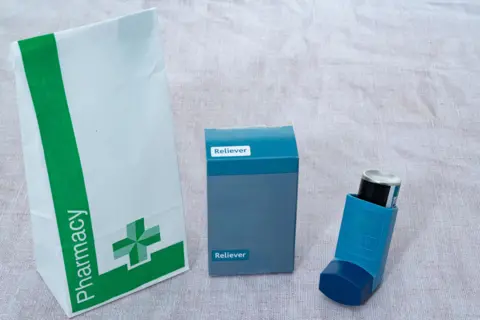
Children who use a lot of blue reliever inhalers are several times more likely to have severe asthma attacks, which can be life-threatening.
Dr Anna Selby, a paediatric registrar at UHS and leader of the study, told the BBC its main aim was to "identify children that are at high risk" and "put measures in place to improve their control".
She said: "When children are using their blue reliever inhaler often, it means their asthma isn't as well controlled as it could be."
Selby added: "There may be a number of reasons why children may need this additional review.
"It may be that they need help with using their inhalers or need more education around asthma management, or it may be that they need to be switched to a different type of inhaler or different asthma medication."
Families are being invited to take part at general practices in Hampshire, Dorset and the Thames Valley region, and at UHS's National Institute for Health and Care Research (NIHR) Clinical Research Facility.
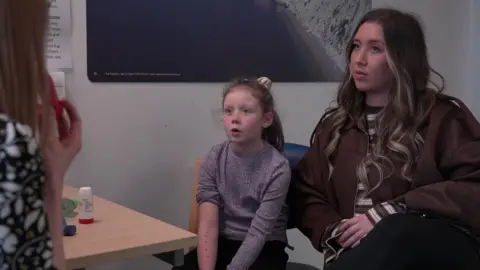
Two types of inhaler are typically used to treat asthma - the brown preventer inhalers and blue reliever ones.
But reliever inhalers do not treat the underlying airway inflammation that causes symptoms.
Children currently receive an annual asthma review with their GP.
The PARC study is dividing GP practices into two groups, one with the enhanced check-up, and the other with the usual care, to see whether the change prevents asthma attacks.
At the end of the project the children who did not receive the enhanced check-up will get one too.
Researchers hope to create a new alert system that will notify GPs if more than six reliever inhalers have been prescribed to a child so the check-up can be arranged.
Atlanta McDermott volunteered her daughter Amelia for the study, who was using her blue inhaler every day.
She said she "wanted better understanding and knowledge of asthma in itself, just to help Amelia and not feel helpless or useless when she is having flare ups".
Amelia has since switched to a combination inhaler which contains both reliever and preventer medication.
Atlanta said: "The study's helped us in so many ways.
"The communication from start to finish has been amazing, and Amelia is wanting to do clubs again and is playing outside, and just being a normal child again has been lovely."
The study is being delivered through the NIHR Southampton Biomedical Research Centre.
Asthma
 Getty Images
Asthma is a common condition that affects breathing.
Symptoms include:
- wheezing
- coughing
- shortness of breath
- tight chest
Symptoms can be mild or severe and usually come and go.
An asthma attack is when there are severe symptoms and it is difficult to breathe, which can be life-threatening.
Symptoms can be triggered by exercise, high levels of air pollution, cold air, or contact with something the person is allergic to, such as pollen, dust, mould or animals.
Asthma usually starts in children, but can happen at any age.
Source: NHS
You can follow BBC Hampshire & Isle of Wight on Facebook, X, or Instagram.
