'Restored mills give you so much back... they give you hope'

 BBC
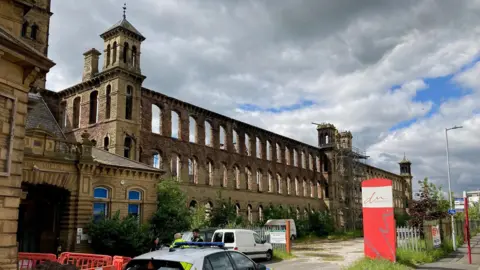
BBCThe burnt-out skeleton of Dalton Mills is a lasting reminder of an arson attack which destroyed its main building.
Up until 3 March 2022, Genappe Mill was regularly used as a filming backdrop for various productions including TV series Peaky Blinders.
On that fateful day a gang of teenagers broke in and set fire to a polystyrene gargoyle, possibly left behind by a film crew, which grew into an inferno and took days to put out.
Its fate has been hanging in the balance ever since, especially after it passed into escheat, an ancient law that renders it ownerless but under the Crown Estate's control.
There is a bid to buy the site to save it for the community.
If this goes ahead it will join other mills across the region which have been brought back to life.
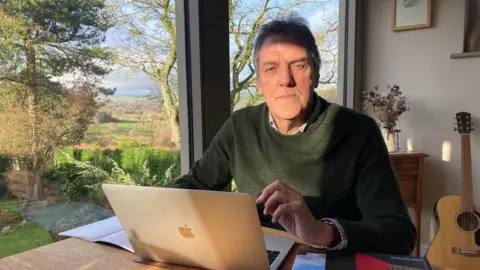
Neil Horsley started photographing mills in Yorkshire and Lancashire five years ago.
His first book, Mills Transformed (Stories of Mill Regeneration), was published earlier this year.
He says: "I thought a lot of the mills would just be apartment blocks, but many of the ones I visited have been turned into a whole range of things.
"One's a classic car repair shop; another one's a wedding venue; there's an academy in Bradford that provides education facilities.
"Sunny Bank Mills is probably now the largest creative hub in the greater Leeds area.
"Gibson Mill at Hardcastle Craggs is a National Trust environmental centre.
"What surprised me is the whole range of uses that people have found for these buildings."
Neil, 68, trained as a town planner and had a career in urban regeneration.
During the pandemic he picked up his camera and started to explore the countryside around him.
He says: "I just realised that there was a great story behind them; not only the story of the building but also the story of the people who take them on and renovate them."
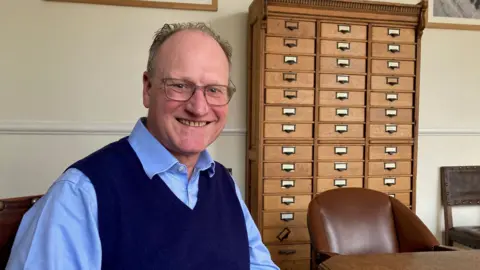
Cousins William and John Gaunt took over the family-owned Sunny Bank Mills, in Farsley, Leeds, at turn of the Millennium.
They were the sixth generation of Gaunts to be involved since its foundation as a "club mill" by a weavers' collective in 1829.
By the time they took control it was a fine worsted cloth manufacturer in a rapidly diminishing market.
They came to the heart-wrenching decision to sell the brand and customer base, with the business closing in 2008.
William says: "It was an extremely painful process, both for the workers and for us.
"But we'd identified the mill as the key asset that we're custodians of for the family."
Their masterplan centred around the principles of employment, heritage and re-engaging with the local community.
William says: "We went round the whole of northern England looking at other mills in Yorkshire and across in Lancashire.
"Not to copy them, but just to see what other people were doing with them and what might work best for here."
Change of use permissions were granted by the council and funding was secured, including substantial investment from the family coffers, and the transformation began in 2015.
Now the mill on Town Street has about 500 people working in 70 businesses as well as 50 artists' studios.
The Great British Sewing Bee television series has been filmed in its 1912 mill since 2022.
"We're about half way through the redevelopment of the mills now, which is a big surprise to some people because they think it looks like the finished article," says William, 58.
"I think now that I won't see it done in my tenure, so something for the next generation to get their teeth into."
Not all mills are so fortunate.
And when one goes up in flames the received wisdom is the building has been deliberately set on fire.
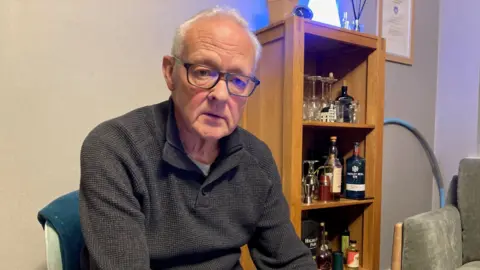
For fire investigator Chris Clarke it is merely the start of an exhaustive process of elimination to establish, if possible, a cause.
The 64-year-old spent almost three decades working for the West Yorkshire Fire & Rescue Service, 12 of those in its fire investigation team, which he eventually ran.
He says: "If you look at recent mill fires across the Bradford district, they've a history of vandalism, anti-social behaviour, possibly drug-taking and drinking.
"They're just insecure buildings and easy targets for deliberate fire setting."
In the 2000s, causes of mill fires included the stripping of copper wire with thieves burning off the plastic insulation on site.
When the mills were still working, mechanical and electrical faults were often to blame.
"The problem being, and this is mentioned in Hansard in 1956, especially (with) the wool mills," Chris says.
"All of the timber and the timber joists, etc, were soaked in oil - the lanolin from the sheep's wool.
"It just takes a small ignition source and the fire spreads uncontrollably through big, vast open areas where the looms were."
Chris is now a partner in Fire Investigations (UK) LLP which provides forensic fire investigation reports for clients across the world.
He says: "I suspect in 10 years' time we won't be having this conversation because there are very few mills left, certainly in the Bradford and Calderdale districts.
"The ones that are have been turned into functioning, fire-safe buildings now."
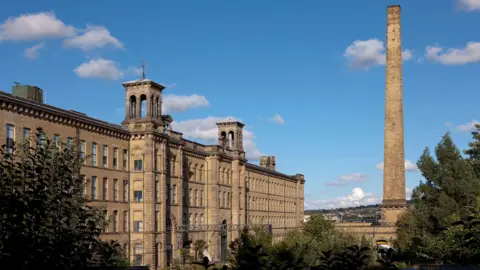 SALTS MILL
A prime example is Salts Mill where Zoë Silver is co-director along with sister Davina.
In 1987 their father Jonathan Silver bought the Grade II* listed mill in Saltaire.
Zoë says: "My dad Jonathan bought it 1987 when he was 37 and he just had a go.
"Nobody wanted it, it was empty and he just thought 'I can do this'. He had form, he'd done similar things before, but nothing on this scale."
Jonathan had an ace up his sleeve in that his friend, from Bradford Grammar School, was world-famous artist David Hockney.
"My dad got one room ready, hung it with pictures by David Hockney, and opened the doors and was willing to see what happened next."
Her father's life was cut tragically short by cancer when he was just 47, but wife Maggie took over its running.
The former textile mill, which Sir Titus Salt originally opened in 1853, is part of a Unesco World Heritage Site.
It now boast an art gallery, shops, restaurants and spaces for hire with about 1,000 people working on site.
Zoë says: "That's the thing about these old buildings.
"The minute you can get some life into them, any life, they give you some much back... and they give you hope."
Listen to highlights from West Yorkshire on BBC Sounds, catch up with the latest episode of Look North.
