Arrest made after facial recognition vans used

 BBC
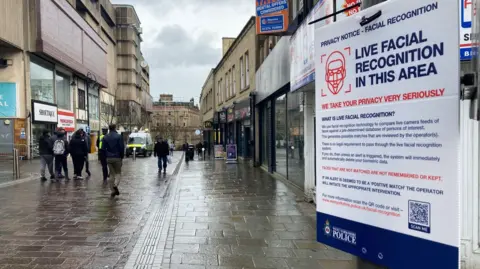
BBCAn arrest has been made by officers using facial recognition cameras for the first time in Bradford.
The Live Facial Recognition (LFR) vehicles were deployed in Kirkgate last week, leading to the arrest of a woman wanted on suspicion of theft from a motor vehicle.
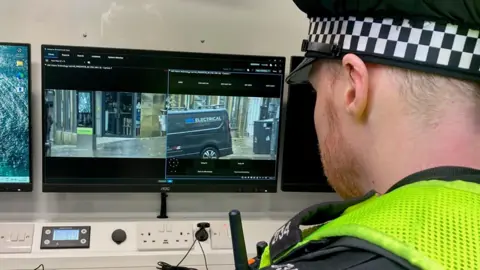
LFR works by comparing faces captured on a live camera feed and then comparing them against an authorised watchlist.
They are used mostly to track people wanted by the authorities in connection with crimes but also those who have gone missing, according to West Yorkshire Police.
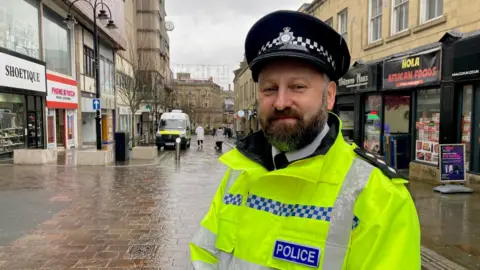
Chief Inspector Dan Tillett said: "We have to go through a lot of mechanisms in order to get the authority to be able to deploy this tactic.
"What I would remind people in that this is just a tool, a tool in our arsenal that we use in a very targeted and proportionate way."
The deployment in Bradford follows on from previous deployments in Leeds last year - the first time the technology had been used in Yorkshire.
Facial recognition works by measuring key features, such as the width of a nose, the distance between the eyes, and the shape of a person's cheek bones.
Those features are then compared with the faces of persons of interest stored on a police watchlist.
If there is a match officers on the ground can approach the person identified and if necessary carry can out an arrest.
Civil rights group have said previously that watchlists were not just restricted to serious crimes, but also victims of crimes and witnesses to crimes.
West Yorkshire Police said only individuals of "legitimate interest" - including missing persons, key witnesses and suspected victims of some crimes - would trigger an alert.
Tillett said if a person's face does not match to someone on the watchlist "that image is deleted within a second".
Tillett said the vans could be used in city centres or at public events where there is a high footfall, with details of deployments published in advance on the police's website and signs put up on the day informing the public of their use.
West Yorkshire's deputy mayor for policing and crime, Alison Lowe, said her department would continue to "scrutinize" the way police use LFR.
But she said police "must have up-to-date operational tools at their disposal" after the cameras were first introduced last November.
Listen to highlights from West Yorkshire on BBC Sounds, catch up with the latest episode of Look North.
