'Video call service expansion could help tackle domestic violence'

 BBC
BBCPlans to expand a video call service to deal with domestic abuse crimes could encourage victims to stay within the criminal justice system, a charity has said.
If the victim chooses, the service allows officers to talk to them, take statements, and collect digital evidence like photos or videos during a secure video call, however phone call or in-person visits are still available.
Sonya McMullan from Women's Aid Federation NI said the more options someone experiencing domestic abuse has the better.
The service is delivered by a team at Castlereagh Police Station in Belfast and officers are hoping to broaden the types of crime that the service can deal with and hope by mid-2026 the service will be extended to deal with domestic abuse incidents.
Ms McMullan said it could be particularly helpful for women who may be in a very rural location but emphasised that having a choice was important.
"That accessibility... with regard to disability... and additional needs as well could be something that could work very well but we have to make sure that it is a choice... and it's not the go to," she added.
She said that the charity knows people in "a state of crisis" are "in fear and danger" and need to ring 999 and have the option of an officer attending their home.
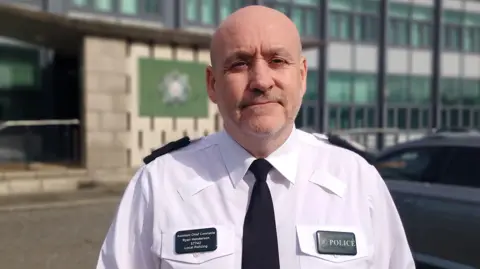
The PSNI said from 23 April to 4 December 2025 the video call service was used 6813 times and the force plans to open a second hub in January to be able to take more calls.
A similar service has already been used by police in Dorset to help domestic abuse victims.
Assistant Chief Constable Ryan Henderson said the video officer attendance scheme is a private way of being able to speak to a police officer directly.
"What we've learnt from seeing some of this work elsewhere - is that for victims of domestic abuse - they can feel more comfortable, using this type of service."
Mr Henderson also said whilst it has been widely reported the police service has been chronically underfunded it's important that they are able to do something that responds to the way people want to get the services.
"From time to time officers will for various reasons have health issues or other issues that means they just have to come away from the front line they can't do the full range of duties... it's people in that position that we are using to do the calls."
Ch Insp Alan Lowry told BBC Radio Ulster's Good Morning Ulster programme that the service had been "quite well received" and offered "more of a choice" to victims.
He added that there had been both positive and some negative feedback to the service from victims of crime.
He said the negative feedback was around "technical issues" that had since been resolved, while the positive feedback included that the process was "convenient" and officers were "empathetic".
"The system is working exceptionally well," he added.
Criminal process delays
Ms McMullan said the police are open to working with survivors and groups such as Women's Aid to give feedback on the services progress.
"We hear of so many people withdrawing from the criminal justice process, not wanting to go through with their case, and a lot of that is about delay... and the time it's taken and the trauma and impact retelling that story all of the time... but a lot of it is the communication, not knowing what's happening, how the case is progressing," she explained.
"For that, the video call service could be really invaluable. Whenever a Woman's Aid worker is meeting with the individual that they could link in with a police officer via video call... I think that would encourage people to stay within the criminal justice system."
