Glimpse of city's past as medieval wall uncovered

 Hull City Council
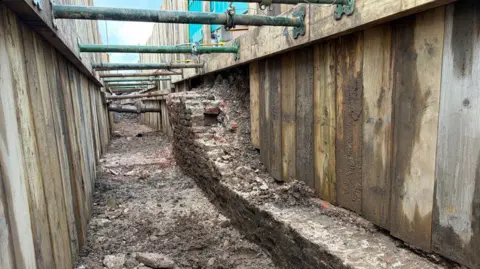
A section of Hull's medieval walls have been uncovered for the first time in 250 years.
The wall, which was built in the late 14th Century, was found under Guildhall Road during utility works.
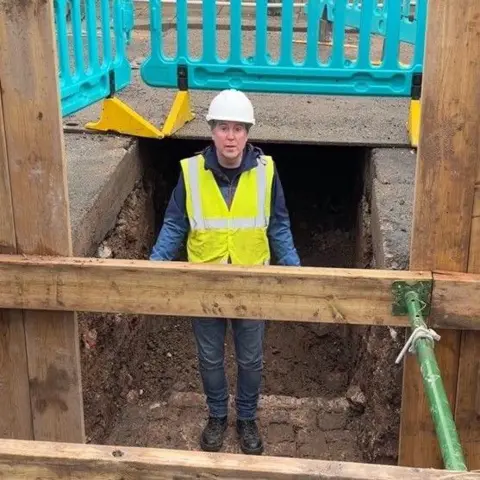
A team of archaeologists is now collecting as much information as possible about the structure, before it is covered up again.
Peter Connelly, manager at Humber Field Archaeology, said: "Revealing even just a small glimpse of this medieval past is an important chapter in Hull's story."
 Hull City Council
The walls defended the city's Old Town and were "probably" the biggest brick-built structure in England at the time they were completed, according to Connelly.
There were four main gates, interval towers and several smaller entrances.
However, from the 1770s, they were demolished to make way for the expansion of Hull and construction of docks.
Sections of the walls have been uncovered before and part of Beverley Gate – where King Charles I was denied entry to the town during the build-up to the English Civil War – is on permanent display.
Connelly said it was "quite engaging" to see a new part of the structure.
"Even just getting little insights into this important chapter of Hull's medieval past is a lovely thing to see," he added.
"This is the first time this part of the wall has been seen for over 250 years."
The roadworks are being carried out by Hull City Council and Vital Energi, a renewable energy provider.
Although the wall will be covered up again, Connelly said he hoped future generations might uncover it again when they had "better equipment than us to analyse the past".
Listen to highlights fromHull and East Yorkshire on BBC Sounds, watch the latest episode of Look Northor tell us about a story you think we should be coveringhere.
Download the BBC News app from the App Storefor iPhone and iPad orGoogle Play for Android devices
